

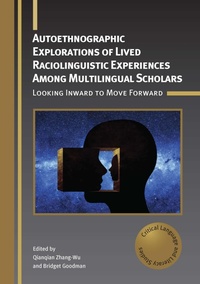
Autoethnographic Explorations of Lived Raciolinguistic Experiences Among Multilingual Scholars
Looking Inward to Move Forward
Published on 15. April 2025
270 pages
978-1-80041-732-8 (ISBN)
Description

While substantial research has looked backward at the colonial history of language and forward to the potential of decolonizing English for linguistic justice, there is a lack of investigation looking inward at the lived raciolinguistic experiences of multilingual scholars. This edited collection opens a healing space for storytelling and deepens readers' understanding of raciolinguistics in practice through autoethnography. The book brings together language education researchers and scholars, with each author representing and in contact with multiple cultural, linguistic and ethnic backgrounds. Together they create a community of practice to bring scholars with diverse backgrounds together for inward reflections on their lived raciolinguistic experiences. Through this journey, the book empowers both the chapter contributors and readers and allies who may see themselves in the stories to reflect, learn and change their practices, and provides valuable insights into raciolinguistics and autoethnography as a research method.
Reviews / Votes
This volume offers a powerful yet deeply personal look into the lived raciolinguistic experiences of multilingual scholars. Not only does it subvert dominant narratives, but it also empowers readers to embrace their linguistic identities. Essential reading for anyone committed to dismantling linguistic oppression and fostering equity in academia. * Sender Dovchin, Curtin University, Australia * I appreciate the opportunity this book provided to actively listen to the lived and often traumatic raciolinguistic experiences of multilingual international scholars who courageously share their powerful stories through autoethnographic methodologies. Their stories and scholarship remind us that we have much work to do in our teaching, research, publishing, and everyday interactions to disrupt raciolinguistic ideologies. * Wayne E. Wright, Purdue University, USA * This book illustrates how the raciolinguistic memories of multilingual scholars can be powerfully mobilized through autoethnography. By looking inward, the contributors also shed light on how individuals can overcome vulnerability and discomfort to strike a path forward for themselves and their allies. Essential reading for teachers, teacher educators, and researchers. * Peter I. De Costa, Michigan State University, USA *More details
Series
Language
English
Place of publication
Bristol
United Kingdom
Target group
College/higher education
Product notice
Reflowable
File size
33,89 MB
ISBN-13
978-1-80041-732-8 (9781800417328)
Copyright in bibliographic data and cover images is held by Nielsen Book Services Limited or by the publishers or by their respective licensors: all rights reserved.
Schweitzer Classification
Other editions
Additional editions
Qianqian Zhang-Wu | Bridget Goodman
Autoethnographic Explorations of Lived Raciolinguistic Experiences Among Multilingual Scholars
Looking Inward to Move Forward
Book
04/2025
Multilingual Matters
€51.90
Shipment within 10-20 days
Persons
Qianqian Zhang-Wu is Assistant Professor of English & Director of Multilingual Writing, Northeastern University, USA. She is the author of Languaging Myths and Realities: Journeys of Chinese International Students (Multilingual Matters, 2022) which won the 2022 CIES Study Abroad and International Students SIG Best Book Award, 2023 CCCC Research Impact Award and 2023 CCCC Advancement of Knowledge Award Honorable Mention.
Bridget Goodman is Associate Professor of Multilingual Education, Graduate School of Education, Nazarbayev University, Astana, Kazakhstan. She is co-editor of Researching Multilingually: Conceptual and Methodological Failures, Struggles and Successes (Multilingual Matters, 2025, with Brian Seilstad).
Bridget Goodman is Associate Professor of Multilingual Education, Graduate School of Education, Nazarbayev University, Astana, Kazakhstan. She is co-editor of Researching Multilingually: Conceptual and Methodological Failures, Struggles and Successes (Multilingual Matters, 2025, with Brian Seilstad).
Content
Contributors
Foreword
Part 1: Introduction
Chapter 1. Qianqian Zhang-Wu and Bridget Goodman: Looking Inward Through Autoethnographies
Part 2: Navigating Transitions
Chapter 2. Xiaoye You: Writing the Transnational Racial Subject
Chapter 3. Qianqian Zhang-Wu: 'I don't know English Department now offers CHINESE writing classes!': Raciolinguistic Struggles of a Chinese Woman Working as an English Professor in the US
Chapter 4. Bolormaa Shinjee: 'Did You Bring My Lunch, Beautiful'? Self-Reflection of a Female Academic from the Global South
Part 3: Reclaiming Identity
Chapter 5. Renata Love Jones: Yonder's Endarkened Pedagogies
Chapter 6. Jung Kim: 'Jung like Jungle': (Re)Claiming Names and Languages
Chapter 7. Ellen Cushman: Unsettling Raciolinguistics: Reclaiming Indigenous Language Practices
Chapter 8. Nariman Amantayev: Autoethnographic Inquiry into Raciolinguistic Ideology within the Same Ethnicity and an Invitation to Reconsider Kazakh Language Teaching Practices
Part 4: Self-Positioning as Researchers
Chapter 9. Sibonile Mpendukana and Miche Thompson: Embodied Moments of Racialisation in Research
Chapter 10. Ming-Hsuan Wu and Genevieve Leung: Legitimately Occupying Peripheral 'Asian' and 'American' Spaces: A Dialogue Between Two Language Teaching Professionals
Chapter 11. Anna Becker: 'You Sound Like from the CD' - An Autoethnographic Narrative about 'Multilingual' Teaching and Research in 'Multilingual' Switzerland
Chapter 12. Bridget Goodman: Shades of Beige? One White Scholar's Imperfect(ive) Quest for Racial and Linguistic Justice
Part 5: Reflection Through Writing
Chapter 13. Shreya Sangai: English Departments Here and There: Rebuke and Mistrust, Compassion and Rebuilding
Chapter 14. Sandro Barros: Brazilian Landscape with Rain: On the Languaged Brown Body Below the Equator
Chapter 15. Jeannette D. Alarcon: Walking a Raciolinguistic Path Con Mi Abuela
Part 6: Conclusion
Chapter 16. Bridget Goodman and Qianqian Zhang-Wu: From Looking Inward to Looking Forward
Index
Foreword
Part 1: Introduction
Chapter 1. Qianqian Zhang-Wu and Bridget Goodman: Looking Inward Through Autoethnographies
Part 2: Navigating Transitions
Chapter 2. Xiaoye You: Writing the Transnational Racial Subject
Chapter 3. Qianqian Zhang-Wu: 'I don't know English Department now offers CHINESE writing classes!': Raciolinguistic Struggles of a Chinese Woman Working as an English Professor in the US
Chapter 4. Bolormaa Shinjee: 'Did You Bring My Lunch, Beautiful'? Self-Reflection of a Female Academic from the Global South
Part 3: Reclaiming Identity
Chapter 5. Renata Love Jones: Yonder's Endarkened Pedagogies
Chapter 6. Jung Kim: 'Jung like Jungle': (Re)Claiming Names and Languages
Chapter 7. Ellen Cushman: Unsettling Raciolinguistics: Reclaiming Indigenous Language Practices
Chapter 8. Nariman Amantayev: Autoethnographic Inquiry into Raciolinguistic Ideology within the Same Ethnicity and an Invitation to Reconsider Kazakh Language Teaching Practices
Part 4: Self-Positioning as Researchers
Chapter 9. Sibonile Mpendukana and Miche Thompson: Embodied Moments of Racialisation in Research
Chapter 10. Ming-Hsuan Wu and Genevieve Leung: Legitimately Occupying Peripheral 'Asian' and 'American' Spaces: A Dialogue Between Two Language Teaching Professionals
Chapter 11. Anna Becker: 'You Sound Like from the CD' - An Autoethnographic Narrative about 'Multilingual' Teaching and Research in 'Multilingual' Switzerland
Chapter 12. Bridget Goodman: Shades of Beige? One White Scholar's Imperfect(ive) Quest for Racial and Linguistic Justice
Part 5: Reflection Through Writing
Chapter 13. Shreya Sangai: English Departments Here and There: Rebuke and Mistrust, Compassion and Rebuilding
Chapter 14. Sandro Barros: Brazilian Landscape with Rain: On the Languaged Brown Body Below the Equator
Chapter 15. Jeannette D. Alarcon: Walking a Raciolinguistic Path Con Mi Abuela
Part 6: Conclusion
Chapter 16. Bridget Goodman and Qianqian Zhang-Wu: From Looking Inward to Looking Forward
Index
