

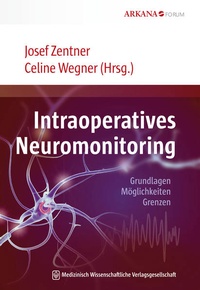
Intraoperatives Neuromonitoring
Grundlagen, Möglichkeiten, Grenzen
1st Edition
Published on 10. March 2020
274 pages
978-3-95466-528-0 (ISBN)
Description

Nicht nur die Anzahl, auch die Qualität chirurgischer Eingriffe, bei denen der Schutz neuronaler Strukturen von besonderer Bedeutung ist, hat in den letzten Jahren deutlich zugenommen. Dazu hat das Intraoperative Neuromonitoring einen wesentlichen Beitrag geleistet.
Intraoperatives Neuromonitoring (IONM) ist heute ein etabliertes Verfahren und fester Bestandteil bei Operationen verschiedenster medizinischer Disziplinen: Chirurgische Eingriffe in der Neurochirurgie, der HNO oder Orthopädie, aber auch in der Gefäß-und Allgemeinchirurgie sind ohne diese elektrophysiologischen Verfahren nicht mehr denkbar.
Mit den wachsenden Ansprüchen an Präzision und Sicherheit von OP-Verfahren steigt auch der Stellenwert des intraoperativen Monitorings. Der unüberhörbare Ruf nach einer systematischen und fundierten Ausbildung der Verantwortlichen zum IONM ist eine logische Folge davon.
Das vorliegende Handbuch bietet das erforderliche Wissen, führt in die Methode ein und vermittelt wichtige Fähigkeiten zur Anwendung des intraoperativen Monitorings.
IONM ist ein faszinierendes Verfahren, das von dem ständigen Wechselspiel von Theorie und klinischer Praxis lebt. Auch das vermitteln die Autoren einem bewusst breiteren Leserkreis.
More details
Edition
1. Auflage
Language
German
Place of publication
Berlin
Germany
Target group
Professional and scholarly
Ärztliche Mitarbeiter, die das IONM anwenden und verantworten; Mitarbeitende aus nicht ärztlichen Berufen, die IONM in der Klinik durchführen; Ärzte und Studierende, die ihr Wissen über IONM im Rahmen von Aus- und Weiterbildungen erweitern möchten; Medizintechniker und angrenzende Berufe
Edition type
New edition
File size
168,96 MB
ISBN-13
978-3-95466-528-0 (9783954665280)
Schweitzer Classification
Other editions
Additional editions
Book
12/2019
1st Edition
MWV Medizinisch Wissenschaftliche Verlagsgesellschaft
€99.95
Available immediately
Persons
Content
- Cover
- Titel
- Vorwort
- Inhalt
- 1 Einführung
- 1.1 Warum Neuromonitoring?
- 1.2 Historische Aspekte
- 1.3 Monitoring-Konzept
- 1.4 Monitoring-Team
- 1.5 Medizinprodukteberater
- 2 Anatomische und physiologische Grundlagen
- 2.1 Lage- und Richtungsbezeichnungen
- 2.2 Das Nervensystem
- 2.3 Bewegungsapparat
- 2.4 Testfragen
- 3 Messtechnik
- 3.1 Physikalische Parameter
- 3.2 Stimulation
- 3.3 Signalaufnahme
- 3.4 Testfragen
- 4 Technisches Zubehör
- 4.1 Stimulations- und Ableitelektroden
- 4.2 Spezielles Zubehör
- 5 Modalitäten und Methoden des IONM
- 5.1 Elektroenzephalografie (EEG)
- 5.2 Elektromyografie (EMG)
- 5.3 Elektroneurografie (ENG)
- 5.4 Evozierte Potenziale (EP)
- 5.5 Funktionell-topografisches Mapping
- 5.6 Hirnnerven
- 5.7 Spinalnerven
- 5.8 Reflexe
- 5.9 Überwachung des autonomen Nervensystems
- 5.10 Testfragen
- 6 Perioperatives Management
- 6.1 Patientenvorbereitung
- 6.2 Systemvorbereitung
- 6.3 Verhalten im OP
- 6.4 Messabläufe und Abschluss
- 7 Anästhesie und IONM
- 7.1 Wirkung von Anästhetika auf das Nervensystem
- 7.2 Anästhetika und Elektrophysiologie
- 7.3 Testfragen
- 8 Anwendung des IONM
- 8.1 Interpretation der Potenzialbefunde
- 8.2 IONM in der Neurochirurgie
- 8.3 IONM in der Orthopädie
- 8.4 IONM in der Gefäßchirurgie
- 8.5 IONM in der Allgemeinchirurgie
- 8.6 IONM in der Hals-Nasen-Ohrenchirurgie
- 9 Effizienz des IONM
- 10 Troubleshooting
- Anhang
- Glossar
- Abbildungsverzeichnis
- Tabellenverzeichnis
- Literaturverzeichnis
