

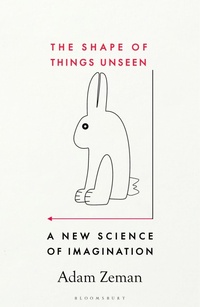
The Shape of Things Unseen
A New Science of Imagination
1st Edition
Published on 16. January 2025
384 pages
978-1-5266-0977-9 (ISBN)
Description

'Fascinating, absorbing and educative' A. C. Grayling
'Highly original and beautifully written' Dominic Lawson
A compelling insight into how our imagination works, based on the latest scientific research.
People often think of imagination as something used only in creative endeavours. In fact, we use imagination constantly as we reminisce, anticipate, plan, daydream, read, create imagined worlds. The truth is we live in the here and now much less than we tend to think. Imagination isn't the exception in our daily lives; it's our default setting. Yet only now are we beginning to understand exactly how it works.
From hallucination to sleepwalking, from REM sleep to delusions, neurologist Adam Zeman brilliantly guides us through the latest scientific studies in the world of the imagination. He draws on research in neuroscience, the study of human origins and child development to show how the human brain is above all else a creative, imaginative organ - and that we have evolved to share what we imagine.
Our brains behave in strikingly similar ways when we observe, remember, imagine or act. Imagine looking at a cube and your eye will trace the contours of the cube as if you were actually seeing it. Yet it turns out that people differ hugely in their imaginative experience. Some people lack sensory imagery altogether - they would be unable to picture their family if asked to - but still lead fulfilling, even highly creative, lives.
From how we visualise to how we understand the minds of others, from the benefits of play to mental disorders, The Shape of Things Unseen dazzles and delights. It is an essential guide to the latest discoveries about the workings of the human mind.
'Highly original and beautifully written' Dominic Lawson
A compelling insight into how our imagination works, based on the latest scientific research.
People often think of imagination as something used only in creative endeavours. In fact, we use imagination constantly as we reminisce, anticipate, plan, daydream, read, create imagined worlds. The truth is we live in the here and now much less than we tend to think. Imagination isn't the exception in our daily lives; it's our default setting. Yet only now are we beginning to understand exactly how it works.
From hallucination to sleepwalking, from REM sleep to delusions, neurologist Adam Zeman brilliantly guides us through the latest scientific studies in the world of the imagination. He draws on research in neuroscience, the study of human origins and child development to show how the human brain is above all else a creative, imaginative organ - and that we have evolved to share what we imagine.
Our brains behave in strikingly similar ways when we observe, remember, imagine or act. Imagine looking at a cube and your eye will trace the contours of the cube as if you were actually seeing it. Yet it turns out that people differ hugely in their imaginative experience. Some people lack sensory imagery altogether - they would be unable to picture their family if asked to - but still lead fulfilling, even highly creative, lives.
From how we visualise to how we understand the minds of others, from the benefits of play to mental disorders, The Shape of Things Unseen dazzles and delights. It is an essential guide to the latest discoveries about the workings of the human mind.
Reviews / Votes
Groundbreaking . . . Neurologist Adam Zeman takes readers on an enlightening journey through the science, psychology and artistry of imagination, unveiling how it governs our perceptions, fuels creativity and even leads to poignant failures. From everyday daydreams to extreme conditions like aphantasia and hyperphantasia, Zeman reveals the unseen landscapes of our minds in a way that is both accessible and deeply insightful. The Shape of Things Unseen is essential reading for anyone intrigued by the mysteries of the mind A marvellous account of the brain's creative powers in perception and imagination, beautifully written, bringing novel insights to bear on the richness of mental life: Zeman is the poet of this science, bringing into seamless connection neurology, neuropsychology, artistic creativity and lived experience at the opposite ends of a scale - from those capable of forming exceptionally vivid mental pictures to those unable to do so at all - and what everything in between means for the way brains construct our worlds. Fascinating, absorbing and educative Rarely does one come across a scientific book that one simply does not want to put down. This is an immensely readable account of how the human imagination works, and of its ramifications in all areas of our lives. Adam Zeman is an extremely companionable writer, leading us courteously through the byways of neuroscience and psychology as he expounds his fascinating subject. This book is a triumph. It is a work of great importance that touches upon many of the issues that beset our world today What is it like to live without mental images, to imagine without a mind's eye? In The Shape of Things Unseen, pioneering neurologist Adam Zeman leads us through the mysterious world of aphantasia. It's an intoxicating journey. Zeman is a gifted writer and storyteller and manages to do justice to the poetry of the mind as well as the science. I have a feeling this book is destined to become a classic of narrative neuroscience A profoundly useful roadmap to one of the most mysterious aspects of the universe, The Shape of Things Unseen is a clear-eyed, engaging overview of how the imagination works. It reveals its central role in perception and memory, and the extent to which it has differentiated us from the rest of the animal kingdom. Recommended reading for any mind that wants to understand itself A fine guide to the tricky science of the imagination... Admirably wide-ranging * New Scientist * Zeman's absorbing book is itself another example of the power of the imagination * New Statesman * An illuminating and wide-ranging history of ideas about the imagination ... Delightfully complex and discursive ... [Adam Zeman's] book is a fascinating summary sketch of countless models, theories and imaginings of the imagination; among them his own * Times Literary Supplement * The Shape of Things Unseen, which oscillates about the main axis of human creativity, is accessible, memorable, and, quite frankly, imaginative * The Irish Times * Reads like a detective story * Tablet * Fascinating, engaging and superbly written An engaging introduction to the diversity and complexity of imagination ... A stimulating journey through the many forms of imagination, leaving the reader with much to ponder * Brain *More details
Edition
1. Auflage
Language
English
Place of publication
London
United Kingdom
Publishing group
Bloomsbury Publishing PLC
Illustrations
39 in-text black and white images
16pp plate section of 28 colour images
File size
8,39 MB
ISBN-13
978-1-5266-0977-9 (9781526609779)
Copyright in bibliographic data and cover images is held by Nielsen Book Services Limited or by the publishers or by their respective licensors: all rights reserved.
Schweitzer Classification
Other editions
Additional editions
Book
02/2026
Bloomsbury Publishing PLC
€16.50
Available immediately
Book
01/2025
Bloomsbury Circus
€31.50
Available immediately
Person
Adam Zeman is Honorary Fellow, Centre for Clinical Brain Sciences, at the University of Edinburgh, and Honorary Professor of Neurology at the University of Exeter. He was brought up in London and trained in Medicine at Oxford University Medical School, after a first degree in Philosophy and Psychology. His earlier books include Consciousness: A User's Guide, A Portrait of the Brain, and, as co-author, Epilepsy and Memory.
Content
- Cover
- Praise Page
- Author Bio
- Title Page
- Copyright
- Dedication
- Epigraph
- Contents
- Introduction: A short tour of imagination
- PART I The Scope of Imagination
- 1 Seeing things - everyday imagination
- 2 Bodying forth - creative imagination
- 3 Others have souls - social imagination
- PART II The Science of Imagination
- 4 Picture this - reproductive imagination
- 5 The wondrous sight - productive imagination
- 6 Creating future - imagination in the brain
- 7 Homo prospiciens - evolving imagination
- 8 Bedtime stories - learning to imagine
- PART III The Besieged Imagination
- 9 Visions and voices - hallucinations in mind and brain
- 10 Foul play - delusions and 'illness according to idea'
- 11 Reprogram - treating and training imagination
- 12 Extreme imagination - imagination unbound
- Epilogue: Why we imagine
- A note on the brain
- Notes
- Acknowledgements
- Image Credits
- Index
