

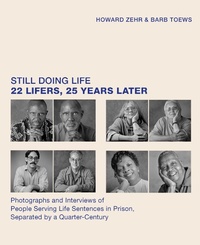
Still Doing Life
Description

Side-by-side, time-lapse photos and interviews, separated by twenty-five years, of people serving life sentences in prison, by the bestselling author of The Little Book of Restorative Justice ?Shows the remarkable resilience of people sentenced to die in prison and raises profound questions about a system of punishment that has no means of recognizing the potential of people to change.? ?Marc Mauer, senior adviser, The Sentencing Project, and co-author (with Ashley Nellis) of The Meaning of Life
?Life without parole is a death sentence without an execution date.? ?Aaron Fox (lifer) from Still Doing Life
In 1996, Howard Zehr, a restorative justice activist and photographer, published Doing Life, a book of photo portraits of individuals serving life sentences without the possibility of parole in Pennsylvania prisons. Twenty-five years later, Zehr revisited many of the same individuals and photographed them in the same poses. In Still Doing Life, Zehr and co-author Barb Toews present the two photos of each individual side by side, along with interviews conducted at the two different photo sessions, creating a deeply moving of people who, for the past quarter century, have been trying to live meaningful lives while facing the likelihood that they will never be free.
In the tradition of other compelling photo books including Milton Rogovin's Triptychs and Nicholas Nixon's The Brown Sisters, Still Doing Life offers a riveting longitudinal look at a group of people over an extended period of time?in this case with complex and problematic implications for the American criminal justice system. Each night in the United States, more than 200,000 men and women incarcerated in state and federal prisons will go to sleep facing the reality that they may die without ever returning home. There could be no more compelling book to challenge readers to think seriously about the consequences of life sentences.
More details
Persons
Howard Zehr is a distinguished professor of Restorative Justice at Eastern Mennonite University's Center for Justice and Peacebuilding. He is the author of the bestselling The Little Book of Restorative Justice and Doing Life, among other titles.
Barb Toews is associate professor of criminal justice at University of Washington, Tacoma. She is author of The Little Book of Restorative Justice for People in Prison and co-author, with Howard Zehr, of Critical Issues in Restorative Justice. She is the editor of the Little Books in Restorative Justice series and lives in Tacoma, Washington.
Content
- Intro
- Introduction
- The Portraits and Interviews
- Acknowledging Our Bias and Language
- Kimerly Joynes
- Charles Diggs
- Craig Datesman
- Marilyn Dobrolenski
- Commer Glass
- Brian Wallace
- Marie Scott
- Ricardo Mercado
- Betty Heron
- Bruce Norris
- Yvonne Cloud
- Joseph Miller
- Aaron Fox
- Diane Weaver
- Bruce Bainbridge
- Hugh Williams
- Harry Twiggs
- Gaye Morley
- Kevin Mines
- James Taylor
- Cyd Berger
- John Frederick Nole
- This is like the first fruit that I've ever had, and it's quite delicious
- Life Sentences: Trauma, Race, and Restorative Justice
- Resources for Further Learning
- Acknowledgments
- Notes
