

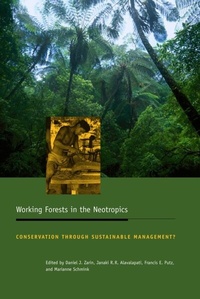
Working Forests in the Neotropics
Conservation Through Sustainable Management?
1st Edition
Published on 27. November 2015
416 pages
978-0-231-50303-7 (ISBN)
Description

Neotropical forests sustain a wealth of biodiversity, provide a wide range of ecosystem services and products, and support the livelihoods of millions of people. But is forest management a viable conservation strategy in the tropics? Supporters of sustainable forest management have promoted it as a solution to problems of both biodiversity protection and economic stagnation. Detractors insist that any conservation strategy short of fully protected status is a waste of resources and that forest management actually hastens deforestation. By focusing on a set of critical issues and case studies, this book explores the territory between these positions, highlighting the major factors that contribute to or detract from the chances of achieving forest conservation through sustainable management.
All prices
More details
Other editions
Additional editions
Daniel Zarin | Janaki Alavalapati | Frances Putz
Working Forests in the Neotropics
Conservation Through Sustainable Management?
Book
12/2004
Columbia University Press
€144.84
Shipment within 10-20 days
Daniel Zarin | Janaki Alavalapati | Frances Putz
Working Forests in the Neotropics
Conservation Through Sustainable Management?
Book
12/2004
Columbia University Press
€43.37
Article not available at the moment
Persons
Daniel J. Zarin is an Associate Professor in the School of Forest Resources and Conservation at the University of Florida, where he is Director of the Working Forests in the Tropics Program.
Janaki R. R. Alavalapati is an Associate Professor in the School of Forest Resources and Conservation, University of Florida.
Francis E. Putz is a Professor of Botany at the University of Florida and a Senior Research Associate at the Center for International Forestry Research.Â
Marianne Schmink is Professor of Latin American Studies and Anthropology at the University of Florida, where she is Director of the Tropical Conservation and Development program.
Janaki R. R. Alavalapati is an Associate Professor in the School of Forest Resources and Conservation, University of Florida.
Francis E. Putz is a Professor of Botany at the University of Florida and a Senior Research Associate at the Center for International Forestry Research.Â
Marianne Schmink is Professor of Latin American Studies and Anthropology at the University of Florida, where she is Director of the Tropical Conservation and Development program.
Content
List of Contributors
Foreword, by Hon. Jorge Viana
Acknowledgments
1. Neotropical Working Forests: Concepts and Realities, by Daniel J. Zarin
Part I. Industrial Forestry as a Tropical Conservation Strategy
2. Are You a Conservationist or a Logging Advocate?, by Francis E. Putz
3. National Forests in the Brazilian Amazon: Opportunities and Challenges, by Adalberto Veríssimo and Paulo Barreto
4. Sustainability of Selective Logging of Upland Forests in the Brazilian Amazon: Carbon Budgets and Remote Sensing as Tools for Evaluation of Logging Effects, by Michael Keller, Gregory P. Asner, Natalino Silva and Michael Palace
5. Forest Science and the BOLFOR Experience: Lessons Learned about Natural Forest Management in Bolivia, by Francis E. Putz, Michelle A. Pinard, Todd.S. Fredericksen, and Marielos Peña-Claros
6. The Business of Forest Certification, by Joshua C. Dickinson, John M. Forgach, and Thomas E. Wilson
Part II. Working Forests and Community Development in Latin America
7. Communities, Forests, Markets, and Conservation, by Mariane Schmink
8. Making Markets Work for Forest Communities, by Sara J. Scherr, Andy White, and David Kaimowitz
9. Inside the Polygon: Emerging Community Tenure Systems and Forest Resource Extraction, by Thomas Ankersen and Grenville Barnes
10. Aiming for Sustainable Community Forest Management: The Experiences of Two Communities in Mexico and Honduras, by Catherine Tucker
11. Community Forestry for Small-Scale Furniture Production in the Brazilian Amazon, by David McGrath, Charles Peters, and Antônio José Mota Bentes
12. Community Forestry as a Strategy for Sustainable Management: Perspectives from Quintana Roo, by David Bray
13. Carbon Sequestration Potential through Forestry Activities in Tropical Mexico, by Bernardus de Jong
14. Axing the Trees, Growing the Forest: Smallholder Timber Production in the Amazon Várzea, by Robin Sears and Miguel Pinedo-Vasquez
Part III. Working Forest Paradoxes
15. Neotropical Working Forests: For What and For Whom?, by Janaki Alavalapati and Daniel J. Zarin
16. On Defying Nature's End, by Gustavo A.B. da Fonseca, Aaron Bruner, Russell A. Mittermeier, Keith Alger, Clau
17. Selective Logging, Forest Fragmentation and Fire Disturbance: Implications of Interaction, by Mark A. Cochrane, David L. Skole, Eraldo A. T. Matricardi, Christopher Barber, and Walter Chomentowski
18. Limited or Unlimited Wants in the Presence of Limited Means? Inquiries into the Role of Satiation in Affecting Deforestation, by Arild Angelsen and Martin K. Luckert
19. From Staple to Fashion Food: Shifting Cycles and Shifting Opportunities in the development of the Açaí Palm Fruit (Euterpe oleracea Mart.) Economy in the Amazon Estuary, by Eduardo S. Brondizio
20. The Homogeocene in Puerto Rico, by Ariel E. Lugo
Part IV. Envisioning a Future for Sustainable Tropical Forest Management
21. Conventional Wisdom about Sustainable Forest Management and a Pro-Poor Forest Agenda, by David Kaimowitz
22. Governing the Amazon Timber Industry, by Daniel Nepstad, Ane Alencar, Ana Cristina Barros, Eirivelthon Lima, Elsa Mendoza
Index
Foreword, by Hon. Jorge Viana
Acknowledgments
1. Neotropical Working Forests: Concepts and Realities, by Daniel J. Zarin
Part I. Industrial Forestry as a Tropical Conservation Strategy
2. Are You a Conservationist or a Logging Advocate?, by Francis E. Putz
3. National Forests in the Brazilian Amazon: Opportunities and Challenges, by Adalberto Veríssimo and Paulo Barreto
4. Sustainability of Selective Logging of Upland Forests in the Brazilian Amazon: Carbon Budgets and Remote Sensing as Tools for Evaluation of Logging Effects, by Michael Keller, Gregory P. Asner, Natalino Silva and Michael Palace
5. Forest Science and the BOLFOR Experience: Lessons Learned about Natural Forest Management in Bolivia, by Francis E. Putz, Michelle A. Pinard, Todd.S. Fredericksen, and Marielos Peña-Claros
6. The Business of Forest Certification, by Joshua C. Dickinson, John M. Forgach, and Thomas E. Wilson
Part II. Working Forests and Community Development in Latin America
7. Communities, Forests, Markets, and Conservation, by Mariane Schmink
8. Making Markets Work for Forest Communities, by Sara J. Scherr, Andy White, and David Kaimowitz
9. Inside the Polygon: Emerging Community Tenure Systems and Forest Resource Extraction, by Thomas Ankersen and Grenville Barnes
10. Aiming for Sustainable Community Forest Management: The Experiences of Two Communities in Mexico and Honduras, by Catherine Tucker
11. Community Forestry for Small-Scale Furniture Production in the Brazilian Amazon, by David McGrath, Charles Peters, and Antônio José Mota Bentes
12. Community Forestry as a Strategy for Sustainable Management: Perspectives from Quintana Roo, by David Bray
13. Carbon Sequestration Potential through Forestry Activities in Tropical Mexico, by Bernardus de Jong
14. Axing the Trees, Growing the Forest: Smallholder Timber Production in the Amazon Várzea, by Robin Sears and Miguel Pinedo-Vasquez
Part III. Working Forest Paradoxes
15. Neotropical Working Forests: For What and For Whom?, by Janaki Alavalapati and Daniel J. Zarin
16. On Defying Nature's End, by Gustavo A.B. da Fonseca, Aaron Bruner, Russell A. Mittermeier, Keith Alger, Clau
17. Selective Logging, Forest Fragmentation and Fire Disturbance: Implications of Interaction, by Mark A. Cochrane, David L. Skole, Eraldo A. T. Matricardi, Christopher Barber, and Walter Chomentowski
18. Limited or Unlimited Wants in the Presence of Limited Means? Inquiries into the Role of Satiation in Affecting Deforestation, by Arild Angelsen and Martin K. Luckert
19. From Staple to Fashion Food: Shifting Cycles and Shifting Opportunities in the development of the Açaí Palm Fruit (Euterpe oleracea Mart.) Economy in the Amazon Estuary, by Eduardo S. Brondizio
20. The Homogeocene in Puerto Rico, by Ariel E. Lugo
Part IV. Envisioning a Future for Sustainable Tropical Forest Management
21. Conventional Wisdom about Sustainable Forest Management and a Pro-Poor Forest Agenda, by David Kaimowitz
22. Governing the Amazon Timber Industry, by Daniel Nepstad, Ane Alencar, Ana Cristina Barros, Eirivelthon Lima, Elsa Mendoza
Index

