


Religious Movements in Contemporary America
1st Edition
Published on 19. May 2015
876 pages
978-1-4008-6884-1 (ISBN)
Description

Contemporary religious movements in America vary greatly in their organization, goals, methods, and membership. Reflecting the striking diversity of the current religious movement, the papers in this volume consider three categories of religious movements: native American churches, recently founded religious groups, and syncretistic groups based on imported cults. The general aim is to understand the varieties of human behavior within these institutions and to point out their relationship to society in the United States.
Originally published in 1975.
The Princeton Legacy Library uses the latest print-on-demand technology to again make available previously out-of-print books from the distinguished backlist of Princeton University Press. These editions preserve the original texts of these important books while presenting them in durable paperback and hardcover editions. The goal of the Princeton Legacy Library is to vastly increase access to the rich scholarly heritage found in the thousands of books published by Princeton University Press since its founding in 1905.
Originally published in 1975.
The Princeton Legacy Library uses the latest print-on-demand technology to again make available previously out-of-print books from the distinguished backlist of Princeton University Press. These editions preserve the original texts of these important books while presenting them in durable paperback and hardcover editions. The goal of the Princeton Legacy Library is to vastly increase access to the rich scholarly heritage found in the thousands of books published by Princeton University Press since its founding in 1905.
More details
Other editions
Additional editions
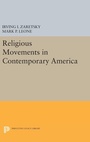
Irving I. Zaretsky | Mark P. Leone
Religious Movements in Contemporary America
Book
04/2016
Princeton University Press
€293.70
Article not available at the moment
Irving I. Zaretsky | Mark P. Leone
Religious Movements in Contemporary America
Book
03/2015
Princeton University Press
€109.20
Article not available at the moment

Irving I. Zaretsky | Mark P. Leone
Religious Movements in Contemporary America
Book
08/1977
Princeton University Press
€21.03
Article exhausted; check different version
Irving I. Zaretsky | Mark P. Leone
Religious Movements in Contemporary America
Book
02/1975
Princeton University Press
€108.94
Article exhausted; check different version
Persons
Irving I. Zaretsky & Mark P. Leone
Content
Frontmatter, pg. i
Contents, pg. vii
Preface, pg. x
INTRODUCTION. The Common Foundation of Religious Diversity, pg. xvii
INTRODUCTION, pg. 3
The Legitimation of Marginal Religions in the United States, pg. 9
"The Law Knows No Heresy": Marginal Religious Movements and the Courts, pg. 27
INTRODUCTION, pg. 53
Uncovering Ritual Structures in Afro-American Music, pg. 60
The Psychology of the Spiritual Sermon, pg. 135
Ritualization: A Study in Texture and Texture Change, pg. 150
In the Beginning Was the Word: The Relationship of Language to Social Organization in Spiritualist Churches, pg. 166
INTRODUCTION, pg. 223
Cross-Cultural Perspectives on the Religious Uses of Altered States of Consciousness, pg. 228
Prognosis: A New Religion?, pg. 244
Cocoon Work: An Interpretation of the Concern of Contemporary Youth with the Mystical, pg. 255
INTRODUCTION, pg. 275
Ritual, Release, and Orientation: Maintenance of the Self in the Antinomian Personality, pg. 283
Sectarianism and Psychosocial Adjustment: A Controlled Comparison of Puerto Rican Pentecostals and Catholics, pg. 298
Spiritualists and Shamans as Psychotherapists: An Account of Original Anthropological Sin, pg. 330
A Medium for Mental Health, pg. 338
Magical Therapy: An Anthropological Investigation of Contemporary Satanism, pg. 355
Belief, Ritual, and Healing: New England Spiritualism and Mexican-American Spiritism Compared, pg. 383
Ideological Support for the Marginal Middle Class: Faith Healing and Glossolalia, pg. 418
INTRODUCTION, pg. 459
The Hare Krishna Movement, pg. 463
The Meher Baba Movement: Its Affect on Post-Adolescent Social Alienation, pg. 479
INTRODUCTION, pg. 515
Latter-Day Sense and Substance, pg. 519
Reasonably Fantastic: Some Perspectives on Scientology, Science Fiction, and Occultism, pg. 547
INTRODUCTION, pg. 591
The Historical Study of Marginal American Religious Movements, pg. 596
Culture Crises and New Religious Movements: A Paradigmatic Statement of a Theory of Cults, pg. 612
Towards a Sociology of the Occult: Notes on Modern Witchcraft, pg. 628
The Deprivation and Disorganization Theories of Social Movements, pg. 646
INTRODUCTION, pg. 665
Pentecostalism: Revolution or Counter-Revolution?, pg. 669
"Publish" or Perish: Negro Jehovah's Witness Adaptation in the Ghetto, pg. 700
The Economic Basis for the Evolution of Mormon Religion, pg. 722
CONCLUSION. Perspectives for Future Research, pg. 767
BIBLIOGRAPHY, pg. 771
CONTRIBUTORS, pg. 815
INDEX, pg. 823
Contents, pg. vii
Preface, pg. x
INTRODUCTION. The Common Foundation of Religious Diversity, pg. xvii
INTRODUCTION, pg. 3
The Legitimation of Marginal Religions in the United States, pg. 9
"The Law Knows No Heresy": Marginal Religious Movements and the Courts, pg. 27
INTRODUCTION, pg. 53
Uncovering Ritual Structures in Afro-American Music, pg. 60
The Psychology of the Spiritual Sermon, pg. 135
Ritualization: A Study in Texture and Texture Change, pg. 150
In the Beginning Was the Word: The Relationship of Language to Social Organization in Spiritualist Churches, pg. 166
INTRODUCTION, pg. 223
Cross-Cultural Perspectives on the Religious Uses of Altered States of Consciousness, pg. 228
Prognosis: A New Religion?, pg. 244
Cocoon Work: An Interpretation of the Concern of Contemporary Youth with the Mystical, pg. 255
INTRODUCTION, pg. 275
Ritual, Release, and Orientation: Maintenance of the Self in the Antinomian Personality, pg. 283
Sectarianism and Psychosocial Adjustment: A Controlled Comparison of Puerto Rican Pentecostals and Catholics, pg. 298
Spiritualists and Shamans as Psychotherapists: An Account of Original Anthropological Sin, pg. 330
A Medium for Mental Health, pg. 338
Magical Therapy: An Anthropological Investigation of Contemporary Satanism, pg. 355
Belief, Ritual, and Healing: New England Spiritualism and Mexican-American Spiritism Compared, pg. 383
Ideological Support for the Marginal Middle Class: Faith Healing and Glossolalia, pg. 418
INTRODUCTION, pg. 459
The Hare Krishna Movement, pg. 463
The Meher Baba Movement: Its Affect on Post-Adolescent Social Alienation, pg. 479
INTRODUCTION, pg. 515
Latter-Day Sense and Substance, pg. 519
Reasonably Fantastic: Some Perspectives on Scientology, Science Fiction, and Occultism, pg. 547
INTRODUCTION, pg. 591
The Historical Study of Marginal American Religious Movements, pg. 596
Culture Crises and New Religious Movements: A Paradigmatic Statement of a Theory of Cults, pg. 612
Towards a Sociology of the Occult: Notes on Modern Witchcraft, pg. 628
The Deprivation and Disorganization Theories of Social Movements, pg. 646
INTRODUCTION, pg. 665
Pentecostalism: Revolution or Counter-Revolution?, pg. 669
"Publish" or Perish: Negro Jehovah's Witness Adaptation in the Ghetto, pg. 700
The Economic Basis for the Evolution of Mormon Religion, pg. 722
CONCLUSION. Perspectives for Future Research, pg. 767
BIBLIOGRAPHY, pg. 771
CONTRIBUTORS, pg. 815
INDEX, pg. 823
