

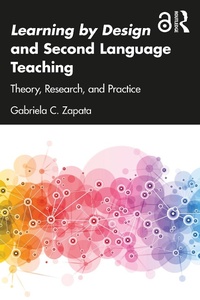
Learning by Design and Second Language Teaching
Theory, Research, and Practice
1st Edition
Published on 20. April 2022
186 pages
978-1-000-59603-8 (ISBN)
Description

Learning by Design and Second Language Teaching establishes theoretical, research, and practice connections between the multiliteracies framework Learning by Design and L2 teaching and learning.
A comprehensive introductory chapter presents the theoretical tenets of the approach and is followed by four chapters devoted to the establishment of connections between the framework and L2 instruction, information on evidence-based pedagogical practices and suggestions for their implementation, and task examples that can be adapted for use in a variety of educational contexts. Each chapter links theory and research to practical steps instructors can take to select authentic materials and create tasks in each of the framework's knowledge processes with the objective of developing L2 students' performance in the interpersonal (speaking), interpretive (reading and listening), and presentational (writing) modes of communication. A selection of guidance charts, figures, templates, and extra digital resources are included within the text to support learning and teaching.
The book will be of interest to graduate students and in-service and future L2 teachers in all levels of instruction.
Chapter 1, Chapter 2 and Chapter 3 of this book are freely available as a downloadable Open Access PDF under a Creative Commons Attribution-Non Commercial-No Derivatives 4.0 license available at http://www.taylorfrancis.com.
A comprehensive introductory chapter presents the theoretical tenets of the approach and is followed by four chapters devoted to the establishment of connections between the framework and L2 instruction, information on evidence-based pedagogical practices and suggestions for their implementation, and task examples that can be adapted for use in a variety of educational contexts. Each chapter links theory and research to practical steps instructors can take to select authentic materials and create tasks in each of the framework's knowledge processes with the objective of developing L2 students' performance in the interpersonal (speaking), interpretive (reading and listening), and presentational (writing) modes of communication. A selection of guidance charts, figures, templates, and extra digital resources are included within the text to support learning and teaching.
The book will be of interest to graduate students and in-service and future L2 teachers in all levels of instruction.
Chapter 1, Chapter 2 and Chapter 3 of this book are freely available as a downloadable Open Access PDF under a Creative Commons Attribution-Non Commercial-No Derivatives 4.0 license available at http://www.taylorfrancis.com.
More details
Series
Edition
1. Auflage
Language
English
Place of publication
London
United Kingdom
Publishing group
Taylor & Francis Ltd
Target group
Professional and scholarly
Product notice
Reflowable
Illustrations
14 Tables, black and white; 4 Line drawings, color; 3 Line drawings, black and white; 1 Halftones, black and white; 8 Illustrations, black and white
File size
1,57 MB
ISBN-13
978-1-000-59603-8 (9781000596038)
Copyright in bibliographic data and cover images is held by Nielsen Book Services Limited or by the publishers or by their respective licensors: all rights reserved.
Schweitzer Classification
Other editions
Additional editions
Book
04/2022
1st Edition
Routledge
€219.90
Shipment within 15-20 days
Book
04/2022
1st Edition
Routledge
€75.10
Shipment within 15-20 days
Person
Gabriela C. Zapata was born in Rosario, Argentina. She received her MA in TESOL and PhD in Spanish (Linguistics track) from The Pennsylvania State University. She is Professor of Hispanic Linguistics in the Department of Hispanic Studies at Texas A&M University. Dr. Zapata's research foci are Learning by Design and second (L2) and heritage language (HL) pedagogy, multimodal social semiotics, and teacher education. She is also involved in the development and implementation of inclusive open educational resources for the teaching of Spanish as a L2 and HL and Spanish for the Professions.
Content
List of Figures
List of Tables
Preface
Chapter 1: Introduction to Learning by Design
Learning by Design: Theoretical and Pedagogical Bases
Learning by Design: Principles and Components
Learning by Design: Knowledge Processes
Experiencing
Conceptualizing
Analyzing
Applying
Learning by Design: Recent theoretical developments
Summary
References
Chapter 2: Learning by Design and Second Language Education
Second Language Teaching and Learning in Today's World: Frameworks, Perspectives, and Foci
Learning by Design and Second Language Teaching and Learning
Summary
References
Chapter 3: Learning by Design and Second Language Teaching Practices
Learning by Design's Reflexive Pedagogy
Second Language Instruction Based on Universal Design for Learning and Learning by Design
I. Pedagogical Planning
II. Instructional Moves
Everyday Practices for Second Language Instruction Grounded in Learning by Design
I. Presentation of Learning by Design's Knowledge Processes
II. Instructional Objectives
III. Collaborative Learning
IV. Checkpoints and Assessment
Summary
References
Chapter 4: Genre- and Project-Based Instruction Grounded in Learning by Design
Genre-Based Instruction
Project-Based Learning
Summary
References
Chapter 5: Sample Second Language Tasks Grounded in Learning by Design
1. Community Development: Talk to an Expert
2. Endangered, Threatened, or Vulnerable Flora and Fauna: Expository Texts and Infographics
3. Fan Fiction
4. Identity Texts
Other Formats
Graphic Novels/Comics
Identity Blogs
Drama-Based Identity Texts
Related Topics
My Nepantla
My People, My Histories, My Future
5. Media Collection (Critical Analysis)
Memes
6. Multimodal Stories
7. Podcasts and Vodcasts
8. Recipes and Other Procedural Texts
9. School Brochures
Final Recommendations
Summary
References
Acknowledgement
Appendix A: Template Questions and Foci for the Analysis of Multimodal Texts
Appendix B: Recommended Websites and Digital Tools
Appendix C: Multimodal Product Assessment
Index
List of Tables
Preface
Chapter 1: Introduction to Learning by Design
Learning by Design: Theoretical and Pedagogical Bases
Learning by Design: Principles and Components
Learning by Design: Knowledge Processes
Experiencing
Conceptualizing
Analyzing
Applying
Learning by Design: Recent theoretical developments
Summary
References
Chapter 2: Learning by Design and Second Language Education
Second Language Teaching and Learning in Today's World: Frameworks, Perspectives, and Foci
Learning by Design and Second Language Teaching and Learning
Summary
References
Chapter 3: Learning by Design and Second Language Teaching Practices
Learning by Design's Reflexive Pedagogy
Second Language Instruction Based on Universal Design for Learning and Learning by Design
I. Pedagogical Planning
II. Instructional Moves
Everyday Practices for Second Language Instruction Grounded in Learning by Design
I. Presentation of Learning by Design's Knowledge Processes
II. Instructional Objectives
III. Collaborative Learning
IV. Checkpoints and Assessment
Summary
References
Chapter 4: Genre- and Project-Based Instruction Grounded in Learning by Design
Genre-Based Instruction
Project-Based Learning
Summary
References
Chapter 5: Sample Second Language Tasks Grounded in Learning by Design
1. Community Development: Talk to an Expert
2. Endangered, Threatened, or Vulnerable Flora and Fauna: Expository Texts and Infographics
3. Fan Fiction
4. Identity Texts
Other Formats
Graphic Novels/Comics
Identity Blogs
Drama-Based Identity Texts
Related Topics
My Nepantla
My People, My Histories, My Future
5. Media Collection (Critical Analysis)
Memes
6. Multimodal Stories
7. Podcasts and Vodcasts
8. Recipes and Other Procedural Texts
9. School Brochures
Final Recommendations
Summary
References
Acknowledgement
Appendix A: Template Questions and Foci for the Analysis of Multimodal Texts
Appendix B: Recommended Websites and Digital Tools
Appendix C: Multimodal Product Assessment
Index
