

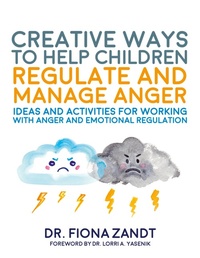
Creative Ways to Help Children Regulate and Manage Anger
Ideas and Activities for Working with Anger and Emotional Regulation
Published on 21. May 2024
224 pages
978-1-83997-557-8 (ISBN)
Description

Support children to better understand and navigate anger with this practical guide of therapeutic activities. From the author of Creative Ways to Help Children Manage BIG Feelings, this book contains all new material and 50 new activities to equip children with emotional regulation strategies.
Grounded in theory and research around anger in children, the activities include clear therapeutic rationales for practitioners, considerations for older and younger children, suggestions for the inclusion of parents and carers, and adaptations for online practice. With creative resources using readily available, inexpensive materials and downloadable templates, this is the ideal companion for both new and experienced therapists working with children aged 4-12.
Grounded in theory and research around anger in children, the activities include clear therapeutic rationales for practitioners, considerations for older and younger children, suggestions for the inclusion of parents and carers, and adaptations for online practice. With creative resources using readily available, inexpensive materials and downloadable templates, this is the ideal companion for both new and experienced therapists working with children aged 4-12.
More details
Series
Edition
Digital original
Language
English
Place of publication
London
United Kingdom
Target group
Professional and scholarly
Edition type
Digital original
Illustrations
13 B&W line drawings
ISBN-13
978-1-83997-557-8 (9781839975578)
Copyright in bibliographic data and cover images is held by Nielsen Book Services Limited or by the publishers or by their respective licensors: all rights reserved.
Schweitzer Classification
Other editions
Additional editions
Fiona Zandt
Creative Ways to Help Children Regulate and Manage Anger
Ideas and Activities for Working with Anger and Emotional Regulation
Book
05/2024
Jessica Kingsley Publishers
€35.00
Shipment within 3-4 weeks
Persons
Fiona Zandt (Author)
Fiona Zandt is a Clinical Psychologist and co-founder of Creative Child Therapy Workshops. Together with Suzanne Barrett, she runs workshops and provides online training to child therapists. Fiona also has a successful private practice and is Senior Clinical Psychologist at the Royal Children's Hospital in Melbourne, Australia.
Fiona Zandt is a Clinical Psychologist and co-founder of Creative Child Therapy Workshops. Together with Suzanne Barrett, she runs workshops and provides online training to child therapists. Fiona also has a successful private practice and is Senior Clinical Psychologist at the Royal Children's Hospital in Melbourne, Australia.
Content
- Intro
- Creative Ways to Help Children Regulate and Manage Anger
- Cover
- Of related interest
- Title Page
- Copyright
- Contents
- Foreword
- Acknowledgements
- Preface
- 1. Before You Start
- Why anger arises
- Anger and the development of regulation
- The neuroscience of regulation
- Regulation and the therapeutic relationship
- Anger and diagnosis
- Theoretical frameworks and evidence base
- On language
- Knowing your own feelings about anger
- Regulation for therapists
- The role of play and using playful activities
- The importance of grownups
- Finding new paths
- 2. First Sessions
- Finding the balance
- First sessions with children
- Setting up the space for children
- Assessing a child's emotional awareness and regulation skills
- Assessing coping and calming
- First sessions with grownups
- Exploring grownups' own experiences of anger
- Understanding grownups' responses and reflective capacity
- General family functioning
- Openness to different ideas
- Keeping first sessions play-based
- Activities for the first sessions
- My anger is.
- What's bugging you?
- The shape of my anger
- Rainbow pom-pom feelings
- Angry puppet stories
- Bang it out
- Inside and outside elastics jump
- Inside and outside noticing dice
- 3. Moving into Therapy
- Making sense of it all and coming up with a plan
- Working in a way that fits for the child and family
- Understanding what the child needs
- Understanding what the grownups need
- Goal-setting and treatment planning
- Tracking progress through ongoing assessment
- 4. Calming the Body
- Developing calming and self-soothing routines
- Calming in sessions
- Calming and coping strategies for day-to-day life
- Increasing calming strategies
- Activities for calming the body
- Pit stops
- Calming animal shapes
- Taking your emotional temperature
- Breathing sensory bag
- I'm on your team
- CALM for you, CALM for me
- My magic bag
- Umbrellas for angry moments
- 5. Understanding and Expressing Anger
- What we want children to understand about anger
- Handout: Understanding anger
- Recognizing anger
- Recognizing how stretched the child is and seeing the build-up
- Noticing body signs
- Understanding the feelings underneath anger
- Remembering that anger will pass
- Recognizing patterns
- When anger doesn't come into the room
- Activities that help children notice and name anger
- My anger song
- Splat anger
- Getting in the tank
- Tunnelling through the feeling
- Angry balloon feelings
- Kindness binoculars
- Sitting with all my feelings
- How stretched are you today?
- Magnifying feelings
- Unsafe animals
- Understanding anger dice game
- Different feeling parts
- Baby babushka feelings
- Seeing the other feelings in my anger
- Clouds of anger
- The washing machine
- Spinning anger
- See it differently
- Who's that knocking?
- Getting comfortable with uncomfortable feelings and thoughts
- 6. Responding to Anger in the Room and Supporting Grownups to Respond
- Responding to anger in sessions
- Setting limits in therapy and helping grownups to do so
- Helping grownups to regulate their children using HOLDS
- H is for Having a moment to connect with your own feelings and look after yourself
- O is for Organizing the child's feelings, as well as the situation
- L is for Looking for the feelings underneath
- D is for Doing the things that are regulating
- S is for Speaking after the child and grownup are regulated
- Considerations when using this model
- When grownups don't get it right
- When therapists need to use HOLDS
- Activities to support families with regulation
- Handout: HOLDS for your child
- Talk, don't talk
- Rupture and repair with Play-Doh
- 7. Thinking About Anger
- How and when to use cognitive strategies
- Helpful concepts around thoughts
- Problem-solving
- P is for Pausing and taking a breath
- I is for thinking of an Idea to try and giving it a go
- K is for Keep going for long enough to see if it works
- S is for Stop and try something else if need be
- Activities for helping children think about anger
- Handout: Problem-solving for kids
- Lucky dip choices
- Different roads
- Problem-solving puppets
- Anger word match
- Sticky thoughts with sticky tape
- Thinking and feeling brain hats
- In and out of my hands with anger
- 8. Choosing and Doing What Is Important
- Choosing and doing what is important for children
- And for grownups
- Activities that help children and grownups choose and do what is important
- Heading toward what is important
- Holding on to what is important
- Route recalculation
- Toward ladders and away from snakes
- 9. When Things Get Tricky
- Developing a plan
- Legal and ethical responsibilities
- A word about working online
- 10. Dealing with Common Triggers
- Activities that address common triggers for anger
- Changing plans with Connect 4
- Slimy messy mistakes
- Holding on to the shoulds
- Final Thoughts
- References
