

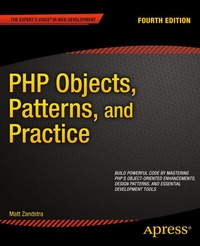
PHP Objects, Patterns, and Practice
4th Edition
Published on 21. January 2014
XXII, 488 pages
978-1-4302-6032-5 (ISBN)
Description

PHP Objects Patterns and Practice, Fourth Edition is revised and updated throughout. The book begins by covering PHP's object-oriented features. It introduces key topics including class declaration, inheritance, reflection and much more. These provide the fundamentals of the PHP's support for objects. It also introduces some principles of design. This edition introduces new object relevant features such as traits, reflection extension additions, callable type hinting, improvements to exception handling, and many smaller language enhancements. The next section is devoted to design patterns. These describe common problems and their solutions. The section describes the design principles that make patterns powerful. It covers many of the classic design patterns and includes chapters on enterprise and database patterns. The last segment of the book covers the tools and practices that can help turn great code into a successful project. The section shows how to manage multiple developers and releases with git, how to build and install using Phing and PEAR. It also explores strategies for automated testing and build. In addition to discussing the latest developments in build, test, and continuous integration, this section keeps pace with best practice in version control by focusing on Git, increasingly the developer's system of choice. Taken together these three elements: object fundamentals, design principles, and best practice will help the reader develop elegant and rock solid systems. PHP Objects and Patterns: Describes and demonstrates PHP's built-in object-oriented features Breaks down the principles of object-oriented design, explaining key design patterns using practical examples. Discusses the tools and practices necessary for developing, testing and deploying exemplary applications.
More details
Other editions
New editions

Matt Zandstra
PHP Objects, Patterns, and Practice
E-Book
12/2016
5th Edition
APress
€66.99
Available for download
Additional editions
Matt Zandstra
PHP Objects, Patterns, and Practice
Book
11/2013
4th Edition
Apress
€44.89
Article exhausted; check for reprint
Previous edition
Matt Zandstra
PHP Objects, Patterns, and Practice
E-Book
04/2008
2nd Edition
APress
€39.58
Available for download
Person
Matt Zandstra has worked as a web programmer, consultant, and writer for nearly two decades. He is the author of SAMS Teach Yourself PHP in 24 Hours (three editions) and a contributor to DHTML Unleashed. He has written articles for Linux Magazine, Zend.com, IBM DeveloperWorks, and php|architect Magazine, among others. Matt works as a consultant advising companies on their architectures and system management, and also develops systems primarily with PHP, and Java. Matt also writes fiction.
Content
- Intro
- Contents at a Glance
- Contents
- About the Author
- About the Technical Reviewer
- Acknowledgments
- Introduction
- Chapter 1: PHP: Design and Management
- The Problem
- PHP and Other Languages
- About This Book
- Objects
- Patterns
- Practice
- What's New in the Fourth Edition
- Summary
- Chapter 2: Objects
- The Accidental Success of PHP Objects
- In the Beginning: PHP/FI
- Syntactic Sugar: PHP 3
- PHP 4 and the Quiet Revolution
- Change Embraced: PHP 5
- Advocacy and Agnosticism: The Object Debate
- Summary
- Chapter 3: Object Basics
- Classes and Objects
- A First Class
- A First Object (or Two)
- Setting Properties in a Class
- Working with Methods
- Creating a Constructor Method
- Arguments and Types
- Primitive Types
- Primitive Types Matter: An Example
- Taking the Hint: Object Types
- Inheritance
- The Inheritance Problem
- Working with Inheritance
- Constructors and Inheritance
- Invoking an Overridden Method
- Public, Private, and Protected: Managing Access to Your Classes
- Accessor Methods
- The ShopProduct Classes
- Summary
- Chapter 4: Advanced Features
- Static Methods and Properties
- Constant Properties
- Abstract Classes
- Interfaces
- Traits
- A Problem for Traits to Solve
- Defining and Using a Trait
- Using More than One Trait
- Combining Traits and Interfaces
- Managing Method Name Conflicts with insteadof
- Aliasing overridden trait methods
- Using static methods in traits
- Accessing Host Class Properties
- Defining Abstract Methods in Traits
- Changing Access Rights to Trait Methods
- Late Static Bindings: The static Keyword
- Handling Errors
- Exceptions
- Throwing an Exception
- Subclassing Exception
- Cleaning up after try / catch Clauses with finally
- Final Classes and Methods
- Working with Interceptors
- Defining Destructor Methods
- Copying Objects with __clone( )
- Defining String Values for Your Objects
- Callbacks, Anonymous Functions and Closures
- Summary
- Chapter 5: Object Tools
- PHP and Packages
- PHP Packages and Namespaces
- Namespaces to the Rescue
- Using the File System to Simulate Packages
- Naming the PEAR Way
- Include Paths
- Autoload
- The Class and Object Functions
- Looking for Classes
- Learning About an Object or Class
- Getting a Fully Qualified String Reference to a Class
- Learning About Methods
- Learning About Properties
- Learning About Inheritance
- Method Invocation
- The Reflection API
- Getting Started
- Time to Roll Up Your Sleeves
- Examining a Class
- Examining Methods
- Examining Method Arguments
- Using the Reflection API
- Summary
- Chapter 6: Objects and Design
- Defining Code Design
- Object-Oriented and Procedural Programming
- Responsibility
- Cohesion
- Coupling
- Orthogonality
- Choosing Your Classes
- Polymorphism
- Encapsulation
- Forget How to Do It
- Four Signposts
- Code Duplication
- The Class Who Knew Too Much
- The Jack of All Trades
- Conditional Statements
- The UML
- Class Diagrams
- Representing Classes
- Attributes
- Operations
- Describing Inheritance and Implementation
- Associations
- Aggregation and Composition
- Describing Use
- Using Notes
- Sequence Diagrams
- Summary
- Chapter 7: What Are Design Patterns? Why Use Them?
- What Are Design Patterns?
- A Design Pattern Overview
- Name
- The Problem
- The Solution
- Consequences
- The Gang of Four Format
- Why Use Design Patterns?
- A Design Pattern Defines a Problem
- A Design Pattern Defines a Solution
- Design Patterns Are Language Independent
- Patterns Define a Vocabulary
- Patterns Are Tried and Tested
- Patterns Are Designed for Collaboration
- Design Patterns Promote Good Design
- Design Patterns are Used By Popular Frameworks
- PHP and Design Patterns
- Summary
- Chapter 8: Some Pattern Principles
- The Pattern Revelation
- Composition and Inheritance
- The Problem
- Using Composition
- Decoupling
- The Problem
- Loosening Your Coupling
- Code to an Interface, Not to an Implementation
- The Concept That Varies
- Patternitis
- The Patterns
- Patterns for Generating Objects
- Patterns for Organizing Objects and Classes
- Task-Oriented Patterns
- Enterprise Patterns
- Database Patterns
- Summary
- Chapter 9: Generating Objects
- Problems and Solutions in Generating Objects
- The Singleton Pattern
- The Problem
- Implementation
- Consequences
- Factory Method Pattern
- The Problem
- Implementation
- Consequences
- Abstract Factory Pattern
- The Problem
- Implementation
- Consequences
- Prototype
- The Problem
- Implementation
- But That's Cheating!
- Summary
- Chapter 10: Patterns for Flexible Object Programming
- Structuring Classes to Allow Flexible Objects
- The Composite Pattern
- The Problem
- Implementation
- Consequences
- Composite in Summary
- The Decorator Pattern
- The Problem
- Implementation
- Consequences
- The Facade Pattern
- The Problem
- Implementation
- Consequences
- Summary
- Chapter 11: Performing and Representing Tasks
- The Interpreter Pattern
- The Problem
- Implementation
- Interpreter Issues
- The Strategy Pattern
- The Problem
- Implementation
- The Observer Pattern
- Implementation
- The Visitor Pattern
- The Problem
- Implementation
- Visitor Issues
- The Command Pattern
- The Problem
- Implementation
- Summary
- Chapter 12: Enterprise Patterns
- Architecture Overview
- The Patterns
- Applications and Layers
- Cheating Before We Start
- Registry
- The Problem
- Implementation
- Registry, Scope, and PHP
- Consequences
- The Presentation Layer
- Front Controller
- The Problem
- Implementation
- ApplicationHelper
- CommandResolver
- Request
- A Command
- Overview
- Consequences
- Application Controller
- The Problem
- Implementation
- The Front Controller
- Implementation Overview
- The Configuration File
- Parsing the Configuration File
- Storing the Configuration Data
- The Command Class
- A Concrete Command
- Consequences
- Page Controller
- The Problem
- Implementation
- Consequences
- Template View and View Helper
- The Problem
- Implementation
- Consequences
- The Business Logic Layer
- Transaction Script
- The Problem
- Implementation
- Consequences
- Domain Model
- The Problem
- Implementation
- Consequences
- Summary
- Chapter 13: Database Patterns
- The Data Layer
- Data Mapper
- The Problem
- Implementation
- Handling Multiple Rows
- Using a Generator in Place of the Iterator Interface
- Acquiring Collection objects
- Consequences
- Identity Map
- The Problem
- Implementation
- Consequences
- Unit of Work
- The Problem
- Implementation
- Consequences
- Lazy Load
- The Problem
- Implementation
- Consequences
- Domain Object Factory
- The Problem
- Implementation
- Consequences
- The Identity Object
- The Problem
- Implementation
- Consequences
- The Selection Factory and Update Factory Patterns
- The Problem
- Implementation
- Consequences
- What's Left of Data Mapper Now?
- Summary
- Chapter 14: Good (and Bad) Practice
- Beyond Code
- Borrowing a Wheel
- Playing Nice
- Giving Your Code Wings
- Documentation
- Testing
- Continuous Integration
- Summary
- Chapter 15: An Introduction to PEAR and Pyrus
- What Is PEAR ?
- Phar Out with Pyrus
- Installing a Package
- PEAR Channels
- Using a PEAR Package
- Handling PEAR Errors
- Creating Your Own PEAR Package
- package.xml
- Package Elements
- The contents Element
- Dependencies
- Tweaking Installation with phprelease
- Preparing a Package for Shipment
- Setting Up Your Own Channel
- Adding a Package to a Channel
- Summary
- Chapter 16: Generating Documentation with phpDocumentor
- Why Document?
- Installation
- Generating Documentation
- DocBlock Comments
- Documenting Classes
- File-Level Documentation
- Documenting Properties
- Documenting Methods
- Namespace support
- Creating Links in Documentation
- Summary
- Chapter 17: Version Control with Git
- Why Use Version Control ?
- Getting Git
- Configuring a Git Server
- Creating the Remote Repository
- Preparing the Repository for Local Users
- Providing Access to Users
- Closing Down Shell Access for the git User
- Beginning a Project
- Cloning the Repository
- Updating and Committing
- Adding and Removing Files and Directories
- Adding a File
- Removing a File
- Adding a Directory
- Removing Directories
- Tagging a Release
- Branching a Project
- Summary
- Chapter 18: Testing with PHPUnit
- Functional Tests and Unit Tests
- Testing by Hand
- Introducing PHPUnit
- Creating a Test Case
- Assertion Methods
- Testing Exceptions
- Running Test Suites
- Constraints
- Mocks and Stubs
- Tests Succeed When They Fail
- Writing Web Tests
- Refactoring a Web Application for Testing
- Simple Web Testing
- Introducing Selenium
- Getting Selenium
- PHPUnit and Selenium
- Introducing php-webdriver
- Creating the Test Skeleton
- Connecting to Selenium
- Writing the Test
- A Note of Caution
- Summary
- Chapter 19: Automated Build with Phing
- What Is Phing?
- Getting and Installing Phing
- Composing the Build Document
- Targets
- Properties
- Conditionally Setting Property Values with the Condition task
- Types
- FileSet
- PatternSet
- FilterChain
- Tasks
- Echo
- Copy
- Input
- Delete
- Summary
- Chapter 20: Continuous Integration
- What Is Continuous Integration?
- Preparing a Project for CI
- CI and Version Control
- Phing
- Unit Tests
- Documentation
- Code Coverage
- Coding Standards
- Building a package
- Jenkins
- Installing Jenkins
- Installing Jenkins Plugins
- Setting up the Git Public Key
- Installing a Project
- Running the First Build
- Configuring the Reports
- Triggering Builds
- Test Failures
- Summary
- Chapter 21: Objects, Patterns, Practice
- Objects
- Choice
- Encapsulation and Delegation
- Decoupling
- Reusability
- Aesthetics
- Patterns
- What Patterns Buy Us
- Tried and Tested
- Patterns Suggest Other Patterns
- A Common Vocabulary
- Patterns Promote Design
- Patterns and Principles of Design
- Favor Composition over Inheritance
- Avoid Tight Coupling
- Code to an Interface, Not an Implementation
- Encapsulate the Concept That Varies
- Practice
- Testing
- Documentation
- Version Control
- Automated Build
- Continuous Integration
- What I Missed
- Summary
- Appendix A: Bibliography
- Books
- Articles
- Sites
- Appendix B: A Simple Parser
- The Scanner
- The Parser
- Index
