


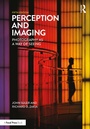
Perception and Imaging
Photography as a Way of Seeing
5th Edition
Published on 23. October 2017
466 pages
978-1-315-45096-4 (ISBN)
Description

When you look at an image, what do you see and feel? What do you want your audience to see and feel when they view your work? For over thirty years, Dr. Richard Zakia helped thousands of photographers hone in on their creative vision through the inspirational, informative text and images included in his classic book, Perception and Imaging.
More than a step-by-step photography instruction manual, Perception and Imaging explores the fundamental act of photography - seeing - through a uniquely comprehensive combination of technique, history, visual perception, philosophy and psychology. No matter your level of technical skill, you can learn to think more clearly about what you wish to convey in your images.
Fully revised to account for the unique influences and consequences of the digital revolution and online photosharing, John Suler newly addresses digital impermanence, sensory and cognitive overload, and the selfie, and their effects on perception. Additional coverage also includes microexpressions, Rorschach inkblots and subliminal reactions, transference, and synectics.
More than a step-by-step photography instruction manual, Perception and Imaging explores the fundamental act of photography - seeing - through a uniquely comprehensive combination of technique, history, visual perception, philosophy and psychology. No matter your level of technical skill, you can learn to think more clearly about what you wish to convey in your images.
Fully revised to account for the unique influences and consequences of the digital revolution and online photosharing, John Suler newly addresses digital impermanence, sensory and cognitive overload, and the selfie, and their effects on perception. Additional coverage also includes microexpressions, Rorschach inkblots and subliminal reactions, transference, and synectics.
More details
Edition
5th edition
Language
English
Place of publication
London
United Kingdom
Publishing group
Taylor & Francis Ltd
Target group
College/higher education
Illustrations
250 farbige Abbildungen
250 Illustrations, color
File size
38,68 MB
ISBN-13
978-1-315-45096-4 (9781315450964)
Copyright in bibliographic data and cover images is held by Nielsen Book Services Limited or by the publishers or by their respective licensors: all rights reserved.
Schweitzer Classification
Other editions
Additional editions
Book
11/2017
5th Edition
Routledge
€76.00
Shipment within 10-20 days
Book
09/2017
5th Edition
Routledge
€260.34
Shipment within 10-20 days
Persons
John Suler is a Professor of Psychology at Rider University, and the department specialist in psychotherapy and psychopathology. His teaching and research interests include psychoanalytic and humanistic theory and the psychology of cyberspace, in which he has published multiple books. He is a consulting editor for Cyberpsychology and Behavior, the Journal of Virtual Environments, and Behavior Online.
Dr. Richard D. Zakia, Ed.D., Professor Emeritus at Rochester Institute of Technology, taught in many areas of photography and served as the chair of the Fine Art Photography Department and Graduate Program in Imaging Arts. He was the recipient of the Eisenhart Outstanding Teaching Award and the author/co-author of twelve books on photography, including The Focal Encyclopedia of Photography, Teaching Photography, Photographic Composition: A Visual Guide, and his final book, the 4th edition of Perception and Imaging.
Dr. Richard D. Zakia, Ed.D., Professor Emeritus at Rochester Institute of Technology, taught in many areas of photography and served as the chair of the Fine Art Photography Department and Graduate Program in Imaging Arts. He was the recipient of the Eisenhart Outstanding Teaching Award and the author/co-author of twelve books on photography, including The Focal Encyclopedia of Photography, Teaching Photography, Photographic Composition: A Visual Guide, and his final book, the 4th edition of Perception and Imaging.
Content
1. Selection
2. Gestalt Grouping
3. Memory and Association
4. Space and Time
5. Color
6. Contours
7. Illusion and Ambiguity
8. Morphics
9. Subliminals
10. Rhetoric
11. Personality
12. Critiquing Photographs
2. Gestalt Grouping
3. Memory and Association
4. Space and Time
5. Color
6. Contours
7. Illusion and Ambiguity
8. Morphics
9. Subliminals
10. Rhetoric
11. Personality
12. Critiquing Photographs
