

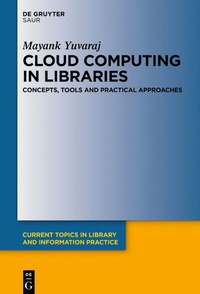
Cloud Computing in Libraries
Description

Cloud computing is a model where computing resources (processors, storage, software) are offered as a utility from an indistinct location and boundaries to the user. Adoption of Cloud computing in recent years has gained momentum within various avenues round the globe due to its characteristics like elasticity, virtualization and pay-as-you-go pricing. In tune with the trend various companies have evolved which are offering web applications. These companies provide the system required to host the application to users on lease which saves them from purchasing.
The book combines both theoretical and practical perspectives of cloud computing with a slant towards library and information centres. The book describes in detail about various companies which are providing cloud computing solutions and infrastructure for library and information centres. Intiatives of OCLC and best practices adopted in other libraries around the world has been discussed at length. Many avenues of the implementation of cloud computing has been identified in the present study. Various initiatives of the library professionals to move their internet sites, their integrated library system for cataloguing and acquisition, Cloud based library apps, Cloud based Stack Map and their repository systems and inter library loan systems to the cloud has been mentioned. The book further proposes a model which may serve as a blueprint for implementation of cloud computing technologies in libraries. With the timely publication of book, library and information service practitioners after going through the book can outsource the task of maintaining the computer infrastructure and focus on their mission to serve people with right information at right point of time.
More details
Other editions
Additional editions
Person
Mayank Yuvaraj , Assistant Librarian, Central University of South Bihar, Patna, India.
Content
- Intro
- Preface
- Acknowledgement
- Contents
- List of Figures
- List of Tables
- List of Abbreviations
- Introduction
- Chapter 1 Origin and Development of Cloud Computing
- Chapter 2 Cloud Computing: Models, Process, and Components
- Chapter 3 Cloud Computing Resources and Tools
- Chapter 4 Cloud Computing: Advantages, Disadvantages, and Success
- Chapter 5 Cloud Computing and Librarianship
- Chapter 6 Cloud Computing in LIS Education
- Chapter 7 Cloud Computing in Libraries: a Global Survey
- Chapter 8 Cloud Computing in Libraries: Tutorials
- Index
