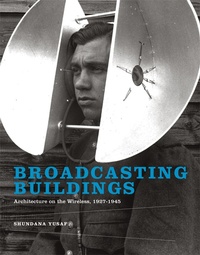
Broadcasting Buildings
Description

In the years between the world wars, millions of people heard the world through a box on the dresser. In Britain, radio listeners relied on the British Broadcasting Corporation for information on everything from interior decoration to Hitler's rise to power. One subject covered regularly on the wireless was architecture and the built environment. Between 1927 and 1945, the BBC aired more than six hundred programs on this topic, published a similar number of articles in its magazine, The Listener, and sponsored several traveling exhibitions. In this book, Shundana Yusaf examines the ways that broadcasting placed architecture at the heart of debates on democracy.
Undaunted by the challenge of talking about space and place in disembodied voices over a nonvisual medium, designers and critics turned the wireless into an arena for debates about the definitions of the architect and architecture, the difficulties of town and country planning after the breakup of large country estates, the financing of the luxury market, the expansion of local governing power, and tourism. Yusaf argues that while broadcast technology made a decisive break with the Victorian world, these broadcasts reflected the BBC's desire to continue the legacy of Victorian institutions dedicated to the production of a cultivated polity. Under the leadership of John Reith, the BBC introduced listeners to the higher pleasures of life hoping to deepen their respect for tradition, the authority of the state, and national interests. These ambitions influenced the way architecture was portrayed on the air. Yusaf finds that the wireless evoked historic architecture only in travelogues and contemporary design mainly in shopping advice. The BBC's architectural programming, she argues, offered a paradoxical interface between the placelessness of radio and the situatedness of architecture, between the mechanical or nonhumanistic impulses of technology and the humanist conception of architecture.
More details
Other editions
Additional editions