

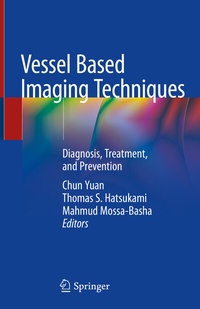
Vessel Based Imaging Techniques
Description

Reviews / Votes
More details
Other editions
Additional editions
Persons
Chun Yuan, PhD is Professor of Radiology and Bioengineering, Vice Chair of Global Affairs, and Co-Director of the Vascular Imaging Research Laboratory at the University of Washington.
Thomas Hatsukami, MD is Professor of Surgery, V. Paul Gavora and Helen S. and John A. Schilling Endowed Chair in Vascular Surgery, and Co-Director of the Vascular Imaging Research Laboratory at the University of Washington.
Mahmud Mossa-Basha, MD is associate professor and vice chair of clinical operations of radiology at the university of Washington.
Content
Part 1: Intracranial.- Vascular Dysfunction and Neurodegenerative Disease.- Current Imaging Approaches and Challenges in the Assessment of the Intracranial Vasculature.- Advanced Intracranial Vessel Wall Imaging and Future Directions.- Part 2: Carotid.- Atherosclerosis of the Carotid Artery.- Current Imaging Approaches and Challenges in the Assessment of Carotid Artery Disease.- Advanced Carotid Vessel Wall Imaging and Future Directions.- Part 3: PAD.- Peripheral Artery Disease: An Overview.- Current Imaging Approaches and Challenges in the Assessment of Peripheral Artery Disease.- Advanced Peripheral Artery Vessel Wall Imaging and Future Directions.- Part 4: Aorta.- Imaging Approaches for Aortic Disease.- Part 5: Coronary.- Pathophysiology of Coronary Artery Disease.- Current Imaging Approaches and Challenges in the Assessment of Coronary Artery Disease.- Advanced Coronary Artery Vessel Wall Imaging and Future Directions.- Part 6: Techniques.- Image Processing: What is neededand unique for vessel wall imaging?.- Vessel Wall Imaging in the Era of Artificial Intelligence.- Part 7: Hemodynamic.- Hemodynamical Aspects of Vessel Wall Imaging: 4D Flow.- Computational Fluid Dynamics for Evaluating Hemodynamics.
