


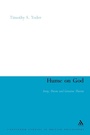
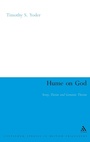
Hume on God
Irony, Deism and Genuine Theism
1st Edition
Published on 1. December 2008
186 pages
978-1-4411-8158-9 (ISBN)
Description

David Hume, one of the most influential philosophers to have written in the English language, is widely known as a skeptic and an empiricist. He is famous for raising questions about the existence of things for which there is insufficient empirical evidence, such as souls, the self, miracles, and, perhaps most importantly, God.
Despite this reputation, however, Hume's works contain frequent references to a deity, and one searches in vain to find a positive assertion of atheism. This book proposes a different reading of Hume on God, in which Hume is seen as proposing a 'genuine theism'. Yoder investigates Hume's use of irony and his relationship with the Deists of his era and offers a thorough re-examination of Hume's writings on religion. Yoder concludes that, despite Hume's criticisms of the church, religiously-based ethics and the belief in miracles, he stops well short of a rejection of the existence of God. Always a creative thinker, Hume carves out a unique conception of the divine being.
Despite this reputation, however, Hume's works contain frequent references to a deity, and one searches in vain to find a positive assertion of atheism. This book proposes a different reading of Hume on God, in which Hume is seen as proposing a 'genuine theism'. Yoder investigates Hume's use of irony and his relationship with the Deists of his era and offers a thorough re-examination of Hume's writings on religion. Yoder concludes that, despite Hume's criticisms of the church, religiously-based ethics and the belief in miracles, he stops well short of a rejection of the existence of God. Always a creative thinker, Hume carves out a unique conception of the divine being.
Reviews / Votes
"Yoder argues that Hume is not a complete skeptic regarding religion, but instead affirms a "true religion" of "genuine theism" in continuity with his defense of mitigated skepticism. Yoder's study is especially valuable for his response to the tendency to dismiss certain passages in Hume's writings as ironic. Instead, Yoder develops a set of hermeneutical principles for deciding when Hume is using irony, and concludes that Hume's positive statements concerning the existence of a deity are not ironic. Yoder's interpretation of Hume's writings on religion will remain an important contribution to the literature." - Dr Claudia Schmidt, Marquette University, USAMore details
Series
Edition
1. Auflage
Language
English
Place of publication
New York
United States
Target group
Professional and scholarly
ISBN-13
978-1-4411-8158-9 (9781441181589)
Copyright in bibliographic data and cover images is held by Nielsen Book Services Limited or by the publishers or by their respective licensors: all rights reserved.
Schweitzer Classification
Other editions
Additional editions
Book
12/2011
Continuum Publishing Corporation
€55.70
Shipment within 15-20 days
Book
12/2008
Continuum International Publishing Group Ltd.
€221.30
Shipment within 3-4 weeks
Person
Timothy S. Yoder (Ph.D. Marquette University) is Associate Professor of Philosophy at Philadelphia Biblical University in Langhorne, PA, USA.
Content
1. The Conventional Story of Hume on God
2. Hume and Irony
3. Hume and Deism
4. Hume on the Existence of God
5. Hume on the Nature of God
6. Conclusion
2. Hume and Irony
3. Hume and Deism
4. Hume on the Existence of God
5. Hume on the Nature of God
6. Conclusion
