

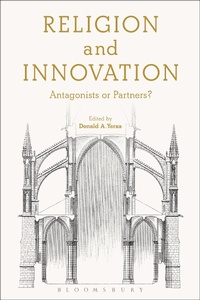
Religion and Innovation
Antagonists or Partners?
1st Edition
Published on 17. December 2015
368 pages
978-1-4725-9100-5 (ISBN)
Description

It is often assumed that religion is the backward-looking servant of tradition and the status quo, utterly opposed to the new. This refrain in so much of recent polemical writing has permeated the public mind and can even be found in academic publications. But recent scholarship increasingly shows that this view is a gross simplification - that, in fact, religious beliefs and practices have contributed to significant changes in human affairs: political and legal, social and artistic, scientific and commercial. This is certainly not to say that religion is always innovative. But the relationship between religion and innovation is much more complex and instructive than is generally assumed.
Religion and Innovation includes contributions from leading historians, archaeologists, and social scientists, who offer findings about the relationship between religion and innovation. The essays collected in this volume range from discussions of the transformative power of religion in early societies; to re-examinations of our notions of naturalism, secularization, and progress; to explorations of cutting-edge contemporary issues.
Combining scholarly rigor with clear, accessible writing, Religion and Innovation: Antagonists or Partners? is essential reading for anyone interested in the history of religion and the ongoing debates about its role in the modern world and into the future.
Religion and Innovation includes contributions from leading historians, archaeologists, and social scientists, who offer findings about the relationship between religion and innovation. The essays collected in this volume range from discussions of the transformative power of religion in early societies; to re-examinations of our notions of naturalism, secularization, and progress; to explorations of cutting-edge contemporary issues.
Combining scholarly rigor with clear, accessible writing, Religion and Innovation: Antagonists or Partners? is essential reading for anyone interested in the history of religion and the ongoing debates about its role in the modern world and into the future.
More details
Edition
1. Auflage
Language
English
Place of publication
London
United Kingdom
Publishing group
Bloomsbury Publishing PLC
Target group
College/higher education
Professional and scholarly
Illustrations
20 bw illus
ISBN-13
978-1-4725-9100-5 (9781472591005)
Copyright in bibliographic data and cover images is held by Nielsen Book Services Limited or by the publishers or by their respective licensors: all rights reserved.
Schweitzer Classification
Other editions
Additional editions
Book
12/2015
Bloomsbury Academic
€52.70
Shipment within 15-20 days
Person
Donald A. Yerxa is Professor of History Emeritus at Eastern Nazarene College, USA. He was Senior Editor of Historically Speaking and is Editor of Fides et Historia.
Content
Introduction
Part 1: Religion and Innovation in Pre-Columbian Societies
1. Innovation, Religion and Authority at the Formative Period Andean Cult Center of Chavin de Huantar, John W. Rick (Stanford University, USA)
2. Religion and Political Innovation in Ancient Mesoamerica, Arthur Joyce (University of Colorado, Boulder, USA) and Sarah Barber (University of Central Florida, USA)
3. Religion and Innovation at the Emerald Acropolis: Something New under the Moon, Timothy Pauketat (University of Illinois, Urbana-Champaign, USA) and Susan Alt (Indiana University, USA)
Part 2: Religion and Innovation: Naturalism, Scientific Progress, Enlightenment, and Secularization
4. The First Enlightenment: The Patristic Roots of Religious Freedom, Timothy Samuel Shah (Georgetown University, USA)
5. Religion, Innivation, and Secular Modernity, Peter Harrison (University of Queensland, Australia)
6. Religion, Scientific Naturalism, and Historical Progress, Peter Harrison (University of Queensland, Australia)
7. Religion, Enlightenment, and the Paradox of Innovation, William J. Bulman (Lehigh University, USA) and Robert G. Ingram (Ohio University, USA)
8. Remembering the Reformation, 1817 and 1883: Commemorating the Past as Agent and Mirror of Social Change, Thomas Albert Howard (Gordon College, USA)
9. Secularization and Religious Innovation: A Transatlantic Comparison, David Hempton (Harvard Divinity School, USA) and Hugh McLeod (University of Birmingham, UK)
10. Christian Transnationalists, Nationhood, and the Construction of Civil Society, Dana L. Robert (Boston University, USA)
Part 3: Religion, Progress and Innovation in the Contemporary World
11. Sin, Guilt and the Future of Progress, Wilfred M. McClay (University of Oklahoma, USA)
12. Religious Innovation and Economic Empowerment in India: An Empirical Exploration, Rebecca Samuel Shah (Georgetown University, USA)
13. Century of Progress? Chicago after Daniel Burnham, Philip H. Bess (University of Notre Dame, USA)
14. Technologies of Imagination: Secularism, Transhumanism, and the Idiom of Progress, J. Benjamin Hurlbut (Arizona State University, USA)
Afterword: Innovation and Religion, Today and Tomorrow, Adam Keiper (The New Atlantis)
Bibliography
Index
Part 1: Religion and Innovation in Pre-Columbian Societies
1. Innovation, Religion and Authority at the Formative Period Andean Cult Center of Chavin de Huantar, John W. Rick (Stanford University, USA)
2. Religion and Political Innovation in Ancient Mesoamerica, Arthur Joyce (University of Colorado, Boulder, USA) and Sarah Barber (University of Central Florida, USA)
3. Religion and Innovation at the Emerald Acropolis: Something New under the Moon, Timothy Pauketat (University of Illinois, Urbana-Champaign, USA) and Susan Alt (Indiana University, USA)
Part 2: Religion and Innovation: Naturalism, Scientific Progress, Enlightenment, and Secularization
4. The First Enlightenment: The Patristic Roots of Religious Freedom, Timothy Samuel Shah (Georgetown University, USA)
5. Religion, Innivation, and Secular Modernity, Peter Harrison (University of Queensland, Australia)
6. Religion, Scientific Naturalism, and Historical Progress, Peter Harrison (University of Queensland, Australia)
7. Religion, Enlightenment, and the Paradox of Innovation, William J. Bulman (Lehigh University, USA) and Robert G. Ingram (Ohio University, USA)
8. Remembering the Reformation, 1817 and 1883: Commemorating the Past as Agent and Mirror of Social Change, Thomas Albert Howard (Gordon College, USA)
9. Secularization and Religious Innovation: A Transatlantic Comparison, David Hempton (Harvard Divinity School, USA) and Hugh McLeod (University of Birmingham, UK)
10. Christian Transnationalists, Nationhood, and the Construction of Civil Society, Dana L. Robert (Boston University, USA)
Part 3: Religion, Progress and Innovation in the Contemporary World
11. Sin, Guilt and the Future of Progress, Wilfred M. McClay (University of Oklahoma, USA)
12. Religious Innovation and Economic Empowerment in India: An Empirical Exploration, Rebecca Samuel Shah (Georgetown University, USA)
13. Century of Progress? Chicago after Daniel Burnham, Philip H. Bess (University of Notre Dame, USA)
14. Technologies of Imagination: Secularism, Transhumanism, and the Idiom of Progress, J. Benjamin Hurlbut (Arizona State University, USA)
Afterword: Innovation and Religion, Today and Tomorrow, Adam Keiper (The New Atlantis)
Bibliography
Index
