

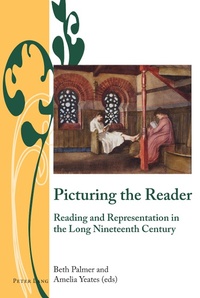
Picturing the Reader
Description

«Adopting an interdisciplinary approach to a range of visual and textual material, this engaging and illuminating collection compels twenty-first-century readers to take a fresh look at the multiple ways in which readers and reading were represented in the long nineteenth century.» (Professor Julia Thomas, Cardiff University)
The long nineteenth century saw a prolific increase in the number of books being produced and read and, consequently, in the number of visual and textual discourses about reading. This collection examines a range of visual and textual iconographies of readers produced during this period and maps the ways in which such representations engaged with crucial issues of the time, including literary value, gender formation, familial relationships, the pursuit of leisure and the understanding of new technologies.
Gauging the ways in which Victorians conceptualized reading has often relied on textual sources, but here we recognize and elaborate the importance of visual culture - often in dialogue with textual evidence - in shaping the way people read and thought about reading. This book brings together historians, literary scholars and art historians using a range of methodologies and theoretical approaches to address ideas of readership found in fine art, photography, arts and craft, illustration, novels, diaries and essays. The volume shows how the field of readership studies can be enriched and furthered through an interdisciplinary approach and, in particular, through an exploration of the visual iconography of readers and reading.
More details
Other editions
Additional editions
Persons
Beth Palmer is Senior Lecturer in English Literature at the University of Surrey. She has published widely on numerous aspects of Victorian popular culture and her work includes a monograph, Women's Authorship and Editorship in Victorian Culture: Sensational Strategies (2011), an edited collection on readership, print culture and the novel (2011), and an anthology of Victorian sensation plays, Sensation Drama: An Anthology (2019). She is currently working on a project titled Sensational Genres that examines the relationship between the sensation novel, the press and the theatre in Victorian Britain, in which the relationships between Victorian readers and theatre-goers is a central concern.
Amelia Yeates is Associate Professor in Art History at Liverpool Hope University. She has published on a range of topics relating to nineteenth-century visual and literary culture, including representations of women reading, Pre-Raphaelitism and the figure of Pygmalion in nineteenth-century art and literature. Publications include a co-edited collection on Pre-Raphaelite Masculinities (2014) and a guest-edited special issue of Visual Culture in Britain on Visualising Identities: The Male Artist in Nineteenth-Century Britain (2015). In 2019-2020, she was the host of a British Art Network subgroup on «British Genre and Narrative Painting: 1750-1870».
Content
Contents: Framing the Reader - Beth Palmer: Framing Reading in Mary Watts's Diaries and Designs - Catherine J. Golden: Reading Like a Victorian: How the Book Review Illuminates Viewing as an Essential Part of Reading - Garth Wenman-James: Picturing the Poor: Reader Spectatorship, Sympathy and Slumming in Charles Dickens's Oliver Twist - Visual Representations of Readers - Colin Cruise: Painting the «Woman as Reader»: From Romney to Rossetti - Amelia Yeates: «No Happy Wearing of Beloved Leaves»: Women and Not Reading in Nineteenth-Century Art - Charlotte Boman: In Search of «Some Bond of Union»: Picturing the Domestic Reading Circle in Victorian Photographs - The Reader in the Text - Ashton Foley-Schramm: Interrogating the Male Reader in Mary Elizabeth Braddon's Lady Audley's Secret - Katie Halsey: Picturing the Reader in Jane Austen's Novels - Mary Hammond: Afterword.
