

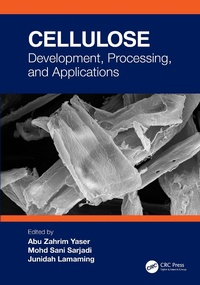
Cellulose
Development, Processing, and Applications
1st Edition
Published on 26. September 2023
334 pages
978-1-000-95881-2 (ISBN)
Description

Cellulose: Development, Processing, and Applications covers topics related to advanced cellulose development and processing, as well as the utilization of major agricultural and biomass waste. It discusses the utilization of cellulose from other agricultural and biomass materials, including oil palm biomass, bamboo, and other non-wood forest products in emerging areas. It covers the treatments used to improve the quality of cellulosic materials in specific applications. Following that, the book delves into the use of cellulosic materials in the application of composting science and technology.
Features:
Delves into the specific agriculture waste/biomass waste materials used for the advanced cellulose-based production
Outlines the potential use of the covered materials for energy production and other emerging applications
Includes composting technology and processes using the cellulosic materials
Overviews industrial applications of cellulose from agricultural waste/biomass waste and composting technology
Discusses the main agricultural waste/biomass in the Asian region
This book is aimed at researchers and graduate students in chemical engineering, bioprocessing, composites, and biotechnology.
Features:
Delves into the specific agriculture waste/biomass waste materials used for the advanced cellulose-based production
Outlines the potential use of the covered materials for energy production and other emerging applications
Includes composting technology and processes using the cellulosic materials
Overviews industrial applications of cellulose from agricultural waste/biomass waste and composting technology
Discusses the main agricultural waste/biomass in the Asian region
This book is aimed at researchers and graduate students in chemical engineering, bioprocessing, composites, and biotechnology.
More details
Edition
1. Auflage
Language
English
Place of publication
London
United Kingdom
Publishing group
Taylor & Francis Ltd
Target group
College/higher education
Professional and scholarly
Product notice
Reflowable
Illustrations
50 Tables, black and white; 52 Line drawings, black and white; 24 Halftones, black and white; 76 Illustrations, black and white
ISBN-13
978-1-000-95881-2 (9781000958812)
Copyright in bibliographic data and cover images is held by Nielsen Book Services Limited or by the publishers or by their respective licensors: all rights reserved.
Schweitzer Classification
Other editions
Additional editions
Abu Zahrim Yaser | Mohd Sani Sarjadi | Junidah Lamaming
Cellulose
Development, Processing, and Applications
Book
01/2025
1st Edition
CRC Press
€82.80
Shipment within 10-20 days
Abu Zahrim Yaser | Mohd Sani Sarjadi | Junidah Lamaming
Cellulose
Development, Processing, and Applications
Book
09/2023
1st Edition
CRC Press
€229.50
Shipment within 10-20 days
Persons
Abu Zahrim Yaser, PhD is an Associate Professor in Waste Processing Technology at the Faculty of Engineering, Universiti Malaysia Sabah, Malaysia. He obtained his PhD from Swansea University. He has published 12 books and more than 100 other publications. His inventions in the composting systems have been adopted by Tongod and Nabawan districts in Sabah. He is the co-chair for Kundasang's Community Composting Site, a site dedicated for vegetable waste composting. He is a visiting scientist at the University of Hull.
Mohd Sani Sarjadi, PhD is currently an Associate Professor in Industrial Chemistry in the Faculty of Science and Natural Resources, Universiti Malaysia Sabah. His PhD was awarded in 2015 and obtained from the University of Sheffield, United Kingdom. His research interests include organic synthesis, polymer chemistry and all aspects of industrial chemistry. He had published numerous articles in local and international refereed journals and conference proceedings. He is an Associate Member of the Royal Society of Chemistry, United Kingdom (Chartered Chemist); Associate Member of the Malaysian Institute of Chemistry; and Professional Technologist (Material Science Technology), Malaysia Board of Technologists.
Junidah Lamaming, PhD is currently a fellow researcher at Faculty of Engineering, Universiti Malaysia Sabah. She obtained her PhD in 2016 in the field of nanocellulose and nanofiber science and technology from Universiti Sains Malaysia, Malaysia. She was rewarded an IAAM Scientist Award from International Association of Advanced Materials. Her research interests include nanocellulose fiber and applications, polymer blends, reinforced/filled polymer composites, characterization and production of lignocellulose-based composites and fire-retardants, bioadhesives and biopolymers using sustainable methods. Over the years, she has published articles in a significant number of high impact journals, conference papers and a book in her related research areas. She also contributes her expertise and knowledge by reviewing international and national publications. She is a member of Malaysia Board of Technologists.
Mohd Sani Sarjadi, PhD is currently an Associate Professor in Industrial Chemistry in the Faculty of Science and Natural Resources, Universiti Malaysia Sabah. His PhD was awarded in 2015 and obtained from the University of Sheffield, United Kingdom. His research interests include organic synthesis, polymer chemistry and all aspects of industrial chemistry. He had published numerous articles in local and international refereed journals and conference proceedings. He is an Associate Member of the Royal Society of Chemistry, United Kingdom (Chartered Chemist); Associate Member of the Malaysian Institute of Chemistry; and Professional Technologist (Material Science Technology), Malaysia Board of Technologists.
Junidah Lamaming, PhD is currently a fellow researcher at Faculty of Engineering, Universiti Malaysia Sabah. She obtained her PhD in 2016 in the field of nanocellulose and nanofiber science and technology from Universiti Sains Malaysia, Malaysia. She was rewarded an IAAM Scientist Award from International Association of Advanced Materials. Her research interests include nanocellulose fiber and applications, polymer blends, reinforced/filled polymer composites, characterization and production of lignocellulose-based composites and fire-retardants, bioadhesives and biopolymers using sustainable methods. Over the years, she has published articles in a significant number of high impact journals, conference papers and a book in her related research areas. She also contributes her expertise and knowledge by reviewing international and national publications. She is a member of Malaysia Board of Technologists.
Content
Chapter 1. Introduction
Chapter 2. A Brief Overview of the Use of Bamboo Biomass in the Asian Region's Energy Production
Chapter 3. Pre-treatment of Oil Palm Empty Fruit Bunches with Sea Water Improves the Qualities of Lignocellulose Biomass
Chapter 4. Biorefinery of Biofuel Production: Thermochemical and Biochemical Technologies from Renewable Resources
Chapter 5. Review on the Current Updates on Palm Oil Industry and its Biomass Recycling to Fertilizer in Malaysia
Chapter 6. Wastewater as Nutrient Enhancer and Moisturizer for Compost Production: A Review
Chapter 7. Biocomposites as Structural Components in Various Application
Chapter 8. Natural Fiber Composites for Automotive Applications
Chapter 9. Influence of Cellulose Nanocrystals from Agro Residues as Reinforcing Agent for Cement Composites
Chapter 10. All-Cellulose Composites: Processing, Properties, and Applications
Chapter 11. Cellulose-Based Bioadhesive for Wood-Based Composite Applications
Chapter 12. Deriving Renewable Feedstock from Palm Oil Mill Effluent for Polyhydroxyalkanoate (PHA) Production
Chapter 13. Recent Developments in Pre-Treatment and Nanocellulose Production from Lignocellulosic Materials
Chapter 14. Characteristics of Cellulose Nanocrystals from Sugarcane Bagasse Isolated from Various Methods: A Review
Chapter 15. Applications of Regenerated Cellulose Products
Chapter 16. Developments and Application of Nanocellulose-Based Hydrogels in the Biomedical Field
Chapter 17. Overview of Cellulose Fiber as Materials for Paper Production
Chapter 18. Challenges and State of the Art of Allium Pulp Development for Paper Making: A Brief Review
Chapter 19. Application of Cellulose in Leather
Chapter 20. Utilization of Cellulose in Wastewater Treatment
Chapter 21. Comparing Properties and Potential of Pinewood, Dried Tofu and Oil Palm Empty Fruit Bunch (EFB) Pellet as Cat Litter
Chapter 22. Challenges and Future Perspectives
Chapter 2. A Brief Overview of the Use of Bamboo Biomass in the Asian Region's Energy Production
Chapter 3. Pre-treatment of Oil Palm Empty Fruit Bunches with Sea Water Improves the Qualities of Lignocellulose Biomass
Chapter 4. Biorefinery of Biofuel Production: Thermochemical and Biochemical Technologies from Renewable Resources
Chapter 5. Review on the Current Updates on Palm Oil Industry and its Biomass Recycling to Fertilizer in Malaysia
Chapter 6. Wastewater as Nutrient Enhancer and Moisturizer for Compost Production: A Review
Chapter 7. Biocomposites as Structural Components in Various Application
Chapter 8. Natural Fiber Composites for Automotive Applications
Chapter 9. Influence of Cellulose Nanocrystals from Agro Residues as Reinforcing Agent for Cement Composites
Chapter 10. All-Cellulose Composites: Processing, Properties, and Applications
Chapter 11. Cellulose-Based Bioadhesive for Wood-Based Composite Applications
Chapter 12. Deriving Renewable Feedstock from Palm Oil Mill Effluent for Polyhydroxyalkanoate (PHA) Production
Chapter 13. Recent Developments in Pre-Treatment and Nanocellulose Production from Lignocellulosic Materials
Chapter 14. Characteristics of Cellulose Nanocrystals from Sugarcane Bagasse Isolated from Various Methods: A Review
Chapter 15. Applications of Regenerated Cellulose Products
Chapter 16. Developments and Application of Nanocellulose-Based Hydrogels in the Biomedical Field
Chapter 17. Overview of Cellulose Fiber as Materials for Paper Production
Chapter 18. Challenges and State of the Art of Allium Pulp Development for Paper Making: A Brief Review
Chapter 19. Application of Cellulose in Leather
Chapter 20. Utilization of Cellulose in Wastewater Treatment
Chapter 21. Comparing Properties and Potential of Pinewood, Dried Tofu and Oil Palm Empty Fruit Bunch (EFB) Pellet as Cat Litter
Chapter 22. Challenges and Future Perspectives
