

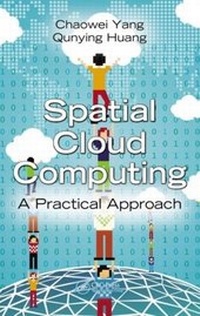
Spatial Cloud Computing
A Practical Approach
1st Edition
Published on 4. December 2013
357 pages
978-1-4665-9317-6 (ISBN)
Description

An exploration of the benefits of cloud computing in geoscience research and applications as well as future research directions, Spatial Cloud Computing: A Practical Approach discusses the essential elements of cloud computing and their advantages for geoscience. Using practical examples, it details the geoscience requirements of cloud computing, covers general procedures and considerations when migrating geoscience applications onto cloud services, and demonstrates how to deploy different applications.
The book discusses how to choose cloud services based on the general cloud computing measurement criteria and cloud computing cost models. The authors examine the readiness of cloud computing to support geoscience applications using open source cloud software solutions and commercial cloud services. They then review future research and developments in data, computation, concurrency, and spatiotemporal intensities of geosciences and how cloud service can be leveraged to meet the challenges. They also introduce research directions from the aspects of technology, vision, and social dimensions.
Spatial Cloud Computing: A Practical Approach a common workflow for deploying geoscience applications and provides references to the concepts, technical details, and operational guidelines of cloud computing. These features and more give developers, geoscientists, and IT professionals the information required to make decisions about how to select and deploy cloud services.
The book discusses how to choose cloud services based on the general cloud computing measurement criteria and cloud computing cost models. The authors examine the readiness of cloud computing to support geoscience applications using open source cloud software solutions and commercial cloud services. They then review future research and developments in data, computation, concurrency, and spatiotemporal intensities of geosciences and how cloud service can be leveraged to meet the challenges. They also introduce research directions from the aspects of technology, vision, and social dimensions.
Spatial Cloud Computing: A Practical Approach a common workflow for deploying geoscience applications and provides references to the concepts, technical details, and operational guidelines of cloud computing. These features and more give developers, geoscientists, and IT professionals the information required to make decisions about how to select and deploy cloud services.
Reviews / Votes
"...presents a complete picture of advanced spatial cloud computing in the discipline of geosciences. ... The authors succeed in delivering a fairly clear comparison and explanation of various cloud computing technologies via several concrete experimental examples, which also helps illustrate the power of cloud computing. ... I strongly recommend it ..."-Tong Zhang, Wuhan University, China"this book challenges this apocalyptic reading of Virilio's work, suggesting that - while he doesn't provide us with easy solutions to the problems we face - the political force in Virilio's work comes from the questions he leaves us with about speed, security and global politics in times of crisis, terror and fear. ... This book will be of interest to students of critical security studies, political theory, sociology, political geography, cultural studies and IR in general."
-NeoPopRealism Journal & Wonderpedia, March 2013
More details
Language
English
Place of publication
Baton Rouge
United States
Publishing group
Taylor & Francis Inc
Target group
College/higher education
Illustrations
138 s/w Abbildungen, 30 farbige Abbildungen, 20 s/w Tabellen
138 b/w images, 30 color images and 20 tables
File size
20,95 MB
ISBN-13
978-1-4665-9317-6 (9781466593176)
Copyright in bibliographic data and cover images is held by Nielsen Book Services Limited or by the publishers or by their respective licensors: all rights reserved.
Schweitzer Classification
Other editions
Additional editions
Book
03/2017
1st Edition
CRC Press
€124.80
Shipment within 10-20 days
Book
12/2013
1st Edition
CRC Press
€237.70
Shipment within 15-20 days
Content
Part I Introduction to Cloud Computing for Geospatial Domains. Why Cloud Computing. Cloud Computing Concepts, Characteristics and Architecture. Enabling Technologies. Spatial Cloud Computing. Part II Cloud Computing Deployment. How to use cloud computing?. Cloud Computing Cost Model: How to choose cloud Computing?. Cloud Enable Applications. Part III Cloud Enabling Geosciences Projects. Cloud-Enable GEOSS Clearinghouse. Cloud-Enable Climate@Home. Cloud-Enable Dust Storm Forecasting. Part IV Cloud Computing Status and Readiness. Commercial Cloud Computing Platforms. Readiness of Cloud Computing Platforms. Open Source Cloud Computing Solutions. Readiness of Open Source Cloud Computing Resources. GeoCloud Initiative. Part V Future Directions. Cloud Computing Research. Handling of Data, Computing, Concurrent and Spatiotemporal Intensities. Integrating Knowledge Reasoning and Cloud Computing to Enable Geosciences. Towards Spatial Cloud Computing. References. Index.
