

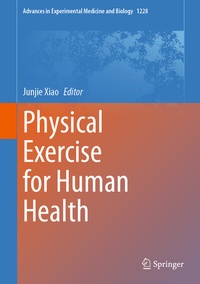
Physical Exercise for Human Health
Description

This book shares the latest findings on exercise and its benefits in preventing and ameliorating numerous diseases that are of worldwide concern. Addressing the role of exercise training as an effective method for the prevention and treatment of various disease, the book is divided into eleven parts: 1) An Overview of the Beneficial Effects of Exercise on Health and Performance, 2) The Physiological Responses to Exercise, 3) Exercise and Metabolic Diseases, 4) Exercise and Cardiovascular Diseases, 5) Exercise and Musculoskeletal Diseases, 6) Exercise and Neurological and Psychiatric Diseases, 7) Exercise and the Respiration System, 8) Exercise and Immunity, 9) Exercise and HIV/AIDS, 10) Exercise and Neuropsychiatric Disorders, and 11) Future Prospects. Given its scope, the book will be particularly useful for researchers and students in the fields of physical therapy, physiology, medicine, genetics and cell biology, as well as researchers and physicians with a range of medical specialties.
Reviews / Votes
More details
Other editions
Additional editions
Person
Dr. Junjie Xiao is the Vice Dean of the School of Life Science and also of the Medical School (in preparation) at Shanghai University. He is the Associate Editor of the Journal of Cardiovascular Translational Research , BMC Sports and Science, Medicine& Rehabilitation , and a member of the editorial board of BMC Medicine . He is the author or co-author of numerous scientific articles in various journals, including Cell Metabolism , Nature Communications , Annual Review of Genomics and Human Genetics, Circulation, and Theranostics. His major research interest is exercise and myocardial protection, especially using exercise as a platform to identify novel targets for enhancing cardiac regeneration and combating heart failure.
Content
Chapter 1. An overview of the beneficial effects of exercise on health and performance.- Chapter 2. Type of exercise training and training methods.- Chapter 3. Molecular mechanisms mediating adaptation to exercise.- Chapter 4. Exercise and organ crosstalk.- Chapter 5. Exercise and Hyperlipidemia.- Chapter 6. Exercise and Type 2 diabetes.- Chapter 7. Exercise and Type 1 Diabetes.- Chapter 8. Exercise and Polycystic ovarian syndrome.- Chapter 9. Exercise and insulin resistance.- Chapter 10. Exercise and Hypertension.- Chapter 11. Exercise and Coronary heart disease.- Chapter 12. Exercise and Peripheral Arteriosclerosis.- Chapter 13. Exercise and Stroke.- Chapter 14. Exercise and cardiovascular protection.- Chapter 15. Exercise and Osteoarthritis.- Chapter 16. Exercise and Chronic Pain.- Chapter 17. Exercise and muscle atrophy.- Chapter 18. Exercise and Depressive disorder.- Chapter 19. Exercise and Parkinson's disease.- Chapter 20. Exercise and Dementia.- Chapter 21. Exercise and Schizophrenia.- Chapter 22. Exercise and Multiple Sclerosis.- Chapter 23. Exercise and anxiety.- Chapter 24. Exercise and Chronic obstructive pulmonary disease (COPD).- Chapter 25. Exercise and Asthma.- Chapter 26. Exercise and Cystic fibrosis.- Chapter 27. Exercise regulates the immune system.- Chapter 28. Effects of Exercise on the immune function, quality of life and mental health in HIV/AIDS individuals.- Chapter 29. Effects of Exercise on Memory Interference in Neuropsychiatric Disorders.- Chapter 30. Effects of Exercise on Long-Term Potentiation in Neuropsychiatric Disorders.- Chapter 31. Prospective advances in beneficial effects of exercise on human health.
