

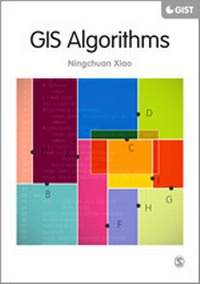
GIS Algorithms
1st Edition
Published on 9. November 2015
336 pages
978-1-4739-3347-7 (ISBN)
Description

Geographic information systems (GIS) have become increasingly important in helping us understand complex social, economic, and natural dynamics where spatial components play a key role. The critical algorithms used in GIS, however, are notoriously difficult to both teach and understand, in part due to the lack of a coherent representation. GIS Algorithms attempts to address this problem by combining rigorous formal language with example case studies and student exercises.
Using Python code throughout, Xiao breaks the subject down into three fundamental areas:
Geometric Algorithms
Spatial Indexing
Spatial Analysis and Modelling
With its comprehensive coverage of the many algorithms involved, GIS Algorithms is a key new textbook in this complex and critical area of geography.
Using Python code throughout, Xiao breaks the subject down into three fundamental areas:
Geometric Algorithms
Spatial Indexing
Spatial Analysis and Modelling
With its comprehensive coverage of the many algorithms involved, GIS Algorithms is a key new textbook in this complex and critical area of geography.
Reviews / Votes
Xiao's book is a must-have for any GIS programmers, from beginners to professionals. Its sample programs in Python provide a rich library for key GIS algorithms. -- Fahui Wang This is a welcome book, which covers the major geographical algorithms for vector and point-based analyses, along with network travel analysis and optimal solution searches, in practical detail. Its concentration on applied Python examples is timely, and it is sure to be the go-to handbook for anyone wanting to build from-the-ground up GIS functions into Python software. In addition the algorithms are a good starting point for anyone looking to implement functions in other languages. -- Andrew EvansMore details
Series
Language
English
Place of publication
London
United Kingdom
Target group
College/higher education
Professional and scholarly
ISBN-13
978-1-4739-3347-7 (9781473933477)
Copyright in bibliographic data and cover images is held by Nielsen Book Services Limited or by the publishers or by their respective licensors: all rights reserved.
Schweitzer Classification
Other editions
Additional editions
Ningchuan Xiao
GIS Algorithms
Book
12/2015
1st Edition
SAGE Publications Ltd
€198.30
Shipment within 15-20 days
Ningchuan Xiao
GIS Algorithms
Book
12/2015
1st Edition
SAGE Publications Ltd
€115.10
Shipment within 15-20 days
Person
Ningchuan Xiao is Associate Professor of Geography at the Ohio State University. He has taught a wide ranges of courses in GIS, spatial analysis, and cartography. His research focuses on the development of effective computational methods in spatial and temporal data handling.
Content
Introduction
Part I. Geometric Algorithms
Basic Geometric Operations
Polygon Overlay
Part II. Spatial Indexing
Indexing
k-D Trees
Quadtrees
Indexing Lines and Polygons
Part III. Spatial Analysis and Modeling
Interpolation
Spatial Pattern and Analysis
Network Analysis
Spatial Optimization
Heuristic Search Algorithms
Part I. Geometric Algorithms
Basic Geometric Operations
Polygon Overlay
Part II. Spatial Indexing
Indexing
k-D Trees
Quadtrees
Indexing Lines and Polygons
Part III. Spatial Analysis and Modeling
Interpolation
Spatial Pattern and Analysis
Network Analysis
Spatial Optimization
Heuristic Search Algorithms
