

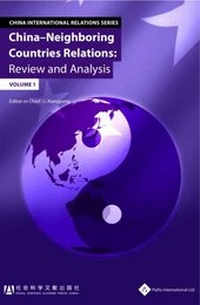
China - Neighboring Asian Countries Relations
Review and Analysis (Volume 1)
1st Edition
Published on 1. March 2013
206 pages
978-1-84464-132-1 (ISBN)
Description

China has a myriad and diverse range of neighbours who are significant in their own right but are also of global importance. Asia accounts for 25% of global GDP.This book evaluates the potential for both co-operation and conflict within the Asian region Border problems and historical problems are still plaguing countries in the region and are affecting the relations between them. China and India have not yet resolved their land frontier issues. Furthermore, China has maritime disputes with Japan, South Korea, Vietnam, and the Philippines. The historical issues among China, Japan, and South Korea make the cooperation between them lack a basis of political mutual trust. Therefore, although there are close trade contacts among these countries, China, Japan, and South Korea have not reached any FTA. In South Asia, because of long-term India-Pakistan conflicts, South Asia's Association for Regional Cooperation (SAARC) has been useless and is unable to effectively promote regional economic cooperation, which is a factor in pushing India to develop towards the East. These unstable factors have not only hindered the formation of long-term institutional arrangements on economic and trade cooperation within the region, but have also caused various unexpected events to disrupt existing cooperation. Throughout this book economic data and analysis is provided which gives an insight into the trade and financial links that bind this region together. Written by experts in China it gives a fascinating view of China's approach to its neighbours. China is assuming a more important role on the world stage but it is important to not forget the key role it plays in its own neighbourhood.
More details
Other editions
Additional editions
Book
03/2013
Paths International Ltd
€100.60
Shipment within 15-20 days
Content
- Intro
- Cover
- Contents
- CHINA'S ROLE IN ACHIEVING SUSTAINED GROWTH IN ASIA
- I. Main connotation and premise for Asia to achievesustained growth
- II. Structural characteristics of Asian economies
- III. Regional significance in China to achieve sustained growth
- CHINA'S RISE AND THE EVOLUTION OF EASTASIAN SECURITY ORDER
- I. Meaning and classification criteria of regional order
- A. Meaning of the regional order
- B. Classification criteria of regional order
- II. Types of regional order
- A. Hegemonic order
- B. Tributary order
- C. Equipollence order
- D. Community order
- III. Key factors to affect regional order in East Asia
- A. China's regional influence rises but sees difficulty becoming thedominant force
- B. Tributary characteristics of United States' East Asian alliance stillcontinue
- IV. East Asian order trend: order of coordination andcondominium between China and USA's alliance system
- A. The United States plays a role through regional alliance
- B. China coordinates with the United States and its alliance to handleregional security affairs
- C. China's self-restraint alleviates regional security issues
- V. Conclusion
- TRANS-PACIFIC PARTNERSHIPS: NEW CHALLENGES FOR ASIAN ECONOMIES
- I. Review and appraisal to the P4
- A. Tariff concessions
- B. Rules of origin
- C. Trade remedy measures
- D. Government procurement
- E. Liberalization of service trade
- F. Strategic partnership
- G. P4 enforcement body
- H. Liberalization of investment
- I. Agreement on environmental cooperation and Labor Memorandumsof Understanding (Labor MOU)
- II. Development prospect of TPP
- III. TPP's possible impacts on Asia
- IV. Thoughts about TPP
- CHINA-ASEAN FREE TRADE: AN EVALUATION OF THE 2010 PERFORMANCE
- I. Institutionalization of cooperation and deepeningof economic interdependence
- II. FTA construction and bilateral strategic partnership
- III. Achievement of the free trade area in 2010
- A. Deepening of bilateral economic interdependence
- B. Some challenges in bilateral strategic trust
- IV. Trends in the development of bilateral relations
- THE IMPLICATIONS AND FEATURESOF CHINA-INDIA POLITICAL RELATIONS
- I. Meaning of the simultaneous rise of China and Indiain political economy
- II. Implications and features of Sino-Indian political relations
- III. Conclusion
- CHINA AND INDIA: POTENTIAL AND CHALLENGE IN LEADING ASIA'S SUSTAINED GROWTH
- I. China and India are vital in the Asian economic pattern
- II. Challenges in sustained growth of China and India
- A. China's economic transformation
- B. India's reindustrialization
- III. Spillover effect of promoting regional cooperation andexpanding economic growth to peripheral countries
- A. Multi-level regional cooperation is very active, but unified big marketsare still out of sight
- B. Unstable political relations between countries also affect regionallong-term economic and trade cooperation arrangements
- NEW FEATURES OF CHINA-NORTH KOREAN ECONOMIC COOPERATION
- I. China-North Korean economic cooperationat the new development stage
- A. "Strategic" and "long term" China-North Korean relations
- B. China and North Korea determine new guidelines on economiccooperation
- C. Economic and trade cooperation is important to deepen China-NorthKorean relations in the new era
- D. Economic development and improvement of people's living standardsare common tasks of China and North Korea
- II. Current macroeconomic features of North Korea
- A. Imbalance of economic development
- B. Economic operational failure
- C. Economic isolation
- III. Status quo and characteristics of China-North Koreaneconomic cooperation
- A. China-North Korean trade cooperation
- B. China-North Korean investment cooperation
- C. China-North Korean economic cooperation closely linked withChina's development strategy
- IV. Thoughts of expanding China-North Korean economicand trade cooperation
- A. Promoting China-North Korean border trade cooperation
- B. Promoting tourism cooperation in North Korea
- C. Actively promoting key cooperation projects
- V. Conclusion
- SECURITY IN THE KOREAN PENINSULA AND CHINA'S TACTICS OF COOPERATION WITH RELEVANT PARTIES
- I. Tension in the Korean Peninsula will be complicated andlong-term, and the unexpected factors will increase
- A. North Korea has a strong impulse to hold nuclear arms on the premiseof the long-term goal that does not give up the denuclearization ofthe Korean Peninsula
- B. North Korea's nuclear test makes the USA-Japan-ROK militaryalliance system a volatile operation
- C. USA-ROK military drills increased after the Cheonan incident
- ithas become unpredictable as to how the situation on the KoreanPeninsula will develop in the future
- D. Any incident or friction between North and South Korea could resultin war
- II. China should establish closer links with the United States,South Korea, Japan, Russia, and the internationalcommunity to communicate and cooperate
- A. China should properly handle China-US relations
- B. China needs to further promote and deepen mutual trust, commonunderstanding, and cooperation among China, Japan, and SouthKorea
- C. China should strengthen communication and cooperation with Russiato ease the tension in the Korean peninsula
- III. China's policies on North Korea
- A. Persisting in promoting North Korea to denuclearize so as to realizea non-nuclear Korean Peninsula
- B. Promoting North Korea's gradual integration into the internationalcommunity through economic diplomacy
- IV. Preparing for possible emergencies in the KoreanPeninsula while settling the nuclear crisis in North Koreathrough diplomatic negotiations
- STRATEGIC CENTER OF GRAVITY TOWARDS THE EAST AND THE ADJUSTMENT OF US ASIAN-PACIFIC STRATEGY
- I. Shifting the strategic center of gravity towards the Eastand Asia-Pacific regions since the end of the cold war
- II. American omni-directional layout in Asia-Pacific in 2010
- III. Adjustment of Asian-Pacific strategy and China
- ISSUES ON TRANS-BORDER RIVERS AND CHINA'S PERIPHERAL SECURITY
- I. Status quo of the issues of trans-border rivers in China
- A. Aquatic environment pollution
- B. Water resource allocation
- C. Utilization and development of water resources
- D. River and peripheral environmental protection
- II. Influence of issues on trans-border rivers to the relationsbetween China and neighboring countries
- A. Destroying the sound development of relations between China andneighboring countries
- B. Countries outside the region take advantage of opportunities tomeddle in China's peripheral affairs
- III. China positively responds the issues of peripheraltrans-border river
- A. Resisting attack words and seeking a road to cooperation
- B. Cooperating to construct the mechanisms for consultation andcooperation on trans-border rivers
- IV. Conclusion
- GEO-ECONOMIC STRATEGY IN THE SOUTH CHINA SEA
- I. The level of geo-economic strategy in the South China Sea
- II. Main challenges in the geo-economy of South China Sea
- A. Vulnerability of geo-economy in South China Sea
- B. Externality of geo-economy in the South China Sea
- C. Geo-economic conflicts in the South China Sea
- III. Strategic thinking about managing and planninggeo-economy in the South China Sea
- A. Defining China's geo-economic strategic space and actionbenchmarks in the South China Sea in the form of nationallegislation
- B. Continuing China's historic policies on the South China Sea byway of "cooperation and win-win" under the framework of newsecurity concepts
- C. Quickening to change China -- ASEAN trade and financialcooperation model
- D. Strategy of "shelving disputes" should be varied for different countries
- E. Vigorously implementing sea power to support the execution ofgeo-economic strategy in the South China Sea
- THE ECONOMIC COOPERATION OF NORTHEAST ASIA AND THE SUPPLY OF REGIONAL PUBLIC GOODS
- I. Overview
- A. Development of regional public goods theory
- B. Regional public goods and regional cooperation
- II. Necessity of China, Japan, and South Korea to provideregional public goods
- III. China-Japan-South Korean economic cooperation andregional public goods
- A. Financial cooperation and regional public goods
- B. Cooperation in energy and environmental protection and regionalpublic goods
- C. Economic and trade cooperation and regional public goods
- IV. Conclusion
