

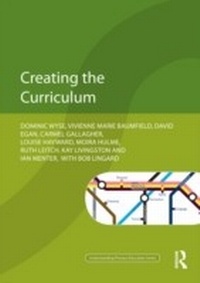
Creating the Curriculum
1st Edition
Published on 21. August 2012
168 pages
978-1-136-29687-1 (ISBN)
Description

Is there an 'ideal' primary school curriculum?
Who should decide what the curriculum is?
Should teachers have autonomy over how they teach?
The curriculum is the heart of what teachers teach and learners learn: effective teaching is only possible with an effective curriculum. Yet in spite of its importance, there has been a crisis in curriculum that has been caused in large part by governments assuming direct control over the curriculum, assessment, and increasingly, pedagogy.
Creating the Curriculum tackles this thorny issue head on, challenging student and practising primary school teachers to think critically about past and present issues and to engage with a new wave of curriculum thinking and development. Considering curriculum construction and its impact on teaching and learning in the four countries of the UK, key issues considered include:
who should decide the curriculum, its aims and its values
the extent to which issues in primary education swing back and forth
Subjects versus thematic organisation, stages and phases, progression, breadth and balance
prescription versus teacher autonomy
the key features of effective classroom practice
strategies for assessing the whole curriculum
how language in the classroom influences curriculum design
understanding curricula in the context of children's social and personal circumstances
creativity, curriculum and the classroom.
Illustrated throughout with strategies and case studies from the classroom, Creating the Curriculum accessibly links the latest research and evidence with concrete examples of good practice. It is a timely exploration of what makes an effective and meanginful curriculum and how teachers can bring new relevance, motivation and powerful values to what they teach.
Who should decide what the curriculum is?
Should teachers have autonomy over how they teach?
The curriculum is the heart of what teachers teach and learners learn: effective teaching is only possible with an effective curriculum. Yet in spite of its importance, there has been a crisis in curriculum that has been caused in large part by governments assuming direct control over the curriculum, assessment, and increasingly, pedagogy.
Creating the Curriculum tackles this thorny issue head on, challenging student and practising primary school teachers to think critically about past and present issues and to engage with a new wave of curriculum thinking and development. Considering curriculum construction and its impact on teaching and learning in the four countries of the UK, key issues considered include:
who should decide the curriculum, its aims and its values
the extent to which issues in primary education swing back and forth
Subjects versus thematic organisation, stages and phases, progression, breadth and balance
prescription versus teacher autonomy
the key features of effective classroom practice
strategies for assessing the whole curriculum
how language in the classroom influences curriculum design
understanding curricula in the context of children's social and personal circumstances
creativity, curriculum and the classroom.
Illustrated throughout with strategies and case studies from the classroom, Creating the Curriculum accessibly links the latest research and evidence with concrete examples of good practice. It is a timely exploration of what makes an effective and meanginful curriculum and how teachers can bring new relevance, motivation and powerful values to what they teach.
Reviews / Votes
"Creating the Curriculum is a stimulating, informed, provocative, well-referenced and accessible collection of writing. The focus of the book is a consideration of curriculum construction and the impact of the primary school curriculum on teaching and learning in the four countries of the UK. Central to the success of this book, however, is that, in addition to providing a careful summative historical setting for the discussion of issues affecting schools now and in the future, the writers never lose sight of the fact that, at every opportunity, we need to listen to children." - John Senior, Gifted Education InternationalMore details
Series
Language
English
Place of publication
London
United Kingdom
Publishing group
Taylor & Francis Ltd
Target group
College/higher education
Illustrations
3 s/w Tabellen, 3 s/w Zeichnungen
3 Tables, black and white; 3 Line drawings, black and white
File size
0,82 MB
ISBN-13
978-1-136-29687-1 (9781136296871)
Copyright in bibliographic data and cover images is held by Nielsen Book Services Limited or by the publishers or by their respective licensors: all rights reserved.
Schweitzer Classification
Other editions
Additional editions
Dominic Wyse | Vivienne Baumfield | David Egan
Creating the Curriculum
Book
08/2012
1st Edition
Routledge
€215.41
Shipment within 15-20 days
Dominic Wyse | Vivienne Baumfield | David Egan
Creating the Curriculum
Book
08/2012
1st Edition
Routledge
€58.00
Shipment within 15-20 days
Persons
Dominic Wyse is Professor of Early Childhood and Primary Education at the Institute of Education, University of London, UK.
Vivienne Marie Baumfield is Professor of Pedagogy at the School of Education, University of Glasgow, UK.
David Egan is Emeritus Professor and Director at the Centre for Applied Education Research, Cardiff School of Education, University Wales in Cardiff, UK.
Carmel Gallagher is Research Associate at the School of Education, Queen's University, Belfast, UK.
Louise Hayward is Professor of Educational Assessment and Innovation at the School of Education, College of Social Sciences, University of Glasgow, UK.
Moira Hulme is Lecturer in Educational Research at the School of Education, University of Glasgow, UK.
Ruth Leitch is Professor of Education at the School of Education, Queen's University Belfast, UK.
Bob Lingard is Professorial Research Fellow at the School of Education, The University of Queensland, Australia.
Kay Livingston is Professor of Educational Research, Policy and Practice at the School of Education, University of Glasgow, UK.
Ian Menter is Professor of Teacher Education and Director of Professional Programmes at the Department of Education, University of Oxford, UK.
Vivienne Marie Baumfield is Professor of Pedagogy at the School of Education, University of Glasgow, UK.
David Egan is Emeritus Professor and Director at the Centre for Applied Education Research, Cardiff School of Education, University Wales in Cardiff, UK.
Carmel Gallagher is Research Associate at the School of Education, Queen's University, Belfast, UK.
Louise Hayward is Professor of Educational Assessment and Innovation at the School of Education, College of Social Sciences, University of Glasgow, UK.
Moira Hulme is Lecturer in Educational Research at the School of Education, University of Glasgow, UK.
Ruth Leitch is Professor of Education at the School of Education, Queen's University Belfast, UK.
Bob Lingard is Professorial Research Fellow at the School of Education, The University of Queensland, Australia.
Kay Livingston is Professor of Educational Research, Policy and Practice at the School of Education, University of Glasgow, UK.
Ian Menter is Professor of Teacher Education and Director of Professional Programmes at the Department of Education, University of Oxford, UK.
Content
Editor's Introduction 1. Reshaping the message systems of schooling in the UK: a critical reflection 2. The history of primary education and the curriculum 3. Aims and Objectives 4. Pedagogy 5. Has anyone really learned anything? Assessment in the primary school 6. Curriculum Construction 7. Languages and literacy 8. Critical analysis of personal and social education in UK primary curricula 9. Creativity 10. Curriculum for the future
