

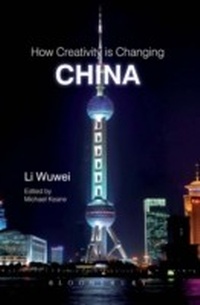
How Creativity is Changing China
1st Edition
Published on 30. September 2011
160 pages
978-1-84966-658-9 (ISBN)
Description

This book is available as open access through the Bloomsbury Open Access programme and is available on www.bloomsburycollections.com.
The question Professor Li Wuwei investigates is not 'whether' creativity
is changing China - but 'how' creativity is changing China. The outcome
will have a profound impact on how China develops and its economic role
in the world.
Creative industries maintain and protect historical and cultural
heritage, improve cultural capital, and foster communities as well as
individual creativity. This leads to the improvement of cultural assets
of cities, the establishment of city brands and identity, the promotion
of the creative economy, and overall economic and social development. In
this context, creativity is changing China forever.
The question Professor Li Wuwei investigates is not 'whether' creativity
is changing China - but 'how' creativity is changing China. The outcome
will have a profound impact on how China develops and its economic role
in the world.
Creative industries maintain and protect historical and cultural
heritage, improve cultural capital, and foster communities as well as
individual creativity. This leads to the improvement of cultural assets
of cities, the establishment of city brands and identity, the promotion
of the creative economy, and overall economic and social development. In
this context, creativity is changing China forever.
More details
Edition
1. Auflage
Language
English
Place of publication
London
United Kingdom
Publishing group
Bloomsbury Publishing PLC
Target group
College/higher education
Professional and scholarly
ISBN-13
978-1-84966-658-9 (9781849666589)
Copyright in bibliographic data and cover images is held by Nielsen Book Services Limited or by the publishers or by their respective licensors: all rights reserved.
Schweitzer Classification
Other editions
Additional editions
Li Wuwei
How Creativity is Changing China
Book
09/2011
Bloomsbury Academic
€119.04
Article exhausted; check different version
Li Wuwei
How Creativity is Changing China
Book
09/2011
Bloomsbury Academic
€39.50
Shipment within 3-4 weeks
Persons
Lu Weiwei is Vice Chair of the National Committee of the Chinese People's Political Consultative Conference and Chair of Shanghai Creative Industries, Shanghai Academy of Social Sciences, China.
Michael Keane is Principal Research Fellow of the Australian Research Council Centre of Excellence for Creative Industries and Innovation, Queensland University of Technology, Australia.
Michael Keane is Principal Research Fellow of the Australian Research Council Centre of Excellence for Creative Industries and Innovation, Queensland University of Technology, Australia.
Content
Table of contents
Acknowledgements 1
Foreword: John Howkins 2
Preface 4
Editor's Introduction 8
Introduction 8
Chapter One 8
1.1 China's Creativity on the World Stage 37
1.2 Made in China 38
1.3 Created in China 41
1.4 Creative Economy 41
1.5 Creative Industries in China 43
1.6 The Age of 3G 44
1.7 China's Creative Enterprises 46
1.8 The Smile Curve 50
1.9 Cultural Productivity 53
1.10 Industrial Competititveness 53
1.11 Soft Power 55
Chapter Two: Transformation of China's Economy 57
2.1 The Issue 57
2.2 Creative industries under the economic crisis 58
2.3 Creativity and Innovation 61
2.4 Intellectual Property (IP) 62
2.5 Risks and Benefits 63
2.6 The phenomenon of Shanzhai 66
2.7 Innovative Nation 68
2.8 The Way of Economic Growth 69
2.9 Industries without Boundaries 72
2.10 Transformation of Economic Development Mode 74
2.11 Policy Suggestions 79
Chapter Three: Changing Development Concepts 82
3.1Intergrated Development 83
3.2 Beyond Cultural Industries 84
3.3 Creative Industries vs. Traditional Industries 85
3.4 Concept of Value Innovation 87
3.5 Concept of people-oriented development 92
3.6 From the object resources to the subject resources 94
3.7 From working hard to working happily 96
3.8 Creative Talents 98
Chapter Four: Changing the Approach to Value Creation 104
4.1 The Value System of Creative Industries 106
4.2 The Value Adding of Creativity 108
4.3 From Cultural Resources to Business Resources 109
4.4 Creative Tourism 110
4.5 The Creation of Future Cultural Heritage 111
4.6 Expanding the 'Spatial Chain': Cross-regional Joint Development 115
4.7 Shaolin Culture and Innovation of Performing Arts 116
4.8 Creative agriculture 117
Chapter Five: The Creative City 120
5.1 Urban Revitalization 120
5.2 The Cultural Context of the City 122
5.3 The City Brand 123
5.4 The Structure of Urban Space 124
5.5 Creative Clusters 127
5.6 Opportunities for Creative Industries in Urban Transformation 134
5.7 Promotion of Sustainable Development of Urban Economy 135
5.8 Creativity in China 135
Chapter Six: Toward a Creative Society 145
6.1 The Evolution of Creative Communities 145
6.2 The Creative Communit 149
6.3 The Creative Society 156
6.4 Tolerance 160
6.5 Social capital 163
6.6 Gross National Happiness (GNH) 167
6.7 Lifestyle 168
6.8 Quality of life 170
6.9 Employment 171
References 173
Index
Acknowledgements 1
Foreword: John Howkins 2
Preface 4
Editor's Introduction 8
Introduction 8
Chapter One 8
1.1 China's Creativity on the World Stage 37
1.2 Made in China 38
1.3 Created in China 41
1.4 Creative Economy 41
1.5 Creative Industries in China 43
1.6 The Age of 3G 44
1.7 China's Creative Enterprises 46
1.8 The Smile Curve 50
1.9 Cultural Productivity 53
1.10 Industrial Competititveness 53
1.11 Soft Power 55
Chapter Two: Transformation of China's Economy 57
2.1 The Issue 57
2.2 Creative industries under the economic crisis 58
2.3 Creativity and Innovation 61
2.4 Intellectual Property (IP) 62
2.5 Risks and Benefits 63
2.6 The phenomenon of Shanzhai 66
2.7 Innovative Nation 68
2.8 The Way of Economic Growth 69
2.9 Industries without Boundaries 72
2.10 Transformation of Economic Development Mode 74
2.11 Policy Suggestions 79
Chapter Three: Changing Development Concepts 82
3.1Intergrated Development 83
3.2 Beyond Cultural Industries 84
3.3 Creative Industries vs. Traditional Industries 85
3.4 Concept of Value Innovation 87
3.5 Concept of people-oriented development 92
3.6 From the object resources to the subject resources 94
3.7 From working hard to working happily 96
3.8 Creative Talents 98
Chapter Four: Changing the Approach to Value Creation 104
4.1 The Value System of Creative Industries 106
4.2 The Value Adding of Creativity 108
4.3 From Cultural Resources to Business Resources 109
4.4 Creative Tourism 110
4.5 The Creation of Future Cultural Heritage 111
4.6 Expanding the 'Spatial Chain': Cross-regional Joint Development 115
4.7 Shaolin Culture and Innovation of Performing Arts 116
4.8 Creative agriculture 117
Chapter Five: The Creative City 120
5.1 Urban Revitalization 120
5.2 The Cultural Context of the City 122
5.3 The City Brand 123
5.4 The Structure of Urban Space 124
5.5 Creative Clusters 127
5.6 Opportunities for Creative Industries in Urban Transformation 134
5.7 Promotion of Sustainable Development of Urban Economy 135
5.8 Creativity in China 135
Chapter Six: Toward a Creative Society 145
6.1 The Evolution of Creative Communities 145
6.2 The Creative Communit 149
6.3 The Creative Society 156
6.4 Tolerance 160
6.5 Social capital 163
6.6 Gross National Happiness (GNH) 167
6.7 Lifestyle 168
6.8 Quality of life 170
6.9 Employment 171
References 173
Index
