

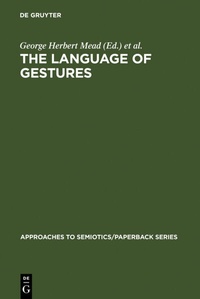
The Language of Gestures
Language of Gestures
1st Edition
Published on 13. October 2010
149 pages
978-3-11-080828-5 (ISBN)
Description

No detailed description available for "The Language of Gestures".
More details
Other editions
Additional editions
Wilhelm Wundt
The Language of Gestures
Book
01/1973
1st Edition
De Gruyter Mouton
€119.95
Shipment within 10-20 days
Wilhelm Wundt
The Language of Gestures
Book
01/1973
1st Edition
De Gruyter Mouton
€169.95
Article exhausted; check different version
Persons
Content
- Intro
- Acknowledgements
- Table of Figures
- Introduction
- Wundt and the Concept of the Gesture
- The Psychophysics of Expression of Wilhelm Wundt
- The Language of Gestures
- I. Forms of Development of Gestural Communication
- 1. Concept and General Characteristics of Gestural Communication
- 2. Gestural Communication among Deaf-mutes
- 3. Gestural Communication and Primitive Peoples
- 4. Inherited Gestures among Civilized Peoples
- 5. Gestural Signs among the Cistercian Monks
- II. Basic Gestural Forms
- 1. Psychological Classification of Gestures
- 2. Demonstrative Gestures
- 3. Imitative Gestures
- 4. Connotative Gestures
- 5. Symbolic Gestures
- III. Ambiguity and Change of Meaning of Gestures
- 1. The Vagueness of the Conceptual Categories
- 2. The Transition of Concepts and the Change of Meaning of Gesture
- IV. The Syntax of Gestural Communication
- 1. The Sequence of Gestures among Deaf-mutes
- 2. The Sequence of Gestures among Indians
- 3. Psychological Causes of Gestural Syntax
- V. The Psychological Development of Gestural Communication
- 1. The Origin of Gestures from Expressive Motions
- 2. Gestures and the Origin of Graphic Art
- 3. Gestural Communication and Pictography
- 4. The Psychological Character of Gestural Communication
