

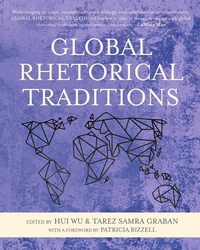
Global Rhetorical Traditions
Published on 7. September 2022
606 pages
978-1-64317-318-4 (ISBN)
Description

GLOBAL RHETORICAL TRADITIONS is unique in design and scope. It presents, as accessibly as possible, translated primary sources on global rhetorical instruction and practices of Asia, Africa, the Near East, the Middle East, Polynesia, and precolonial Europe. Each of the book's chapters represents a different rhetorical region and includes a prefatory introduction, critical commentary, translated primary sources, a glossary of rhetorical terms, and a comprehensive bibliography. The general introduction helps contextualize the project, justify its organization and coverage, and draw attention to the various features, characteristics, and/or philosophies of the rhetorics included in the book. The book's significance lies in its contributions to both studying and teaching global rhetorical traditions by offering representative research methods and primary sources in a single volume. It can be read as scholarship, as reference, and as textbook. BRIEF CONTENTS: Foreword by Patricia Bizzell
Renewing Comparative Methodologies by Tarez Samra Graban
1 Arabic and Islamic Rhetorics: Early Islamic, Medieval Islamic, Arabic-Islamic
2 Chinese Rhetorics; Spring-Autumn and Warring States Period (Classical), Han Dynasty, Six Dynasties (Early Medieval), Tang Dynasty, Song Dynasty, and Ming Dynasty, The Modern Period (20th Century)
3 East African Rhetorics: Nilotic
4 Indian and Nepali Rhetorics: Indian-Poetic, Indian-Logical, Hindu
5 Indonesian Rhetorics: Post-National
6 Irish Rhetorics: Medieval Irish-Gaelic (Non-European)
7 Mediterranean Rhetorics: Byzantine, Hebraic Mediterranean
8 Polynesian-Hawaiian Rhetorics: Post-Colonial Hawaiian (Non-European)
9 Russian Rhetorics: Kievan Rus' Traditions
10 Turkish Rhetorics: Middle Turkish (Central Asia)
More details
Other editions
Additional editions
Hui Wu | Tarez Samra Graban
Global Rhetorical Traditions
Book
09/2022
Parlor Press
€68.40
Shipment within 3-4 weeks
Content
- Front cover
- Front cover inside
- Series page
- Title page
- Copyright page
- Contents
- Acknowledgments
- Illustrations
- Foreword
- Patricia Bizzell
- Introduction: Renewing Comparative Methodologies
- Tarez Samra Graban
- 1 Arabic and Islamic Rhetorics
- Prefatory Introduction
- Tarez Samra Graban
- 1.1 Early Islamic, c. 18 AH/639 CE, Basrah (Iraq)
- Letter from Omar bin Al-Khattab to Abu Musa Al-Ash'ari
- Lana Oweidat
- 1.2 Medieval Islamic, c. 10th Century CE, Damascus
- Al-Farabi's Book of Rhetoric: An Arabic-English Translation of Al-Farabi's Commentary on Aristotle's Rhetoric
- Lahcen E. Ezzaher
- 1.3 Medieval Islamic, c. 428 AH/1037 CE, Persia (Buyid Dynasty)
- Ibn Sina (Avicenna) on Style: Article Four from His Book on Rhetoric
- Maha Baddar
- 1.4 Medieval Islamic, c. 442 AH/1050 CE, Spain
- Foundations of Rhetoric in Ibn Hazm: Selections from Ring of the Dove and A Treatise on the Cure of Souls and the Improvement of Manners
- Robert Eddy and Raed Alsawaier
- 1.5 Arabic-Islamic, c. 11th Century CE, Persia
- Abu ?ayyan al-Taw?idi's "Night 8": No Place for Greek Logic in Arabic Language and Thought
- Lahcen E. Ezzaher
- 1.6 Arabic-Islamic, c. 791 AH/1389 CE, Egypt
- The Tongue of Sovereignty and the Weaver of Wise Words: A Partial Translation of al-Qalqas?handi's Maqamah on the Chancery Writer
- Rasha Diab
- Comprehensive Bibliography
- Glossary of Terms
- 2 Chinese Rhetorics
- Prefatory Introduction
- Hui Wu
- 2.1 Spring-Autumn Period and Warring States Period (Classical)
- Rhetorical Teachings by Confucius (551-479 BCE): A Partial Translation of the Analects with an Introduction
- Haixia Lan
- 2.2 Spring-Autumn Period and Warring States Period (Classical)
- Rhetorical Treatise by Xunzi ( ?) (316-208 BCE): A Partial Translation of Xunzi with an Introduction and Commentary
- Hui Wu
- 2.3 Spring-Autumn and Warring States Period (Classical)
- A Treatise on Rhetoric by Hanfeizi ( ? 295-233 BCE): A Partial Translation of Hanfeizi with an Introduction and Commentary
- Hui Wu
- 2.4 Han Dynasty
- Rhetorical Instruction by Ban Zhao (? ? 49-120 CE): A Partial Translation of Lessons for Women (? Nü Jie) with an Introduction and Commentary
- Hui Wu
- 2.5 Six Dynasties or Early Medieval Period
- Rhetorical Treatise by Lu Ji ( ? 261-303 CE): A Translation of "An Exposition on Writing" (Wen Fu ? ) with an Introduction and Commentary
- Hui Wu
- 2.6 Six Dynasties or Early Medieval Period
- Rhetorical Treatise by Liu Xie (?? 465-522 CE): A Partial Translation of A Heart for Eloquence and the Invention of Dragons (Wenixin Diaolong ?? ) with An Introduction and Commentary
- Hui Wu
- 2.7 Tang Dynasty
- Rhetorical Instruction by Song Ruozhao (? ?, c. 9th Century CE): Chapter One in The Analects for Women (Nü Lun Yu ? ) with an Introduction and Commentary
- Hui Wu
- 2.8 Song Dynasty
- The Rules of Writing in Medieval China by Chen Kui ( 1128-1203 CE): Partial Translation with Commentary
- Andrew Kirkpatrick
- 2.9 Ming Dynasty
- Rhetorical Instruction by Queen Xu (??? Xu Huanghou, 1362-1407 CE): A Partial Translation of the Doctrine for the Inner Court (? Nei Xun) with an Introduction and Commentary
- Hui Wu
- 2.10 Ming Dynasty
- Rhetorical Instruction by Wang Jiefu (???, c. 17th CE): Excerpt from A Brief Survey of Exemplary Women (Nü Fan Jie Lu ??? ) with an Introduction and Commentary
- Hui Wu
- 2.11 The Modern Period (the 20th century)
- Rhetorical Treatise by Chen Wangdao ( ? 1891-1977 CE): Partial Translation of An Introduction to Rhetoric (Xiucixue Fafan ? ???) with an Introduction and Commentary
- Hui Wu
- Comprehensive Bibliography
- Glossary of Terms
- 3 East African Rhetorics
- Prefatory Introduction
- Leonora Anyango
- 3.1 Nilotic, 20th Century, Kenya, Uganda
- "My Other Heart Is Telling Me . . .": Translating Orature as a Rhetoric of Meaning
- Leonora Anyango
- Comprehensive Bibliography
- Glossary of Terms
- 4 Indian and Nepali Rhetorics
- Prefatory Introduction
- Uma S. Krishnan
- 4.1 Indian-Poetic, c. 1750-400 BCE, Ancient India
- Winning Eloquence: A Tip from Two Hymns of the Rig Veda, the Richo Akshare Verse (1.164.39) and the Hymn of Knowledge (10.71)
- Anne Melfi
- 4.2 Indian-Poetic, c. 4th-5th century BCE, Ancient India
- Sruti and Smriti: Role of Listening, Chanting, and Memorization in Rhetorical and Pedagogical Practices of Indian Classical Dance
- Shreelina Ghosh
- 4.3 Indian-Logical, c. 200 CE, Ancient India
- Rhetorical Commentary on Book 1, Chapter 1 of the Nya¯ya Su¯tra, Trans. S. S. Vidyabhusana
- Keith Lloyd
- 4.4 Hindu, between 850 and 1000 CE, Nepal
- Rhetoric as a Vehicle of Social Order in the Garuda Pura?a
- Shuv Raj Rana Bhat
- 4.5 Hindu, c. 18th Century CE, India
- I Say "Cat," You Say "Cradle": Ecstatic Signification and the Kitchen Songs of Avudai Akkal of Sengottai
- Trey Conner and Richard Doyle
- Comprehensive Bibliography
- Glossary of Terms
- 5 Indonesian Rhetorics
- Prefatory Introduction
- Gregory Coles
- 5.1 Post-National, c. 2014 CE, Indonesia
- Address at the Rakernas Partai Nasdem (National Democratic Parties Convention), by Megawati Sukarnoputri
- Gregory Coles
- Comprehensive Bibliography
- Glossary of Terms
- 6 Irish Rhetorics
- Prefatory Introduction
- Brian J. Stone
- 6.1 Medieval Irish-Gaelic (Non-European), c. 700 CE, Ireland
- Selected Texts in Early Medieval Irish Rhetoric
- Brian J. Stone
- Comprehensive Bibliography
- Glossary of Terms
- 7 Mediterranean Rhetorics
- Prefatory Introduction
- Steven B. Katz
- 7.1 Byzantine, Non-European Crusades, c. 1061-1067 CE, Byzantium
- Michael Psellos's "Synopsis of Rhetoric in Verses, Based on the Hermogenian Corpus": Translated with Introduction and Notes
- Jeffrey Walker
- 7.2 Byzantine, c. 12th Century CE, Byzantium
- The Alexiad of Anna Komnene: Introduction and Commentary
- Ellen Quandahl
- 7.3 Hebraic Mediterranean, c. 15th Century CE, Italy
- An Examination of Judah Messer Leon's Hebraic Treatment of the Nofet Zuphim (Book of Honeycomb's Flow)
- Jim Ridolfo
- Comprehensive Bibliography
- Glossary of Terms
- 8 Polynesian-Hawaiian Rhetorics
- Prefatory Introduction
- Georganne Nordstrom and ku?ualoha ho?omanawanui
- 8.1 Post-Colonial Hawaiian (Non-European), c. 20th and 21st Centuries, Hawaii
- He Inoa no ke Kanaka (In the Name of the Person): Mele Inoa as Rhetorical Continuity
- Georganne Nordstrom and ku?ualoha ho?omanawanui
- Comprehensive Bibliography
- Glossary of Terms
- 9 Russian Rhetorics
- Prefatory Introduction
- Maria Prikhodko
- 9.1 Kievan Rus', c. 859-1240 CE, Kiev (Eastern Europe, Rurik Dynasty)
- The Testament of Vladimir Monomakh: A Rhetoric of Moral and Didactic Eloquence in the Kievan Rus' Traditions
- Maria Prikhodko
- Comprehensive Bibliography
- Glossary of Terms
- 10 Turkish Rhetorics
- Prefatory Introduction
- Elif Guler
- 10.1 Middle Turkish, 11th Century CE, Central Asia
- Exploring the Rhetorical Perspectives in Yusuf Has Hacib's Kutadgu Bilig, Karakhanid Empire
- Elif Guler
- Comprehensive Bibliography
- Glossary of Terms
- Contributors
- Index of Glossary Terms
- Index of Names, Peoples, Places, and Religions
- About the Editors
- Inside back cover
- Back cover
