

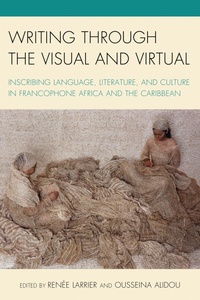
Writing through the Visual and Virtual
Inscribing Language, Literature, and Culture in Francophone Africa and the Caribbean
Lexington Books (Publisher)
1st Edition
Published on 12. November 2015
1 pages
979-8-216-29406-1 (ISBN)
Description

Writing Through the Visual and Virtual: Inscribing Language, Literature, and Culture in Francophone Africa and the Caribbean interrogates conventional notions of writing. The contributors-whose disciplines include anthropology, art history, education, film, history, linguistics, literature, performance studies, philosophy, sociology, translation, and visual arts-examine the complex interplay between language/literature/arts and the visual and virtual domains of expressive culture. The twenty-five essays explore various patterns of writing practices arising from contemporary and historical forces that have impacted the literatures and cultures of Benin, Cameroon, Côte d'Ivoire, Egypt, Guadeloupe, Haiti, Martinique, Morocco, Niger, Reunion Island, and Senegal. Special attention is paid to how scripts, though appearing to be merely decorative in function, are often used by artists and performers in the production of material and non-material culture to tell "stories" of great significance, co-mingling words and images in a way that leads to a creative synthesis that links the local and the global, the "classical" and the "popular" in new ways.
More details
Series
Edition
1. Auflage
Language
English
Place of publication
United States
Publishing group
Bloomsbury Publishing Plc
Target group
Professional and scholarly
ISBN-13
979-8-216-29406-1 (9798216294061)
Copyright in bibliographic data and cover images is held by Nielsen Book Services Limited or by the publishers or by their respective licensors: all rights reserved.
Schweitzer Classification
Other editions
Additional editions
Renee Larrier | Ousseina Alidou
Writing through the Visual and Virtual
Inscribing Language, Literature, and Culture in Francophone Africa and the Caribbean
Book
08/2019
Lexington Books
€70.30
Shipment within 15-20 days
Persons
Renée Larrier is professor and chair of the Department of French at Rutgers University New Brunswick.
Ousseina D. Alidou is professor in the Department of African, Middle Eastern, and South Asian Languages and Literatures at Rutgers University New Brunswick.
Ousseina D. Alidou is professor in the Department of African, Middle Eastern, and South Asian Languages and Literatures at Rutgers University New Brunswick.
Content
Introduction:Traditions of Literacy by Renée Larrier andOusseina D. Alidou
Part I: Visual and Verbal Artistry: Texts and Text[iles] as Epistemology
Chapter 1: Embodying African Women's Epistemology: International Women's Day Pagnes in Cameroon; Bertrade Ngo-Ngijol Banoum and Anne Patricia Rice
Chapter 2: Reading the Téra-tera: Textiles, Transportation, and Nationalism in Niger's First Republic; Amanda Gilvin
Chapter 3: Becoming Griot: Righting Within a Minor Literature; Oumar Diogoye Diouf
Chapter 4: Research on Droughts and Famines in the Sahel: the Contribution of Oral Literature; Boureima Alpha Gado
Part II: Body Language/Writing [on] the Body
Chapter 5: Transgressive Embodied Writings of KAribbean Bodies in Pain; Gladys Francis
Chapter 6: Alhaji Roaming the City: Gender, HIV-AIDS and the Performing Arts; Ousseina D. Alidou
Chapter 7: Writing on the Visual: Lalla Essaydi's Photographic Tableaux; Donna Gustafson
Chapter 8: Angles of Representation: Photography and the Vision of al Misriyya [the Egyptian] in Women's Press of the Early Twentieth Century; Fakhri Haghani
Part III: Inscribing Popular Culture
Chapter 9: Representing Adolescent Sexuality in the Sahel; Barbara Cooper
Chapter 10: There's More Than One Way to Make a Ceebu-Jën: Narrating West African Recipes in Texts; Julie Huntington
Chapter 11: Reclamation of the Arena: Traditional Wrestling in West Africa; Bojana Coulibaly
Chapter 12: Ritual Celebrations: Context of the Development of New African Hybrid Cultures; Jean-Baptiste Sourou
Chapter 13: Simmering Exile; Edwidge Sylvestre-Ceide
Part IV: Language, Literacy, and Education
Chapter 14: Writing,Learning and Teaching Material for Early Childhood Cultures: from Africa to a Global Context; Rokhaya Fall Diawara
Chapter 15: Orthographic Diversity in a World of Standards: Graphic Representations of Vernacular Arabics in Morocco; Becky Schulthies
Chapter 16: The Polyphonous Classroom: Discourse on Language-in-Education on Reunion Island; Meghan Tinsley
Chapter 17: Thundering Poetics/Murmuring Poetics: Doing Things With Words as a Marker of Identity; Laurence Jay-Rayon
Part V: Intersections of Text and Image
Chapter 18: Wilson Bigaud's "Les Noces de Cana" [The Wedding at Cana]or the Meeting of Colonial Heritage and Ancestral Traditions in Haitian Naive Art; Jean Hérald Legagneur
Chapter 19: Tourist Art: A Tracery of the Visual/Virtual;Gabrielle Civil. Images by Vladimir Cybil Charlier
Chapter 20: Religious Iconography in the Daily Life of the Senegalese; Abdoulaye Elimane Kane
Chapter21:West African Culture in Animation: the Example of "Kirikou"; Maha Gad El Hak
Part VI: Literature, Gender, and Identity
Chapter 22: Power and Patriarchy: Sexual Violence and Sexual Exploitation in the Francophone and Hispanophone Caribbean Represented in Marie Vieux-Chauvet's Amour, colère et folie, Simone Schwarz-Bart's Pluie et vent sur Télumée Miracle, Rosario Ferré's "La Bella Durmiente," and Nelly Rosario's El canto del agua;Phuong Hoang
Chapter 23: La Mulâtresse During the Two World Wars: Race, Gender, and Sexuality in Suzanne Lacascade's Claire-Solange, âme-africaine and Mayotte Capécia's Je suis Martiniquaise; Nathan H. Dize
Chapter 24: Inscriptions of Nature from Guadeloupe, Haiti, and Martinique; Anne Rehill
Chapter 25: The Politics of Writing As a Space to Shape Identity(ies); Khady Diène
Part I: Visual and Verbal Artistry: Texts and Text[iles] as Epistemology
Chapter 1: Embodying African Women's Epistemology: International Women's Day Pagnes in Cameroon; Bertrade Ngo-Ngijol Banoum and Anne Patricia Rice
Chapter 2: Reading the Téra-tera: Textiles, Transportation, and Nationalism in Niger's First Republic; Amanda Gilvin
Chapter 3: Becoming Griot: Righting Within a Minor Literature; Oumar Diogoye Diouf
Chapter 4: Research on Droughts and Famines in the Sahel: the Contribution of Oral Literature; Boureima Alpha Gado
Part II: Body Language/Writing [on] the Body
Chapter 5: Transgressive Embodied Writings of KAribbean Bodies in Pain; Gladys Francis
Chapter 6: Alhaji Roaming the City: Gender, HIV-AIDS and the Performing Arts; Ousseina D. Alidou
Chapter 7: Writing on the Visual: Lalla Essaydi's Photographic Tableaux; Donna Gustafson
Chapter 8: Angles of Representation: Photography and the Vision of al Misriyya [the Egyptian] in Women's Press of the Early Twentieth Century; Fakhri Haghani
Part III: Inscribing Popular Culture
Chapter 9: Representing Adolescent Sexuality in the Sahel; Barbara Cooper
Chapter 10: There's More Than One Way to Make a Ceebu-Jën: Narrating West African Recipes in Texts; Julie Huntington
Chapter 11: Reclamation of the Arena: Traditional Wrestling in West Africa; Bojana Coulibaly
Chapter 12: Ritual Celebrations: Context of the Development of New African Hybrid Cultures; Jean-Baptiste Sourou
Chapter 13: Simmering Exile; Edwidge Sylvestre-Ceide
Part IV: Language, Literacy, and Education
Chapter 14: Writing,Learning and Teaching Material for Early Childhood Cultures: from Africa to a Global Context; Rokhaya Fall Diawara
Chapter 15: Orthographic Diversity in a World of Standards: Graphic Representations of Vernacular Arabics in Morocco; Becky Schulthies
Chapter 16: The Polyphonous Classroom: Discourse on Language-in-Education on Reunion Island; Meghan Tinsley
Chapter 17: Thundering Poetics/Murmuring Poetics: Doing Things With Words as a Marker of Identity; Laurence Jay-Rayon
Part V: Intersections of Text and Image
Chapter 18: Wilson Bigaud's "Les Noces de Cana" [The Wedding at Cana]or the Meeting of Colonial Heritage and Ancestral Traditions in Haitian Naive Art; Jean Hérald Legagneur
Chapter 19: Tourist Art: A Tracery of the Visual/Virtual;Gabrielle Civil. Images by Vladimir Cybil Charlier
Chapter 20: Religious Iconography in the Daily Life of the Senegalese; Abdoulaye Elimane Kane
Chapter21:West African Culture in Animation: the Example of "Kirikou"; Maha Gad El Hak
Part VI: Literature, Gender, and Identity
Chapter 22: Power and Patriarchy: Sexual Violence and Sexual Exploitation in the Francophone and Hispanophone Caribbean Represented in Marie Vieux-Chauvet's Amour, colère et folie, Simone Schwarz-Bart's Pluie et vent sur Télumée Miracle, Rosario Ferré's "La Bella Durmiente," and Nelly Rosario's El canto del agua;Phuong Hoang
Chapter 23: La Mulâtresse During the Two World Wars: Race, Gender, and Sexuality in Suzanne Lacascade's Claire-Solange, âme-africaine and Mayotte Capécia's Je suis Martiniquaise; Nathan H. Dize
Chapter 24: Inscriptions of Nature from Guadeloupe, Haiti, and Martinique; Anne Rehill
Chapter 25: The Politics of Writing As a Space to Shape Identity(ies); Khady Diène
