

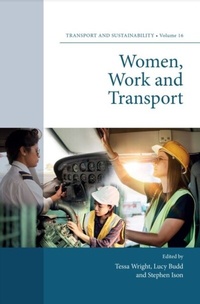
Women, Work and Transport
1st Edition
Published on 17. October 2022
456 pages
978-1-80071-669-8 (ISBN)
Description

Women play an essential role in the transport workforce worldwide, working in formal and informal jobs in public transport, road freight and logistics, rail, maritime and aviation sectors, in ports and in active travel. Women, Work and Transport is an international collection that brings together researchers with global expertise in gender and transport work to provide original evidence of the experiences of women working in all transport modes across countries in the Global North and the Global South. The 21 chapters reveal the everyday challenges faced by women working in highly masculinised environments, including gender stereotypes about women's lack of suitability for transport work, gender-based violence and harassment, limited opportunities for promotion and progression, inflexible work patterns, poor working conditions, and lack of gender-specific facilities.
The transport sector has also been severely affected by the coronavirus pandemic, resulting in widespread furlough and redundancies. The effect of the pandemic on women's work in transport is addressed, while other chapters also reveal how women have succeeded in transport occupations, with the support of mentoring schemes, leadership programmes and trade unions, highlighting new emerging opportunities to challenge occupational gender segregation as the transport sector transforms through automation, digitisation, and the transition to low-carbon technologies.
The Transport and Sustainability series addresses the important nexus between transport and sustainability containing volumes dealing with a wide range of issues relating to transport, its impact in economic, social and environmental spheres, and its interaction with other policy sectors.
The transport sector has also been severely affected by the coronavirus pandemic, resulting in widespread furlough and redundancies. The effect of the pandemic on women's work in transport is addressed, while other chapters also reveal how women have succeeded in transport occupations, with the support of mentoring schemes, leadership programmes and trade unions, highlighting new emerging opportunities to challenge occupational gender segregation as the transport sector transforms through automation, digitisation, and the transition to low-carbon technologies.
The Transport and Sustainability series addresses the important nexus between transport and sustainability containing volumes dealing with a wide range of issues relating to transport, its impact in economic, social and environmental spheres, and its interaction with other policy sectors.
More details
Series
Language
English
Place of publication
Bingley
United Kingdom
Target group
Professional and scholarly
File size
4,81 MB
ISBN-13
978-1-80071-669-8 (9781800716698)
Copyright in bibliographic data and cover images is held by Nielsen Book Services Limited or by the publishers or by their respective licensors: all rights reserved.
Schweitzer Classification
Other editions
Additional editions
Tessa Wright | Lucy Budd | Stephen Ison
Women, Work and Transport
Book
10/2022
Emerald Publishing Limited
€169.50
Shipment within 3-4 weeks
Persons
Tessa Wright is Professor of Employment Relations and Co-Director of the Centre for Research in Equality and Diversity, School of Business and Management, Queen Mary University of London.
Lucy Budd is a human geographer and Professor of Air Transport Management at Leicester Castle Business School, De Montfort University, UK.
Stephen Ison is Professor of Air Transport Policy within Leicester Castle Business School at De Montfort University, Leicester, UK.
Lucy Budd is a human geographer and Professor of Air Transport Management at Leicester Castle Business School, De Montfort University, UK.
Stephen Ison is Professor of Air Transport Policy within Leicester Castle Business School at De Montfort University, Leicester, UK.
Content
Chapter 1. Introduction; Tessa Wright, Lucy Budd, and Stephen Ison
Public Transport
Chapter 2. Women and Work in Public Transport: Historical and Contemporary Evidence; Corinne Mulley
Chapter 3. Current Trends in Gender, Work and Transport: An Island Perspective; Maria Attard and Loukas Dimitriou
Chapter 4. Tackling Gender-Based Violence and Sexual Harassment in the Public Transport Sector: The Role of Key Actors; Anne Kamau and Tessa Wright
Road Transport, Active Travel and Logistics
Chapter 5. Experiences of Women Workers in the African Road Transport Sector; Gina Porter and Nyaboke Omwega
Chapter 6. Mother Truckers? The Gendered Work of Freight and Logistics; Debbie Hopkins and Nihan Akyelken
Chapter 7. Walking, Cycling and Gendered Journeys of Working Lives; Jennifer Bonham and Barbara Koth
Rail Transport
Chapter 8. Women Leaders in Rail: A Postfeminist Aesthetic Femininity; Kathryn Thory
Chapter 9. Gender Realities in Indian Railways; Leena Sachdeva
Chapter 10. Bullying and Harassment in the British Rail Sector: An Intersectional Analysis; Hazel Conley, Mostak Ahamed, and Tessa Wright
Air Transport
Chapter 11. Negotiating Personal and Professional Identities in the Workplace: The Case of Women Ab Initio Airline Pilots; Faye McCarthy, Lucy Budd, and Stephen Ison
Chapter 12. Relational Mentoring in the Aviation and Aerospace Industry: Meeting Women's needs through the Alta Mentoring Scheme; Susan Durbin, Ana Lopes, Stella Warren, and Judith Milne
Chapter 13. Examining the Culture of Women in Aviation Leadership: A Case of UK Airports; Amarachi Amaugo
Chapter 14. Fostering Women's Resilience in the Aviation Sector; Stephanie Douglas
Maritime Transport
Chapter 15. Gender and Work within the Maritime Sector; Momoko Kitada
Chapter 16. 'If God had Wanted You to Go to Sea...' Experiences of Women Seafarers; Marie Grasmeier
Chapter 17. Closing the Gender Gap in the Maritime Industry: A Career-Decision Approach; Heather McLaughlin and Colm Fearon
Chapter 18. Tracking Gender Equality in Ports; Sisangile Nduna and Christa Sys
Governance and Trade Unions
Chapter 19. The Role of Government and the Transport Sector with respect to Women Working in Transport; Hebba Haddad, Jo Field, and Alex Bennett
Chapter 20. Trade Unions and Organizing Women in Civil Aviation; Jocelyn Finniear, Mrinalini Greedharry, and Geraint Harvey
Chapter 21. "Not like other Women": Understanding the Barriers for Women in the Transport Sector and the Role of Trade Unions; Dalila Mahdawi and Jodi Evans
Public Transport
Chapter 2. Women and Work in Public Transport: Historical and Contemporary Evidence; Corinne Mulley
Chapter 3. Current Trends in Gender, Work and Transport: An Island Perspective; Maria Attard and Loukas Dimitriou
Chapter 4. Tackling Gender-Based Violence and Sexual Harassment in the Public Transport Sector: The Role of Key Actors; Anne Kamau and Tessa Wright
Road Transport, Active Travel and Logistics
Chapter 5. Experiences of Women Workers in the African Road Transport Sector; Gina Porter and Nyaboke Omwega
Chapter 6. Mother Truckers? The Gendered Work of Freight and Logistics; Debbie Hopkins and Nihan Akyelken
Chapter 7. Walking, Cycling and Gendered Journeys of Working Lives; Jennifer Bonham and Barbara Koth
Rail Transport
Chapter 8. Women Leaders in Rail: A Postfeminist Aesthetic Femininity; Kathryn Thory
Chapter 9. Gender Realities in Indian Railways; Leena Sachdeva
Chapter 10. Bullying and Harassment in the British Rail Sector: An Intersectional Analysis; Hazel Conley, Mostak Ahamed, and Tessa Wright
Air Transport
Chapter 11. Negotiating Personal and Professional Identities in the Workplace: The Case of Women Ab Initio Airline Pilots; Faye McCarthy, Lucy Budd, and Stephen Ison
Chapter 12. Relational Mentoring in the Aviation and Aerospace Industry: Meeting Women's needs through the Alta Mentoring Scheme; Susan Durbin, Ana Lopes, Stella Warren, and Judith Milne
Chapter 13. Examining the Culture of Women in Aviation Leadership: A Case of UK Airports; Amarachi Amaugo
Chapter 14. Fostering Women's Resilience in the Aviation Sector; Stephanie Douglas
Maritime Transport
Chapter 15. Gender and Work within the Maritime Sector; Momoko Kitada
Chapter 16. 'If God had Wanted You to Go to Sea...' Experiences of Women Seafarers; Marie Grasmeier
Chapter 17. Closing the Gender Gap in the Maritime Industry: A Career-Decision Approach; Heather McLaughlin and Colm Fearon
Chapter 18. Tracking Gender Equality in Ports; Sisangile Nduna and Christa Sys
Governance and Trade Unions
Chapter 19. The Role of Government and the Transport Sector with respect to Women Working in Transport; Hebba Haddad, Jo Field, and Alex Bennett
Chapter 20. Trade Unions and Organizing Women in Civil Aviation; Jocelyn Finniear, Mrinalini Greedharry, and Geraint Harvey
Chapter 21. "Not like other Women": Understanding the Barriers for Women in the Transport Sector and the Role of Trade Unions; Dalila Mahdawi and Jodi Evans
