

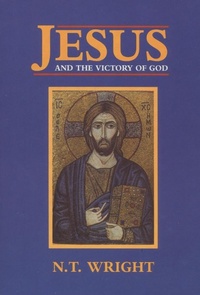
Jesus and the Victory of God
Description

In this highly anticipated volume, N. T. Wright focuses directly on the historical Jesus: Who was he? What did he say? And what did he mean by it?
Wright begins by showing how the questions posed by Albert Schweitzer a century ago remain central today. Then he sketches a profile of Jesus in terms of his prophetic praxis, his subversive stories, the symbols by which he reordered his world, and the answers he gave to the key questions that any world view must address. The examination of Jesus' aims and beliefs, argued on the basis of Jesus' actions and their accompanying riddles, is sure to stimulate heated response.
Wright offers a provocative portrait of Jesus as Israel's Messiah who would share and bear the fate of the nation and would embody the long-promised return of Israel's God to Zion.
More details
Other editions
Additional editions
Person
Content
- Intro
- Title Page
- Copyright
- Dedication
- Contents
- Preface
- I
- II
- III
- IV
- V
- Part 1: Introduction
- Chapter 1: Jesus then and Now
- 1. Angels, Giants and Jigsaws
- 2. Procedure
- 3. The 'Quests' and Their Usefulness
- (i) Jesus through History
- (ii) The Rise of the Critical Movement: From Reimarus to Schweitzer
- (iii) No Quest to New Quest: Schweitzer to Schillebeeckx
- (iv) Two Hundred Years of Questing
- Chapter 2: Heavy Traffic on the Wredebahn: The 'New Quest' Renewed?
- 1. Introduction
- 2. The 'Jesus Seminar'
- 3. Burton L. Mack (and the Question of Q)
- 4. J. Dominic Crossan
- (i) Introduction
- (ii) Basic Features
- (iii) Historical Reconstruction of Jesus
- (iv) The Early Church
- 5. Jesus the Cynic?
- 6. Marcus J. Borg
- 7. Conclusion: The New 'New Quest'
- Chapter 3: Back to the Future: The 'Third Quest'
- 1. Breaking out of the Straitjacket
- 2. The Questions
- (i) How Does Jesus Fit into Judaism?
- (ii) What Were Jesus' Aims?
- (iii) Why Did Jesus Die?
- (iv) How and Why Did the Early Church Begin?
- (v) Why are the Gospels What they are?
- (vi) The Five Questions Together
- (vii) The Sixth Question: Agenda and Theology
- 3. Conclusion: Future Directions of the Third Quest
- Chapter 4: Prodigals and Paradigms
- 1. Jews, Peasants and Prodigals
- 2. From Parable to Paradigm
- (i) Towards a Hypothesis
- (ii) Of the Telling of Stories
- (iii) Worldviews and Mindsets
- Part 2: Profile of a Prophet
- Chapter 5: The Praxis of a Prophet
- 1. Jesus' Career in Outline
- 2. Jesus' Context
- (i) First-Century Judaism
- (ii) Bandits, Peasants and Revolt
- (iii) John the Baptist
- 3. Jesus as 'Oracular' and 'Leadership' Prophet
- 4. A Prophet Mighty in Word and Deed
- (i) Jesus as a 'Leadership' Prophet
- (ii) An Itinerant Prophet
- (iii) Mighty in Word
- (a) Authority and the Kingdom
- (b) Parables
- (c) Oracles of Judgment
- (iv) Mighty in Deed
- (a) Introduction
- (b) 'Mighty Works': Interpretation
- 5. More than a Prophet?
- Chapter 6: Stories of the Kingdom (1): Announcement
- 1. Introduction
- 2. Contexts
- (i) The Jewish Hope
- (a) Eschatology
- (b) A Non-Apocalyptic Kingdom?
- (ii) The Christian Reappropriation
- (iii) The Kingdom in Recent Scholarship
- 3. Kingdom Redefined: The Announcement
- (i) Introduction: Summary Announcements
- (ii) Stories of Israel's Paradoxical History
- (a) Introduction
- (b) The Sower
- (c) Other Parables of Israel's Story
- 4. Conclusion: Announcing the Kingdom
- Chapter 7: Stories of the Kingdom (2): Invitation, Welcome, Challenge and Summons
- 1. Introduction: The Open-Ended Story
- 2. Invitation: The Call to Repent and Believe
- (i) Repentance
- (ii) Belief
- 3. Welcome: Sinners and Forgiveness
- (i) Who Are the Sinners?
- (ii) The Forgiveness of Sins
- 4. Challenge: The Call to Live as the New Covenant People
- (i) Introduction: Community and Praxis
- (ii) New Covenant, New Community
- (iii) New Covenant, New Praxis
- (a) Introduction
- (b) The Renewed Heart
- (c) The Sermon on the Mount
- (d) The Lord's Prayer
- (e) Jubilee: Forgiveness of Debts
- (f) Revolution, Politics, Community and Theology
- 5. Summons: The Call to Be Jesus' Helpers and Associates
- (i) The Summons to Follow Jesus
- (ii) The 'Rich Young Ruler'
- (iii) The Summons to Assist in the Proclamation of the Kingdom
- (iv) The Summons to Take up the Cross and Follow Jesus
- (v) The Great Commandment and the Good Samaritan
- 6. Many will Come from East and West
- 7. The True Wisdom
- 8. Conclusion: The Renewed People of God
- Chapter 8: Stories of the Kingdom (3): Judgment and Vindication
- 1. Introduction
- 2. The Coming Great Disaster
- (i) Introduction
- (ii) John the Baptist
- (iii) General Warnings of Judgment on Israel
- (iv) Warnings of Imminent Judgment on 'This Generation'
- (v) Warnings of Judgment on Jerusalem and the Temple
- 3. Assurance of Vindication
- 4. Mark 13 and Parallels: The Coming Destruction and Vindication
- (i) Introduction
- (ii) The Fall of Jerusalem
- (iii) The Start of the 'Woes', and the Trials of the Disciples
- (iv) Specific Signs of Emergency
- (v) The Vindication of the Son of Man
- (vi) Noah, Lot and the Son of Man
- 5. Conclusion: Judgment and Vindication
- Chapter 9: Symbol and Controversy
- 1. Introduction: Kingdom, Symbol, Controversy
- (i) The Problem of Symbols
- (ii) Controversy about Controversy
- 2. Symbols of Israel's Identity: Sabbath, Food, Nation, Land
- (i) Introduction: Context and Agendas
- (ii) Sabbath
- (iii) Food
- (iv) Nation and Family
- (v) Possessions
- 3. Symbols of Israel's Identity: The Temple
- (i) Introduction
- (ii) The Temple and Its Significance
- (iii) Jesus' Action in the Temple
- 4. Jesus' Symbols of the Kingdom
- (i) Introduction: Symbols of 'Return'
- ii) Restored Land, Restored People
- (iii) The Redefined Family
- (iv) The Redefined Torah
- (v) The Rebuilt Temple
- (vi) The Symbolic Focus
- 5. Jesus 'Leading the People Astray'?
- Chapter 10: The Questions of the Kingdom
- 1. Introduction
- 2. Who Are We?
- 3. Where Are We?
- 4. What's Wrong?
- (i) Introduction
- (ii) The Real Enemy Identified: Not Rome, but the Satan
- (a) The Beelzebul Controversy
- (b) Who Is to Be Feared?
- (c) The Seven Other Demons
- (d) The Initial Victory
- (iii) The Enemy Relocated: Israel and the Satan
- (iv) Conclusion: Jesus' Analysis of the Problem
- 5. What's the Solution?
- 6. What Time Is It?
- 7. The Prophet and the Kingdom
- Part 3: The Aims and Beliefs of Jesus
- Chapter 11: Jesus and Israel: The Meaning of Messiahship
- 1. Introduction
- 2. Messiahship in Judaism and Early Christianity
- (i) Messiahship in the Jewish World of Jesus' Day
- (ii) Messiahship in Early Christianity
- 3. Jesus and Kingship: Events in Jerusalem
- (i) Introduction
- (ii) The Temple-Action
- (iii) Royal Riddles
- (a) Destroy and Rebuild
- (b) Say to This Mountain .
- (c) John the Baptist
- (d) Tenants, Servants, Son and Stone
- (e) Tribute to Caesar
- (f) David's Lord and David's Son
- (g) Royal Riddles: Jesus and the Evangelists
- (iv) Temple, Messiah and Son of Man
- (a) Temple Destroyed, Jesus Vindicated
- (b) Jesus on Trial
- 4. Messiahship as the Secret of Jesus' Prophetic Ministry
- (i) Caesarea Philippi
- (ii) Messianic Praxis in the Early Ministry
- (iii) Messianic Sayings in the Early Ministry
- (iv) A Messianic Beginning to the Ministry?
- (v) A Prophetic/Messianic Ministry
- 5. Conclusion: Jesus and the Return from Exile
- Chapter 12: The Reasons for Jesus' Crucifixion
- 1. Introduction
- 2. The Roman Charge
- 3. The Jewish Charge
- 4. The Intention of Jesus (1): The Key Symbol
- (i) Introduction
- (ii) The Last Supper: Symbol and Significance
- (a) Introduction
- (b) Last Supper and Passover
- (c) From Symbol to Word
- (d) Conclusion
- 5. The Intention of Jesus (2): The Sayings and the Symbol
- (i) Introduction
- (ii) The Riddles of the Cross
- (a) The Rejected Son
- (b) The Great Commandment
- (c) Anointing for Burial
- (d) The Green Tree and the Dry
- (e) The Hen and the Chickens
- (f) The Baptism and the Cup
- (g) Riddles and Authenticity
- (iii) Predictions of the Passion
- 6. The Intention of Jesus (3): Eschatological Redemption in Judaism
- (i) Introduction
- (ii) The Controlling Story: Exile and Restoration
- (iii) The First Sub-plot: The Messianic Woes
- (iv) The Second Sub-plot: Specific or Individual Suffering
- (v) 'According to the Scriptures'
- (vi) Conclusion: Jesus' Jewish Context
- 7. The Intention of Jesus (4): The Strange Victory
- (i) Introduction
- (ii) Proposal: Eschatology and the Cross
- (iii) The Cross and the Scriptures
- (iv) The Messianic Task
- (v) The Victory of God
- (vi) Conclusion
- Chapter 13: The Return of the King
- 1. Introduction
- 2. The Jewish World of Meaning
- (i) The Hope of Yhwh's Return
- (ii) Sharing the Throne of God
- (iii) Symbols for God and God's Activity
- 3. Jesus' Riddles of Return and Exaltation
- (i) Stories of YHWH's Return to Zion
- (a) Introduction
- (b) Talents and Pounds
- (c) Other Stories of the Return of YHWH
- (ii) Riddles of Exaltation
- (iii) Conclusion
- 4. Vocation Foreshadowed
- 5. Conclusion
- Part 4: Conclusion
- Chapter 14: Results
- Appendix: 'Kingdom of God' in Early Christian Literature
- 1. Synoptic Tradition
- a. Listed by Location
- (i) In All Three Synoptic Gospels
- (ii) In Matthew and Mark
- (iii) In Matthew and Luke
- (iv) In Mark and Luke
- (v) In Matthew Only
- (vi) In Mark Only
- (vii) In Luke Only
- b. Listed by Broad Categories
- (i) Summary Statements
- (ii) Invitations to, or Redefinitions of, the Kingdom
- (iii) Warnings about Exclusion from the Kingdom
- (iv) Within Parabolic Redefinition
- (v) The Coming of the Kingdom
- (vi) Other
- 2. John
- 3. Acts
- 4. Pauline Corpus
- 5. Rest of NT
- 6. Other Early Christian and Related Literature:
- Bibliography
- Abbreviations
- A: Primary Sources
- 1. Bible
- 2. Other Jewish Texts
- 3. Other Early Christian and Related Texts
- 4. Pagan Texts
- B: Secondary Literature
- Index of Ancient Sources
- 1. Old Testament
- 2. Apocrypha
- 3. Pseudepigrapha
- 4. Qumran
- 5. Josephus
- 6. Philo
- 7. Rabbinic Works
- 8. New Testament
- 9. Other Early Christian and/or Gnostic Works
- 10. Pagan Sources
- 11. Persian Texts
- Index of Modern Authors
- Index of Selected Topics
