

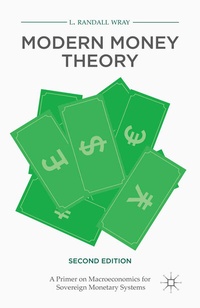
Modern Money Theory
A Primer on Macroeconomics for Sovereign Monetary Systems
2nd Edition
Published on 22. September 2015
XVI, 306 pages
978-1-137-53992-2 (ISBN)
Description

This second edition explores how money 'works' in the modern economy and synthesises the key principles of Modern Money Theory, exploring macro accounting, currency regimes and exchange rates in both the USA and developing nations.
Reviews / Votes
'This book paves the way for another revolution in macroeconomics. Wray shows us how an economy with modern money works and, more importantly, how it can be used to lift us to a more prosperous tomorrow.' Stephanie Kelton, University of Missouri-Kansas City
'Wray debunks so many of the destructive beliefs that have contributed to our current economic and social malaise. This is a primer that should not only become mandatory reading for students of economics, but any policy maker who truly wants to deal with the grave disasters engendered from years of 'reading from the wrong playbook'.' Marshall Auerback, Director of the Economists for Peace and Security (epsusa.org) and a research associate at the Levy Institute
More details
Other editions
Additional editions
Book
09/2015
2nd Edition
Palgrave Macmillan
€139.09
Shipment within 10-20 days
Book
09/2015
2nd Edition
Palgrave Macmillan
€99.50
Article exhausted; check for reprint
Previous edition
E-Book
02/2016
1st Edition
Palgrave Macmillan
€69.54
Available for download
Person
L. Randall Wray is a professor of Economics at the University of Missouri-Kansas City, USA, and Senior Scholar at the Levy Economics Institute of Bard College, New York, USA. A student of Hyman P. Minsky while at Washington University in St. Louis, Wray has focused on monetary theory and policy, macroeconomics, financial instability, and employment policy. He has published widely in journals and is the author of Why Minsky Matters (2015), Understanding Modern Money: The Key to Full Employment and Price Stability (1998) and Money and Credit in Capitalist Economies (1990). He is the editor of Credit and State Theories of Money (2004) and the co-editor of Contemporary Post Keynesian Analysis (2005), Money, Financial Instability and Stabilization Policy (2006), and Keynes for the Twenty-First Century: The Continuing Relevance of The General Theory (2008). Wray is also the author of numerous scholarly articles in edited books and academic journals. He is the co-editor of the Journal of Post Keynesian Economics. He has been a visiting professor at the University of Rome, the University of Paris, the University of Bergamo, the University of Bologna, and UNAM (Mexico City). He was the Bernardin-Haskell Professor, UMKC, Fall 1996, and joined the UMKC faculty as Professor of Economics, August 1999.
Content
Contents
List Of Illustrations
Preface
Box: Definitions
Introduction The Basics Of Modern Money Theory
1. The Basics Of Macroeconomic Accounting
1.1.The Basics Of Accounting For Stocks And Flows
1.2.MMT, Sectoral Balances, And Behavior
1.3. Stocks, Flows, And Balance Sheet: A Bathtub Analogy
1.4. Government Budget Deficits Are Largely Nondiscretionary: The Case Of The Great Recession Of 2007
1.5. Accounting For Real Versus Financial
1.6. Recent US Sectoral Balances: Goldilocks And The Global Crash
2. Spending By Issuer Of Domestic Currency
2.1. What Is A Sovereign Currency?
2.2. What Backs Up Currency And Why Would Anyone Accept It?
2.3. Taxes Drive Money
2.4. What If The Population Refuses To Accept The Domestic Currency?
2.5. Record Keeping In The The Money Of Account
2.6. Sovereign Currency And Monetizing Real Assets
2.7. Sustainability Conditions
3. The Domestic Monetary System: Banking And Central Banking
3.1. Ious Denominated In The National Currency
3.2. Clearing And The Pyramid Of Liabilities
3.3. Central Bank Operations In Crisis: Lender Of Last Resort
3.4. Balance Sheets Of Banks, Monetary Creation By Banks, And Interbank Settle-Ment
3.5. Exogenous Interest Rates And Quantitative Easing
3.6. The Technical Details Of Central Bank And Treasury Coordination: The Case Of The Fed
3.7. Treasury Debt Operations
3.8. Conclusions On Fed And Treasury Roles
4. Fiscal Operations In A Nation That Issues Its Own Currency
4.1. Introductory Principles
4.2. Effects Of Sovereign Government Budget Deficits On Saving, Reserves, And In-Terest Rates
4.3. Government Budget Deficits And The 'Two-Step' Process Of Saving
4.4. What If Foreigners Hold Government Bonds?
4.5. Currency Solvency And The Special Case Of The US Dollar
4.6. Sovereign Currency And Government Policy In The Open Economy
4.7. What About A Country That Adopts A Foreign Currency?
5. Tax Policy For Sovereign Nations
5.1. Why Do We Need Taxes? The MMT Perspective
5.2. What Are Taxes For? The MMT Approach
5.3. Taxes For Redistribution
5.4. Taxes And The Public Purpose
5.5. Tax Bads, Not Goods
5.6. Bad Taxes
6. Modern Money Theory And Alternative Exchange Rate Regimes
6.1.The Gold Standard And Fixed Exchange Rates
6.2. Floating Exchange Rates
6.3. Commodity Money Coins? Metalism Versus Nominalism, From Mesopotamia To Rome
6.4. Commodity Money Coins? Metalism Versus Nominalism, After Rome
6.5. Exchange Rate Regimes And Sovereign Defaults
6.6. The Euro: The Set-Up Of A Nonsovereign Currency
6.7. The Crisis Of The Euro
6.8. Endgame For The Euro?
6.9. Currency Regimes And Policy Space: Conclusion
7. Monetary And Fiscal Policy For Sovereign Currencies: What Should Government Do?
7.1. Just Because Government Can Afford To Spend Does Not Mean Government Ought To Spend
7.2. The 'Free' Market And The Public Purpose
7.3. Functional Finance
7.4. Functional Finance Versus The Government Budget Constraint
7.5. The Debate About Debt Limits (US Case)
7.6. A Budget Stance For Economic Stability And Growth
7.7. Functional Finance And Exchange Rate Regimes
7.8. Functional Finance And Developing Nations
7.9. Exports Are A Cost, Imports Are A Benefit: A Functional Finance Approach
8. Policy For Full Employment And Price Stability
8.1. Functional Finance And Full Employment
8.2. The JG/ELR For A Developing Nation
8.3. Program Manageability
8.4. The JG/ELR And Real World Experience
8.5. The JG And Inequality
8.6. Conclusions On Full Employment Policy
8.7. MMT For Austrians: Can A Libertarian Support The JG?
9. Inflation And Sovereign Currencies
9.1. Inflation And The Consumer Price Index
9.2. Alternative Explanations Of Hyperinflation
9.3. Real-World Hyperinflations
9.4. Conclusions On Hyperinflation
9.5. Conclusion: MMT And Policy
10. Conclusions: Modern Money Theory For Sovereign Currencies
10.1. MMT Got It Right: The Global Financial Crisis
10.2. MMT Got It Right: The Euro Crisis
10.3. Creastionism Versus Redemptionism: How A Money-Issuer Really Lends And Spends
10.4. Growing Recognition Of The Need For A Job Guarantee
10.5. MMT And External Constraints: To Fix Or To Float, That Is The Question
10.6. A Meme For Money
Notes
Bibliography
Index
List Of Illustrations
Preface
Box: Definitions
Introduction The Basics Of Modern Money Theory
1. The Basics Of Macroeconomic Accounting
1.1.The Basics Of Accounting For Stocks And Flows
1.2.MMT, Sectoral Balances, And Behavior
1.3. Stocks, Flows, And Balance Sheet: A Bathtub Analogy
1.4. Government Budget Deficits Are Largely Nondiscretionary: The Case Of The Great Recession Of 2007
1.5. Accounting For Real Versus Financial
1.6. Recent US Sectoral Balances: Goldilocks And The Global Crash
2. Spending By Issuer Of Domestic Currency
2.1. What Is A Sovereign Currency?
2.2. What Backs Up Currency And Why Would Anyone Accept It?
2.3. Taxes Drive Money
2.4. What If The Population Refuses To Accept The Domestic Currency?
2.5. Record Keeping In The The Money Of Account
2.6. Sovereign Currency And Monetizing Real Assets
2.7. Sustainability Conditions
3. The Domestic Monetary System: Banking And Central Banking
3.1. Ious Denominated In The National Currency
3.2. Clearing And The Pyramid Of Liabilities
3.3. Central Bank Operations In Crisis: Lender Of Last Resort
3.4. Balance Sheets Of Banks, Monetary Creation By Banks, And Interbank Settle-Ment
3.5. Exogenous Interest Rates And Quantitative Easing
3.6. The Technical Details Of Central Bank And Treasury Coordination: The Case Of The Fed
3.7. Treasury Debt Operations
3.8. Conclusions On Fed And Treasury Roles
4. Fiscal Operations In A Nation That Issues Its Own Currency
4.1. Introductory Principles
4.2. Effects Of Sovereign Government Budget Deficits On Saving, Reserves, And In-Terest Rates
4.3. Government Budget Deficits And The 'Two-Step' Process Of Saving
4.4. What If Foreigners Hold Government Bonds?
4.5. Currency Solvency And The Special Case Of The US Dollar
4.6. Sovereign Currency And Government Policy In The Open Economy
4.7. What About A Country That Adopts A Foreign Currency?
5. Tax Policy For Sovereign Nations
5.1. Why Do We Need Taxes? The MMT Perspective
5.2. What Are Taxes For? The MMT Approach
5.3. Taxes For Redistribution
5.4. Taxes And The Public Purpose
5.5. Tax Bads, Not Goods
5.6. Bad Taxes
6. Modern Money Theory And Alternative Exchange Rate Regimes
6.1.The Gold Standard And Fixed Exchange Rates
6.2. Floating Exchange Rates
6.3. Commodity Money Coins? Metalism Versus Nominalism, From Mesopotamia To Rome
6.4. Commodity Money Coins? Metalism Versus Nominalism, After Rome
6.5. Exchange Rate Regimes And Sovereign Defaults
6.6. The Euro: The Set-Up Of A Nonsovereign Currency
6.7. The Crisis Of The Euro
6.8. Endgame For The Euro?
6.9. Currency Regimes And Policy Space: Conclusion
7. Monetary And Fiscal Policy For Sovereign Currencies: What Should Government Do?
7.1. Just Because Government Can Afford To Spend Does Not Mean Government Ought To Spend
7.2. The 'Free' Market And The Public Purpose
7.3. Functional Finance
7.4. Functional Finance Versus The Government Budget Constraint
7.5. The Debate About Debt Limits (US Case)
7.6. A Budget Stance For Economic Stability And Growth
7.7. Functional Finance And Exchange Rate Regimes
7.8. Functional Finance And Developing Nations
7.9. Exports Are A Cost, Imports Are A Benefit: A Functional Finance Approach
8. Policy For Full Employment And Price Stability
8.1. Functional Finance And Full Employment
8.2. The JG/ELR For A Developing Nation
8.3. Program Manageability
8.4. The JG/ELR And Real World Experience
8.5. The JG And Inequality
8.6. Conclusions On Full Employment Policy
8.7. MMT For Austrians: Can A Libertarian Support The JG?
9. Inflation And Sovereign Currencies
9.1. Inflation And The Consumer Price Index
9.2. Alternative Explanations Of Hyperinflation
9.3. Real-World Hyperinflations
9.4. Conclusions On Hyperinflation
9.5. Conclusion: MMT And Policy
10. Conclusions: Modern Money Theory For Sovereign Currencies
10.1. MMT Got It Right: The Global Financial Crisis
10.2. MMT Got It Right: The Euro Crisis
10.3. Creastionism Versus Redemptionism: How A Money-Issuer Really Lends And Spends
10.4. Growing Recognition Of The Need For A Job Guarantee
10.5. MMT And External Constraints: To Fix Or To Float, That Is The Question
10.6. A Meme For Money
Notes
Bibliography
Index
