

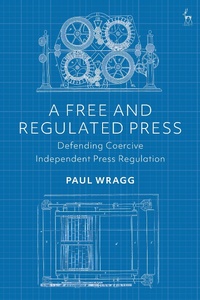
A Free and Regulated Press
Defending Coercive Independent Press Regulation
1st Edition
Published on 28. May 2020
288 pages
978-1-5099-2724-1 (ISBN)
Description

This thought-provoking book provides a systematic, philosophically-grounded reconceptualisation of press freedom and press regulation. In a major departure from orthodox norms, the book argues that press freedom and coercive independent press regulation are not mutually exclusive; that newspapers could be made to compensate their victims, through regulation, without jeopardising their free speech rights; that their perceived public watchdog status does not exempt them; and, ultimately, that mandatory press regulation is not unconstitutional. In doing so, the book questions our most deeply-held, intuitive beliefs about the press and its role in society.
Why do we say the printed press has a duty to act as a public watchdog when there is no legally enforceable apparatus by which to ensure it does? Why does government constantly recommend that the press regulate itself when history shows this model always fails? Why do victims of press malfeasance continue to suffer needlessly?
By deconstructing the accepted view of press freedom and mandatory regulation, this book shows that both are deeply misunderstood. The prevailing notion that the press must serve the public is an empty relic of Victorian ideology that is both philosophically incoherent and legally unjustifiable. The press is obliged to make good, not do good.
Why do we say the printed press has a duty to act as a public watchdog when there is no legally enforceable apparatus by which to ensure it does? Why does government constantly recommend that the press regulate itself when history shows this model always fails? Why do victims of press malfeasance continue to suffer needlessly?
By deconstructing the accepted view of press freedom and mandatory regulation, this book shows that both are deeply misunderstood. The prevailing notion that the press must serve the public is an empty relic of Victorian ideology that is both philosophically incoherent and legally unjustifiable. The press is obliged to make good, not do good.
More details
Edition
1. Auflage
Language
English
Place of publication
London
United Kingdom
Publishing group
Bloomsbury Publishing PLC
Target group
Professional and scholarly
ISBN-13
978-1-5099-2724-1 (9781509927241)
Copyright in bibliographic data and cover images is held by Nielsen Book Services Limited or by the publishers or by their respective licensors: all rights reserved.
Schweitzer Classification
Other editions
Additional editions
Book
11/2021
Hart Publishing
€65.79
Shipment within 15-20 days
Person
Content
PART 1
RATIONALE
1. Unity in Press Freedom Theory
I. Introduction
II. The Modern View
III. The Teleological View in its Historical Context
IV. Conclusion
2. Division in Press Regulatory Theory
I. Introduction
II. Press Regulation in Practice
III. The Ideological Divide Over Press Regulation
IV. The Press Reform Debate and its Discontents
V. Conclusion
PART 2
RIGHT
3. Duty
I. Introduction
II. Duty as a Legal Claim
III. Duty as a Moral Justification
IV. Conclusion
4. Responsibility
I. Introduction
II. Burdens for Benefits
III. Responsibilities Curbing Misuse of Power
IV. Professionalism and the Dualism of Responsibility
V. Conclusion
5. Accountability
I. Introduction
II. Mill's Argument from Truth
III. Liberty, Rationality, and the Press
IV. The Accountability Model Outlined
V. Liberty and the Press
VI. Conclusion
PART 3
REGULATION
6. Society
I. Introduction
II. The Meaning of Accuracy
III. The Harm of Inaccuracy
IV. The Limits of Accuracy Regulation
V. Conclusion
7. Victims
I. Introduction
II. Content
III. Conduct
IV. Public Interest Expression
V. Conclusion
8. Readers
I. Introduction
II. Consumer Protection
III. Autonomy and Automatons
IV. Conclusion
PART 4
REALISATION
9. How?
I. Introduction
II. Terminal Failings in the Contractual Model
III. Statutory Regulation, Press Freedom, and Pareidolia
IV. Sanctions
V. Conclusion
10. Why?
I. Introduction
II. Why Regulate the Press?
III. Why Regulate the Press?
IV. Why Not?
RATIONALE
1. Unity in Press Freedom Theory
I. Introduction
II. The Modern View
III. The Teleological View in its Historical Context
IV. Conclusion
2. Division in Press Regulatory Theory
I. Introduction
II. Press Regulation in Practice
III. The Ideological Divide Over Press Regulation
IV. The Press Reform Debate and its Discontents
V. Conclusion
PART 2
RIGHT
3. Duty
I. Introduction
II. Duty as a Legal Claim
III. Duty as a Moral Justification
IV. Conclusion
4. Responsibility
I. Introduction
II. Burdens for Benefits
III. Responsibilities Curbing Misuse of Power
IV. Professionalism and the Dualism of Responsibility
V. Conclusion
5. Accountability
I. Introduction
II. Mill's Argument from Truth
III. Liberty, Rationality, and the Press
IV. The Accountability Model Outlined
V. Liberty and the Press
VI. Conclusion
PART 3
REGULATION
6. Society
I. Introduction
II. The Meaning of Accuracy
III. The Harm of Inaccuracy
IV. The Limits of Accuracy Regulation
V. Conclusion
7. Victims
I. Introduction
II. Content
III. Conduct
IV. Public Interest Expression
V. Conclusion
8. Readers
I. Introduction
II. Consumer Protection
III. Autonomy and Automatons
IV. Conclusion
PART 4
REALISATION
9. How?
I. Introduction
II. Terminal Failings in the Contractual Model
III. Statutory Regulation, Press Freedom, and Pareidolia
IV. Sanctions
V. Conclusion
10. Why?
I. Introduction
II. Why Regulate the Press?
III. Why Regulate the Press?
IV. Why Not?
