

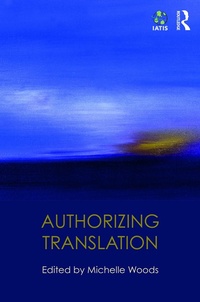
Authorizing Translation
The IATIS Yearbook
Published on 4. October 2016
128 pages
978-1-317-27042-3 (ISBN)
Description

Authorizing Translation applies ground-breaking research on literary translation to examine the intersection between Translation Studies and literary criticism, rethinking ways in which analyzing translation and the authority of the translator can provide nuanced micro and macro readings of literary work and the worlds through which it moves. A substantial introduction surveys the field and suggests possible avenues for future research, while six case-study-based chapters by a new generation of Literature and Translation Studies scholars focus on the question of authority by asking:
Who authors translations?
Who authorizes translations?
What authority do translations have in different cultural contexts?
What authority does Literary Translation Studies have as a field?
The hermeneutic role of the translator is explored through the literary periods of Romanticism, Modernism, and Postmodernism, and through different cultures and languages. The case studies focus on data-centered analysis of reviews of translated literature, ultimately illustrating how the translator's authority creates and hybridizes literary cultures.
Authorizing Translation will be of interest to students and researchers of Literary Translation and Translation Studies. Additional resources for Translation and Interpreting Studies are available on the Routledge Translation Studies Portal: http://cw.routledge.com/textbooks/translationstudies.
Who authors translations?
Who authorizes translations?
What authority do translations have in different cultural contexts?
What authority does Literary Translation Studies have as a field?
The hermeneutic role of the translator is explored through the literary periods of Romanticism, Modernism, and Postmodernism, and through different cultures and languages. The case studies focus on data-centered analysis of reviews of translated literature, ultimately illustrating how the translator's authority creates and hybridizes literary cultures.
Authorizing Translation will be of interest to students and researchers of Literary Translation and Translation Studies. Additional resources for Translation and Interpreting Studies are available on the Routledge Translation Studies Portal: http://cw.routledge.com/textbooks/translationstudies.
Reviews / Votes
"Against a well-argued theoretical backdrop, this beautifully conceived collection of essays revisits what lies at the core of the act of translation: the translator's reading of a given text. For some time the translator's hermeneutic authority has been sidelined by various approaches that highlight context rather than agency. It is invigorating to see a new literary-critical perspective deployed in the examination of six fascinating examples of how translators can make creative interventions in their work, 'usurping' the role of the author." Leo Tak-hung Chan, Lingnan University, ChinaMore details
Series
Language
English
Place of publication
London
United Kingdom
Publishing group
Taylor & Francis Ltd
Target group
College/higher education
Illustrations
3 Tables, black and white; 2 Illustrations, black and white
File size
1,67 MB
ISBN-13
978-1-317-27042-3 (9781317270423)
Copyright in bibliographic data and cover images is held by Nielsen Book Services Limited or by the publishers or by their respective licensors: all rights reserved.
Schweitzer Classification
Other editions
Additional editions
Michelle Woods
Authorizing Translation
Book
12/2020
1st Edition
Routledge
€53.31
Shipment within 15-20 days
Michelle Woods
Authorizing Translation
Book
10/2016
1st Edition
Routledge
€230.90
Shipment within 10-20 days
Person
Michelle Woods is Associate Professor of English at the State University of New York, New Paltz. She is the author of Translating Milan Kundera (2006), Censoring Translation: Censorship, Theatre and the Politics of Translation (2012), and Kafka Translated: How Translators Have Shaped Our Reading of Kafka (2013).
Content
Introduction
Authorizing Translation: Literature, Theory and Translation
Chapter 1:
"A Diachronic Look at the State of Translation Criticism in the English-speaking World"
Chapter 2:
Translating Translinguality in Early Turkish Republican Literature: The Case of Sabahattin Ali
Chapter 3:
"Translation and Authorship Revisited: Krzysztof Bartnicki, Finneganow tren, Da Capo al Finne, and Finnegans _ake"
Chapter 4:
The translator takes the stage: Clair in Crimp's The City
Chapter 5:
"Pseudotranslation and Scottish Romanticism: Scott, Blackwood's and Carlyle."
Chapter 6:
Mario Domingues: Translator and Pseudotranslator
Authorizing Translation: Literature, Theory and Translation
Chapter 1:
"A Diachronic Look at the State of Translation Criticism in the English-speaking World"
Chapter 2:
Translating Translinguality in Early Turkish Republican Literature: The Case of Sabahattin Ali
Chapter 3:
"Translation and Authorship Revisited: Krzysztof Bartnicki, Finneganow tren, Da Capo al Finne, and Finnegans _ake"
Chapter 4:
The translator takes the stage: Clair in Crimp's The City
Chapter 5:
"Pseudotranslation and Scottish Romanticism: Scott, Blackwood's and Carlyle."
Chapter 6:
Mario Domingues: Translator and Pseudotranslator
