

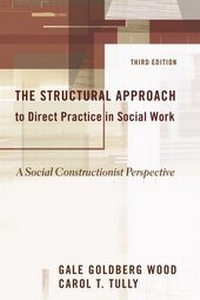
The Structural Approach to Direct Practice in Social Work
A Social Constructionist Perspective
3rd Edition
Published on 18. September 2006
296 pages
978-0-231-50782-0 (ISBN)
Description

This classic text introduces students to the structural approach of social work practice, which assumes that many clients' problems arise from harmful social forces. By focusing on the construction of such realities as poverty, racism, and domestic violence, the structural approach counters the focus on individual change that is so common in our age of managed care and corporatization.
For this edition Gale Goldberg Wood and Carol T. Tully have recast the text from the perspective of contemporary social constructionism without altering its main message and organization. They have added six new chapters, covering ethics, the role of the social worker as therapist and community organizer, learning and working within the organization, and the paradigm dilemma. In addition, case studies now include greater detail about the client's social context.
Though much has changed since the first edition of this book was published, the need for well-trained, compassionate social workers remains. The Structural Approach to Direct Practice in Social Work continues to be an essential resource for practitioners who wish to help their clients confront oppressive social realities and affect system change through political action.
For this edition Gale Goldberg Wood and Carol T. Tully have recast the text from the perspective of contemporary social constructionism without altering its main message and organization. They have added six new chapters, covering ethics, the role of the social worker as therapist and community organizer, learning and working within the organization, and the paradigm dilemma. In addition, case studies now include greater detail about the client's social context.
Though much has changed since the first edition of this book was published, the need for well-trained, compassionate social workers remains. The Structural Approach to Direct Practice in Social Work continues to be an essential resource for practitioners who wish to help their clients confront oppressive social realities and affect system change through political action.
All prices
More details
Other editions
Additional editions
Gale Goldberg Wood | Carol Tully
The Structural Approach to Direct Practice in Social Work
A Social Constructionist Perspective
Book
09/2006
3rd Edition
Columbia University Press
€84.18
Shipment within 10-20 days
Persons
Gale Goldberg Wood is professor emerita of the Kent School of Social Work, University of Louisville, Kentucky, and, with Ruth R. Middleman, the coauthor of the second edition of The Structural Approach to Direct Practice in Social Work. She has written extensively on direct practice, the use of narratives, and empowerment.Carol T. Tully is professor of social work at the Kent School of Social Work. She has published widely on feminist social work, ethics, and social services, and is the author of Lesbians, Gays, and the Empowerment Perspective.
Content
Acknowledgements xi
Introduction 1
Part 1 Infrastructure
1. The Frame of Reference for Social Work Practice 7
Two Dimensions that Define the Profession 9
Four Categories of Social Work Activity 10
Research Value 12
Beyond Research 12
2. The Philosophical Base for Structural Social Work Practice 14
The Practice Context 14
The Philosophical Stance 16
Postmodernism 17
Deconstruction 17
Postmodern Perspectives on Power 18
Social Constructionism 19
The Structural View 21
Specialization 22
Movement Through the Quadrants 24
Conclusion 25
3. Ethics and Strucutral Social Work PRactice 27
Getting Grounded Defining Ethics 27
The NASW Code of Ethics 29
Introduction 1
Part 1 Infrastructure
1. The Frame of Reference for Social Work Practice 7
Two Dimensions that Define the Profession 9
Four Categories of Social Work Activity 10
Research Value 12
Beyond Research 12
2. The Philosophical Base for Structural Social Work Practice 14
The Practice Context 14
The Philosophical Stance 16
Postmodernism 17
Deconstruction 17
Postmodern Perspectives on Power 18
Social Constructionism 19
The Structural View 21
Specialization 22
Movement Through the Quadrants 24
Conclusion 25
3. Ethics and Strucutral Social Work PRactice 27
Getting Grounded Defining Ethics 27
The NASW Code of Ethics 29
