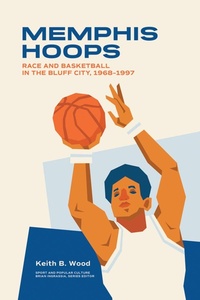
Memphis Hoops
Description

Memphis Hoops tells the story of basketball in Tennessee's southwestern-most metropolis following the 1968 assassination of Martin Luther King Jr. Keith Brian Wood examines the city through the lens of the Memphis State University basketball team and its star player-turned-coach Larry Finch. Finch, a Memphis native and the first highly recruited black player signed by Memphis State, helped the team make the 1973 NCAA championship game in his senior year. In an era when colleges in the south began to integrate their basketball programs, the city of Memphis embraced its flagship university's shift toward including black players. Wood interjects the forgotten narrative of LeMoyne-Owen's (the city's HBCU) 1975 NCAA Division III National Championship team as a critical piece to understanding this era. Finch was drafted by the Lakers following the 1973 NCAA championship but instead signed with the American Basketball Association's Memphis Tams. After two years of playing professionally, Finch returned to the sidelines as a coach and would eventually become the head coach of the Memphis State Tigers.
Wood deftly weaves together basketball and Memphis's fraught race relations during the post-civil rights era. While many Memphians viewed the 1973 Tigers' championship run as representative of racial progress, Memphis as a whole continued to be deeply divided on other issues of race and civil rights. And while Finch was championed as a symbol of the healing power of basketball that helped counteract the city's turbulence, many black players and coaches would discover that even its sports mirrored Memphis's racial divide. Today, as another native son of Memphis, Penny Hardaway, has taken the reigns of the University of Memphis's basketball program, Wood reflects on the question of progress in the city that saw King's assassination little more than forty years ago.
In this important examination of sports and civil rights history, Wood summons social memory from an all-too-recent past to present the untold-and unfinished-story of basketball in the Bluff City.
More details
Other editions
Additional editions