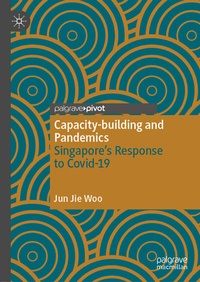
Capacity-building and Pandemics
Description

This book focuses on the policy capacities, built up since the 2003 SARS crisis, that have contributed to Singapore's Covid-19 response efforts. In doing so, the book discusses the fiscal, operational, analytical and political capacities that have driven Singapore's policy response to the pandemic, and proposes a broad policy capacity framework that will be applicable to the analysis of other contexts as well.
The Covid-19 pandemic has brought about massive disruptions in societies and economies across the world. Singapore's early success in managing the Covid-19 pandemic has received much attention from researchers and observers from across the world. A study by the T.H. Chan School of Public Health at Harvard University had described Singapore's early efforts to detect and contain Covid-19 as the "gold standard of near-perfect detection".
Despite its success in containing Covid-19 infections, Singapore has also faced challenges arising from systemic policy blind spots, resulting in high levels of infection in its migrant worker dormitories. With that, the book also discusses the systemic blind spots and policy shortcomings that have emerged in Singapore's response to the Covid-19 pandemic, and provides policy recommendations on policy capacity-building for future pandemics and crises.
The book will be of strong interest to scholars and students of public policy and crisis management, especially those who specialise in healthcare policy and pandemic response. Given the ongoing challenges posed by Covid-19 as well as the continued risks of other future infectious disease outbreaks, the book will also be useful for policymakers and practitioners seeking to draw policy lessons from Singapore's experience with the SARS and Covid-19 outbreaks.
More details
Other editions
Additional editions