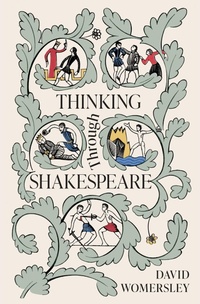
Thinking Through Shakespeare
Description

How Shakespeare's exploration of central human questions-about identity, politics, religion and right and wrong-explains his lasting power, popularity and relevance In the eighteenth century, Samuel Johnson famously argued that Shakespeare is enduringly popular because he "is above all writers, at least above all modern writers, the poet of nature; the poet that holds up to his readers a faithful mirror of manners and of life." Johnson's view largely prevailed until the late twentieth century, when it was challenged by a growing scepticism about the existence of a general human nature. In Thinking Through Shakespeare, eminent literary critic David Womersley pushes back against this change by exploring how Shakespeare's plays think through-and invite us to think through-deep human questions of lasting importance. Thinking Through Shakespeare explores four perennial human problems: personal identity, the distinction between civilization and barbarism, the relation between political power and religious authority and the tension between means and ends. It examines the history of these problems, from antiquity to today, and traces how Shakespeare engages with them in the great tragedies-Othello, Hamlet, Macbeth and King Lear-but also in his other plays. Without arguing that human nature is universal or unchanging, or that Shakespeare has some special access to timeless wisdom, the book makes the case that his drama is powerful because it serves as a forensic tool, probing rival perspectives on questions that have preoccupied many people in many societies over many centuries. By revealing in new ways how Shakespeare's plays are animated and driven by central human problems, and why he should again be viewed as the great poet of human nature, Thinking Through Shakespeare opens up a richer understanding and appreciation of his work.
More details
Other editions
Additional editions