

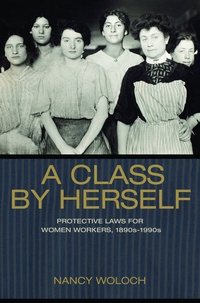
A Class by Herself
Protective Laws for Women Workers, 1890s-1990s
1st Edition
Published on 28. July 2015
352 pages
978-1-4008-6636-6 (ISBN)
Description

A Class by Herself explores the historical role and influence of protective legislation for American women workers, both as a step toward modern labor standards and as a barrier to equal rights. Spanning the twentieth century, the book tracks the rise and fall of women-only state protective laws-such as maximum hour laws, minimum wage laws, and night work laws-from their roots in progressive reform through the passage of New Deal labor law to the feminist attack on single-sex protective laws in the 1960s and 1970s.
Nancy Woloch considers the network of institutions that promoted women-only protective laws, such as the National Consumers' League and the federal Women's Bureau; the global context in which the laws arose; the challenges that proponents faced; the rationales they espoused; the opposition that evolved; the impact of protective laws in ever-changing circumstances; and their dismantling in the wake of Title VII of the Civil Rights Act of 1964. Above all, Woloch examines the constitutional conversation that the laws provoked-the debates that arose in the courts and in the women's movement. Protective laws set precedents that led to the Fair Labor Standards Act of 1938 and to current labor law; they also sustained a tradition of gendered law that abridged citizenship and impeded equality for much of the century.
Drawing on decades of scholarship, institutional and legal records, and personal accounts, A Class by Herself sets forth a new narrative about the tensions inherent in women-only protective labor laws and their consequences.
Nancy Woloch considers the network of institutions that promoted women-only protective laws, such as the National Consumers' League and the federal Women's Bureau; the global context in which the laws arose; the challenges that proponents faced; the rationales they espoused; the opposition that evolved; the impact of protective laws in ever-changing circumstances; and their dismantling in the wake of Title VII of the Civil Rights Act of 1964. Above all, Woloch examines the constitutional conversation that the laws provoked-the debates that arose in the courts and in the women's movement. Protective laws set precedents that led to the Fair Labor Standards Act of 1938 and to current labor law; they also sustained a tradition of gendered law that abridged citizenship and impeded equality for much of the century.
Drawing on decades of scholarship, institutional and legal records, and personal accounts, A Class by Herself sets forth a new narrative about the tensions inherent in women-only protective labor laws and their consequences.
All prices
More details
Edition
Pilot project,
eBook available to selected US libraries only
Language
English
Place of publication
Princeton, NJ
United States
Publishing group
De Gruyter
Target group
Professional and scholarly
Edition type
Digital original
Product notice
Reflowable
File size
7,62 MB
ISBN-13
978-1-4008-6636-6 (9781400866366)
Schweitzer Classification
Other editions
Additional editions
Book
02/2017
Princeton University Press
€28.90
Shipment within 10-20 days
Book
04/2015
Princeton University Press
€43.40
Article exhausted; check different version
Person
Nancy Woloch teaches history at Barnard College, Columbia University. Her books include Women and the American Experience and Muller v. Oregon: A Brief History with Documents.
Content
Introduction 1
1 Roots of Protection: The National Consumers' League and Progressive Reform 5
Progressives Mobilize 6
Florence Kelley and the NCL 11
Rationales: The Perils of Pragmatism 18
Roadblocks: Business and Labor 25
Law: Constraint and Opportunity 28
2 Gender, Protection, and the Courts, 1895-1907 33
Freedom of Contract versus the Police Power 35
A Lowell Mill: Commonwealth v. Hamilton Manufacturing Co. (1876) 38
A Chicago Box Factory: Ritchie v. People (1895) 39
A Utah Mine: Holden v. Hardy (1898) 43
Women's Hours Laws: Pennsylvania, Washington, Nebraska 45
A Utica Bakery: Lochner v. New York (1905) 48
A New York Bookbindery: People v. Williams (1907) 51
3 A Class by Herself: Muller v. Oregon (1908) 54
Local Roots of the Muller Case 55
Muller Goes to Court 58
The NCL Steps In 61
The Brandeis Brief 64
Curt Muller's Brief 70
The Muller v. Oregon Opinion 73
Assessing the Law of 1903 79
4 Protection in Ascent, 1908-23 85
Maximum Hours Cases 87
Night Work Laws 93
Protecting Men 97
The Minimum Wage 103
War and Peace 109
Adkins v. Children's Hospital (1923) 112
5 Different versus Equal: The 1920s 121
Alice Paul, the National Woman's Party, and the ERA 122
The NCL, Social Feminism, and the Minimum Wage 125
Factions Collide: The Women's Movement 130
Close Combat: The Conferences 133
The Women's Bureau Report of 1928 137
Did the Laws Work? Enforcement and Effectiveness 141
Working Women's Voices 145
6 Transformations: The New Deal through the 1950s 152
New Deal Women 153
The Minimum Wage and the Revolution of 1937 158
FLSA: Protection Triumphant 162
The 1940s: War and Postwar 167
Bartending: Goesaert v. Cleary (1948) 174
Women in Unions 180
The Women's Bureau and the NWP 184
7 Trading Places: The 1960s and 1970s 191
The Early 1960s: PCSW and Equal Pay 193
Title VII, the EEOC , and Protective Laws 197
Protection Debated: Pressure and Politics, 1965-69 202
Protection Challenged: Three Landmark Cases 207
Protection Dismantled: The Courts and the States 212
Closing Arguments: 1970 221
The ERA and the Women's Movement 224
8 Last Lap: Work and Pregnancy 235
Pregnancy Cases: The 1970s 236
The Pregnancy Discrimination Act (1978) 242
Toward Family Leave 248
The Toxic Workplace 250
The Johnson Controls Decision (1991) 255
Conclusion: Protection Revisited 261
Looking Back: The Clash over Overtime 263
Moving On: After Protection 267
Acknowledgments 273
Notes 275
Index 321
1 Roots of Protection: The National Consumers' League and Progressive Reform 5
Progressives Mobilize 6
Florence Kelley and the NCL 11
Rationales: The Perils of Pragmatism 18
Roadblocks: Business and Labor 25
Law: Constraint and Opportunity 28
2 Gender, Protection, and the Courts, 1895-1907 33
Freedom of Contract versus the Police Power 35
A Lowell Mill: Commonwealth v. Hamilton Manufacturing Co. (1876) 38
A Chicago Box Factory: Ritchie v. People (1895) 39
A Utah Mine: Holden v. Hardy (1898) 43
Women's Hours Laws: Pennsylvania, Washington, Nebraska 45
A Utica Bakery: Lochner v. New York (1905) 48
A New York Bookbindery: People v. Williams (1907) 51
3 A Class by Herself: Muller v. Oregon (1908) 54
Local Roots of the Muller Case 55
Muller Goes to Court 58
The NCL Steps In 61
The Brandeis Brief 64
Curt Muller's Brief 70
The Muller v. Oregon Opinion 73
Assessing the Law of 1903 79
4 Protection in Ascent, 1908-23 85
Maximum Hours Cases 87
Night Work Laws 93
Protecting Men 97
The Minimum Wage 103
War and Peace 109
Adkins v. Children's Hospital (1923) 112
5 Different versus Equal: The 1920s 121
Alice Paul, the National Woman's Party, and the ERA 122
The NCL, Social Feminism, and the Minimum Wage 125
Factions Collide: The Women's Movement 130
Close Combat: The Conferences 133
The Women's Bureau Report of 1928 137
Did the Laws Work? Enforcement and Effectiveness 141
Working Women's Voices 145
6 Transformations: The New Deal through the 1950s 152
New Deal Women 153
The Minimum Wage and the Revolution of 1937 158
FLSA: Protection Triumphant 162
The 1940s: War and Postwar 167
Bartending: Goesaert v. Cleary (1948) 174
Women in Unions 180
The Women's Bureau and the NWP 184
7 Trading Places: The 1960s and 1970s 191
The Early 1960s: PCSW and Equal Pay 193
Title VII, the EEOC , and Protective Laws 197
Protection Debated: Pressure and Politics, 1965-69 202
Protection Challenged: Three Landmark Cases 207
Protection Dismantled: The Courts and the States 212
Closing Arguments: 1970 221
The ERA and the Women's Movement 224
8 Last Lap: Work and Pregnancy 235
Pregnancy Cases: The 1970s 236
The Pregnancy Discrimination Act (1978) 242
Toward Family Leave 248
The Toxic Workplace 250
The Johnson Controls Decision (1991) 255
Conclusion: Protection Revisited 261
Looking Back: The Clash over Overtime 263
Moving On: After Protection 267
Acknowledgments 273
Notes 275
Index 321

