

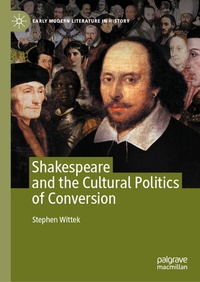
Shakespeare and the Cultural Politics of Conversion
Description

Shakespeare and the Cultural Politics of Conversion
takes a close look at Shakespeare's engagement with the flurry of controversy and activity surrounding the concept of conversion in post-Reformation England. For playhouse audiences during the period, conversional thought encompassed a diverse, fluid amalgamation of ideas, practices, and arguments centered on the means by which an individual could move from one category of identity to another. In an analysis that includes chapter-length readings of
The Taming of the Shrew
,
Henry IV Part I
,
The Merchant of Venice
, Othello, and
The Tempest
, Professor Stephen Wittek argues that Shakespearean drama made a unique and substantive intervention in public discourse surrounding conversion, and continues to speak meaningfully about conversional experience for audiences in the present age. It will be of particular benefit to students and scholars with an interest in theatrical history, performance theory, cultural studies, race studies, and gender studies.
Reviews / Votes
"Stephen Wittek's monograph is best understood-and he does situate it-in the context of recent humanities-centred investigations of conversion that rely on cultural studies approaches. These recent books and essay collections build on both theologically focused and social science (especially psychological) studies of religious conversion while putting more emphasis on textual evidence, especially on the textuality of conversion accounts and representations. Shakespeare and the Cultural Politics of Conversion helpfully summarizes much of this existing scholarship ... ." (Erin E Kelley, Renaissance and Reformation, Vol. 46 (1), 2023)More details
Other editions
Additional editions
Person
Content
Chapter 1: Introduction: Turning into Other Things.- Chapter 2: What We Talk About When We Talk About Conversion.- Chapter 3: Conversion, Coercion, and Persuasion in The Taming of the Shrew.- Chapter 4: The Politics of Conversion in Henry IV, Part 1.- Chapter 5: Conversional Transactions in The Merchant of Venice.- Chapter 6: Citizenship and Conversion in Othello.- Chapter 7: Colonialism and Conversion in The Tempest.
