

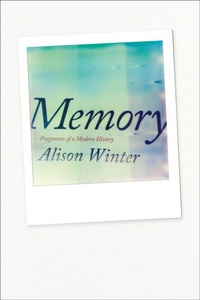
Memory
Fragments of a Modern History
Published on 22. December 2022
332 pages
978-0-226-90260-9 (ISBN)
Description

This historical study is "a compelling demonstration that the science of memory... is both a product of and an influence on the culture from which it springs" (
Bookforum).
Think about a birthday you remember well. Now step back and ask: how clear are those memories? Is there a chance you're remembering incorrectly? And what about the details you can no longer recall? Are they hidden in your brain, or are they gone forever?
Such questions have fascinated scientists for ages, and, as Alison Winter shows in Memory: Fragments of a Modern History, the answers have changed dramatically in just the past century. Tracing the cultural and scientific history of our understanding of memory, Winter explores early metaphors that likened memory to a filing cabinet and, later, a reel of film. Those models were eventually replaced by one in which memory results from an extremely complicated, brain-wide web of cells and systems that together assemble our pasts.
Winter introduces us to innovative scientists and sensationalistic seekers, and, drawing on evidence ranging from scientific papers to diaries to movies, explores the way that new understandings from the laboratory have seeped out into psychiatrists' offices, courtrooms, and the culture at large. Along the way, she investigates the sensational battles over the validity of repressed memories that raged through the 1980s and shows us how changes in technology-such as the emergence of recording devices and computers-have again and again altered the way we conceptualize, and even try to study, the ways we remember.
Think about a birthday you remember well. Now step back and ask: how clear are those memories? Is there a chance you're remembering incorrectly? And what about the details you can no longer recall? Are they hidden in your brain, or are they gone forever?
Such questions have fascinated scientists for ages, and, as Alison Winter shows in Memory: Fragments of a Modern History, the answers have changed dramatically in just the past century. Tracing the cultural and scientific history of our understanding of memory, Winter explores early metaphors that likened memory to a filing cabinet and, later, a reel of film. Those models were eventually replaced by one in which memory results from an extremely complicated, brain-wide web of cells and systems that together assemble our pasts.
Winter introduces us to innovative scientists and sensationalistic seekers, and, drawing on evidence ranging from scientific papers to diaries to movies, explores the way that new understandings from the laboratory have seeped out into psychiatrists' offices, courtrooms, and the culture at large. Along the way, she investigates the sensational battles over the validity of repressed memories that raged through the 1980s and shows us how changes in technology-such as the emergence of recording devices and computers-have again and again altered the way we conceptualize, and even try to study, the ways we remember.
More details
Other editions
Additional editions
Book
01/2012
University of Chicago Press
€33.43
Shipment within 10-20 days
Content
- Intro
- Contents
- Acknowledgments
- Introduction
- 1. On the Witness Stand
- 2. The Making of Truth Serum
- 3. Memories of War
- 4. Wilder Penfield and the Recording of Personal Experience
- 5. The Three Lives of Bridey Murphy
- 6. Securing Memory in the Cold War
- 7. Flashbulb Memories
- 8. The Law of Memory
- 9. Frederic Bartlett and the Social Psychology of Remembering
- 10. Making False Memory
- 11. Reliving and Revising the Past
- Notes
- Index
