


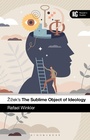
Zizek's The Sublime Object of Ideology
A Reader's Guide
1st Edition
Published on 30. May 2024
176 pages
978-1-350-42567-5 (ISBN)
Description

First published in 1989, The Sublime Object of Ideology was Zizek's breakthrough work, and is still regarded by many as his masterpiece. It was an iconoclastic reinvention of ideology critique that introduced the English-speaking world to Zizek's scorching brand of cultural and philosophical commentary and the multifaceted ways in which he explained it. Tying together concepts from aesthetics, psychoanalytic theory, cultural studies and the philosophy of belief, it changed the face of contemporary commentary and remains the underpinning of much of his subsequent thinking.
This compelling guide introduces all of the influential thinkers and foundational concepts which Zizek draws on to create this seminal work. Grounding the text's many and varied references in the work of Peter Sloterdijk, Saul Kripke, Walter Benjamin, Jacques Lacan, Jacques Derrida, Immanuel Kant and G.W.F. Hegel, amongst others, helps students who are encountering this mercurial writer for the first time to understand the philosophical context of his early explorations. Each of Zizek's key arguments are unpacked and laid out, alongside an invaluable account of how The Sublime Object of Ideology impacted the critical terrain on which it landed.
This compelling guide introduces all of the influential thinkers and foundational concepts which Zizek draws on to create this seminal work. Grounding the text's many and varied references in the work of Peter Sloterdijk, Saul Kripke, Walter Benjamin, Jacques Lacan, Jacques Derrida, Immanuel Kant and G.W.F. Hegel, amongst others, helps students who are encountering this mercurial writer for the first time to understand the philosophical context of his early explorations. Each of Zizek's key arguments are unpacked and laid out, alongside an invaluable account of how The Sublime Object of Ideology impacted the critical terrain on which it landed.
More details
Series
Edition
1. Auflage
Language
English
Place of publication
London
United Kingdom
Publishing group
Bloomsbury Publishing PLC
Target group
College/higher education
ISBN-13
978-1-350-42567-5 (9781350425675)
Copyright in bibliographic data and cover images is held by Nielsen Book Services Limited or by the publishers or by their respective licensors: all rights reserved.
Schweitzer Classification
Other editions
Additional editions
Book
06/2024
Bloomsbury Academic
€26.50
Shipment within 15-20 days
Person
Rafael Winkler is a Professor of Philosophy at the University of Johannesburg, South Africa. He is the author of Philosophy of Finitude (Bloomsbury, 2018) and editor of Phenomenology and Naturalism (2017) and Identity and Difference: Contemporary Debates on the Self (2016).
Content
Acknowledgments
Abbreviations
Part I: Context
The Habermas-Foucault debate, and Althusser
Laclau and Mouffe; Antagonism and the Real of the Drive
Part II: Overview of Themes
Part III: Reading of the text
1.1 What is Money?
1.2 Exchange; Alfred Sohn-Rethel
1.3 Cynical consciousness; Peter Sloterdijk
1.4 Belief and Ideology
1.5 Althusser; Interpellation and Misrecognition
1.6 Kant and the Law
1.7 Disidentification
Section 2
2.1 Retroactivity (Nachträglichkeit)
2.2 Error as the Way to the Truth
2.3 Desire and Lack
2.4 Trauma redux
2.5 The Form of Ideology
Section 3
3.1 (a) The Constitution of Sublime Objects
3.2 The Quilting Point; Laclau and Mouffe's Hegemonic Logic
3.3 Descriptivism vs. Anti-descriptivism
3.4 The Essence or 'je ne sais quoi' of the Object
3.5 (b) The Constitution of the Subject and Enjoyment (Jouissance)
3.6 Imaginary and Symbolic Identification
3.7 'Che vuoi?'
3.8 Fantasy
3.9 The Real
4.0 Ideology Revisited
Section 4
4.1 Symbolic and Physical Existence; Symbolic and Physical Death
4.2 Benjamin's 'Theses on the Philosophy of History'
4.3 Power and its Representation
Section 5
5.1 'There is No Metalanguage'; Derrida and Dissemination
5.2 Lacan and 'Lenin in Warsaw'
5.3 The Real Revisited
5.4 Freedom and the Forced Choice; the Real
5.5 Lack, the Subject, and the Ontological Inconsistency of the Big Other
5.6 The Ideological Function of objet a
5.7 The Subject Presumed to ...
Section 6
6.1 The Indefinite Judgment, Lack, and Negation
6.2 Beauty and the Sublime; the Pleasure Principle and its Beyond
6.3 From Kant to Hegel; Lack and Negativity
6.4 'Spirit is a Bone'
6.5 Hegel's Phenomenology of Spirit and the Heroism of Flattery
6.6 The 'Beautiful Soul' and Positing the Presuppositions
Part IV: Reception and influence
Abbreviations
Part I: Context
The Habermas-Foucault debate, and Althusser
Laclau and Mouffe; Antagonism and the Real of the Drive
Part II: Overview of Themes
Part III: Reading of the text
1.1 What is Money?
1.2 Exchange; Alfred Sohn-Rethel
1.3 Cynical consciousness; Peter Sloterdijk
1.4 Belief and Ideology
1.5 Althusser; Interpellation and Misrecognition
1.6 Kant and the Law
1.7 Disidentification
Section 2
2.1 Retroactivity (Nachträglichkeit)
2.2 Error as the Way to the Truth
2.3 Desire and Lack
2.4 Trauma redux
2.5 The Form of Ideology
Section 3
3.1 (a) The Constitution of Sublime Objects
3.2 The Quilting Point; Laclau and Mouffe's Hegemonic Logic
3.3 Descriptivism vs. Anti-descriptivism
3.4 The Essence or 'je ne sais quoi' of the Object
3.5 (b) The Constitution of the Subject and Enjoyment (Jouissance)
3.6 Imaginary and Symbolic Identification
3.7 'Che vuoi?'
3.8 Fantasy
3.9 The Real
4.0 Ideology Revisited
Section 4
4.1 Symbolic and Physical Existence; Symbolic and Physical Death
4.2 Benjamin's 'Theses on the Philosophy of History'
4.3 Power and its Representation
Section 5
5.1 'There is No Metalanguage'; Derrida and Dissemination
5.2 Lacan and 'Lenin in Warsaw'
5.3 The Real Revisited
5.4 Freedom and the Forced Choice; the Real
5.5 Lack, the Subject, and the Ontological Inconsistency of the Big Other
5.6 The Ideological Function of objet a
5.7 The Subject Presumed to ...
Section 6
6.1 The Indefinite Judgment, Lack, and Negation
6.2 Beauty and the Sublime; the Pleasure Principle and its Beyond
6.3 From Kant to Hegel; Lack and Negativity
6.4 'Spirit is a Bone'
6.5 Hegel's Phenomenology of Spirit and the Heroism of Flattery
6.6 The 'Beautiful Soul' and Positing the Presuppositions
Part IV: Reception and influence
