

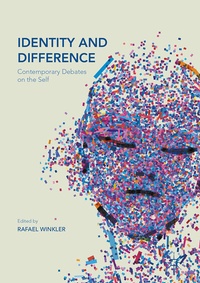
Identity and Difference
Description

This book provides a persuasive account of how identity and difference factor in the debate on the self in the humanities. It explores this topic by applying the question to fields such as philosophy, cultural studies, politics and race studies. Key themes discussed in this collection include authenticity in Michel de Montaigne's essays, the limits of the narrative constitution of the self, the use and abuse of the notion of human nature in political theory and in the current political context of multiculturalism, and the feminist notion of the erotic and of sexual violence. This book will appeal to readers with an interest in new perspectives on the self within the humanities.
More details
Other editions
Additional editions
Person
Rafael Winkler is Associate Professor in the Department of Philosophy at the University of Johannesburg, South Africa. He is the co-founder and co-chair of the Centre for Phenomenology in South Africa, and has published widely in the area of 19th and 20th century European philosophy. He is the co-editor of three special issues with the International Journal of Philosophical Studies , the Journal of the British Society for Phenomenology and the South African Journal of Philosophy . His recent publications include "Time, Singularity and the Impossible: Heidegger and Derrida on Dying" in the Journal Research in Phenomenology (2016) and "Alterity and the Call of Conscience: Heidegger, Ricoeur, and Levinas" in the International Journal of Philosophical Studies (2016).
Content
Introduction Identity and Difference: Rafael Winkler, University of Johannesburg.- 1. Persons, Characters and the Meaning of 'Narrative': Alfonso Munoz Corcuera, National Autonomous University of Mexico.- 2. Rethinking Narrativity: Hanne Jacobs, Loyola University Chicago.- 3. Being my-self ? Montaigne on difference and authenticity: Vincent Caudron, KU Leuven.- 4. Specifically Human? The limited conception of self-consciousness in theories of reflective endorsement: Irene Bucelli, King's College London.- 5. Making the case for political anthropology: Understanding and resolving the backlash against liberalism: Rockwell Clancy, University of Michigan and Shanghai Jiao Tong University.- 6. The Decentred Autonomous Subject: Kathy Buttersworth, University of Kent.- 7. Exploring Rape as a Crime Against the Erotic: Louise du Toit, Stellenbosch University.- 8. Making Mischief: Thinking Through Women's Solidarity And Sexuate Difference with Lucy Irigary and Gayatri Spivak: Laura Roberts, The University of Queensland, Australia.- 9. SOFTDAD: Self and Other in Fronto Temporal Dementia and Alzheimer's disease: Marie-Christine Nizzi, Harvard University.- 10. The 'Africanness' of White South Africans?: Sharli Paphitis and Lindsay Kelland, Rhodes University.
