

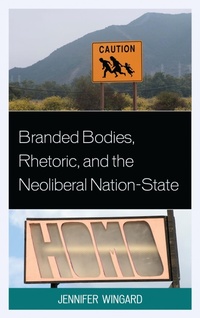
Branded Bodies, Rhetoric, and the Neoliberal Nation-State
1st Edition
Published on 29. November 2012
162 pages
979-8-216-27989-1 (ISBN)
Description

Branded Bodies, Rhetoric, and the Neoliberal Nation-State, by Dr. Jennifer Wingard,explores how neoliberal economics has affected the rhetoric of the media and politics, and how in very direct, material ways it harms the bodies of some of the United States' most vulnerable occupants. The book is written at a moment when the promise of the liberal nation state, in which the government purports to care for its citizens through social welfare programs financed by state funds, is eroding. Currently, state policies are defined by neoliberal governmentality, a form which privileges privatization and individual personal responsibility. Instead of the promise of citizenship and the protections that come with it, or "the American Dream" to use a more common euphemism, the state uses certain bodies that will never be accepted as citizens as an underclass in service of capital (think "Guest Worker Programs"). And those underclassed "bodies" are identified through branding.
In order to demonstrate just how damaging branding has become, Wingard offers readings of key pieces of legislation on immigration and GLBT rights and their media reception from the past twenty years. By showing how brands are assembled to create affective threats, Branded Bodies, Rhetoric, and the Neoliberal Nation-State articulates how dangerous the branding of bodies has become and offers rhetorical strategies that can repair the damage to bodies caused by political branding. Branded Bodies, then, is an intervention into the rhetorical practices of the nation-state. It attempts to clarify how the nation state uses brands to forward its claims of equality and freedom all the while condemning those who do not "fit in" to particular categories valued by the neoliberal state.
In order to demonstrate just how damaging branding has become, Wingard offers readings of key pieces of legislation on immigration and GLBT rights and their media reception from the past twenty years. By showing how brands are assembled to create affective threats, Branded Bodies, Rhetoric, and the Neoliberal Nation-State articulates how dangerous the branding of bodies has become and offers rhetorical strategies that can repair the damage to bodies caused by political branding. Branded Bodies, then, is an intervention into the rhetorical practices of the nation-state. It attempts to clarify how the nation state uses brands to forward its claims of equality and freedom all the while condemning those who do not "fit in" to particular categories valued by the neoliberal state.
More details
Series
Edition
1. Auflage
Language
English
Place of publication
United States
Publishing group
Bloomsbury Publishing Plc
Target group
Professional and scholarly
ISBN-13
979-8-216-27989-1 (9798216279891)
Copyright in bibliographic data and cover images is held by Nielsen Book Services Limited or by the publishers or by their respective licensors: all rights reserved.
Schweitzer Classification
Other editions
Additional editions
Jennifer Wingard
Branded Bodies, Rhetoric, and the Neoliberal Nation-State
Book
02/2015
Lexington Books
€64.60
Shipment within 15-20 days
Person
Jennifer Wingard is an Assistant Professor of Rhetoric, Composition, and Pedagogy and a faculty affiliate to the Women's Studies Program at the University of Houston. Over the past five years, she helped design and implement the new Ph.D. concentration in Rhetoric, Composition, and Pedagogy. She specializes in 20th Century Rhetorical Theory, Transnational Feminist Theory, and Materialist Theories of Teaching English in the Corporate University. Her scholarship focuses on the impact of global neobliberal economics on local civic discourses, and she has been published in Reflections, Journal of Advanced Composition (JAC), and other interdisciplinary edited collections. She is currently working on her second book tentatively titled: No Zoning! Houston, TX the Neoliberal City.
Content
Acknowledgments
Preface: Branding Bodies: Assembling Affective Responses
The Work of Branding Bodies
Chapter One: Othering and Branding: Assembling Neoliberal Identities
Why Branding?
Neoliberalism as Exception: The Private Made Public
From Other-others to Brands: Commodifying Bodies
Affective Branding: Bodies Dissolve into the Nation-State
Rhetorical Assemblage The work of Branding Bodies
Chapter Two: Branding the Family: U.S. Protectionsism as the Tie that Binds
Branding the Nation: It's All in the Family
The Good Citizen/The Good Family
Branding of Protection: The Law of the Family
Mediating the Family: An Equal Opportunity Brand
Families, Communities, and Nations: The Intensity of Post-9/11 Discourse
Chapter Three: (Dis)Embodying Protection: Branding in the ICE Age
The Right to Assemblage: Laura's Phone Call
Assembling the "War on Terror": Post-9/11's Branding of Terror
Assembling Protection: The Development of ICE
Assembling the Nation: Complicating the Citizen/Non-citizen Divide
Assembling Consumers: Selling ICE as the Brand of Protection
Chapter Four: "José Padilla" and "Osama Bin Laden": Material Consequences of
Branding Bodies
Terrorism, José Padilla, and Osama bin Laden: Or How We Lost Our Humanity
Padilla: (Dis)Assembling the Threat
Racial Profiling: Defining Enemy Combatants
Osama bin Laden: The Face of a Movement
The Assassination of Osama bin Laden by the Coward U.S. Protectionism
Bare Life: The Neoliberal Nation-State is Neither Gone nor Forgotten
Chapter Five: From Branding to Bodies: (Re)Assembling the Worker
Branding the Worker: Labor in Neoliberal Times
Why the Worker Works: The Privatization of Public Service
Worker as Mobilized Body: How GLBT Bodies Became Workers in a
Post-DOMA World
Worker as "Good" Family: Defining Citizenship and Humanity through Work
Working an Issue: The Worker as Transnational Actor
Assembling Bodies: A Call for Rhetorical Action
Bibliography/References
Index
Preface: Branding Bodies: Assembling Affective Responses
The Work of Branding Bodies
Chapter One: Othering and Branding: Assembling Neoliberal Identities
Why Branding?
Neoliberalism as Exception: The Private Made Public
From Other-others to Brands: Commodifying Bodies
Affective Branding: Bodies Dissolve into the Nation-State
Rhetorical Assemblage The work of Branding Bodies
Chapter Two: Branding the Family: U.S. Protectionsism as the Tie that Binds
Branding the Nation: It's All in the Family
The Good Citizen/The Good Family
Branding of Protection: The Law of the Family
Mediating the Family: An Equal Opportunity Brand
Families, Communities, and Nations: The Intensity of Post-9/11 Discourse
Chapter Three: (Dis)Embodying Protection: Branding in the ICE Age
The Right to Assemblage: Laura's Phone Call
Assembling the "War on Terror": Post-9/11's Branding of Terror
Assembling Protection: The Development of ICE
Assembling the Nation: Complicating the Citizen/Non-citizen Divide
Assembling Consumers: Selling ICE as the Brand of Protection
Chapter Four: "José Padilla" and "Osama Bin Laden": Material Consequences of
Branding Bodies
Terrorism, José Padilla, and Osama bin Laden: Or How We Lost Our Humanity
Padilla: (Dis)Assembling the Threat
Racial Profiling: Defining Enemy Combatants
Osama bin Laden: The Face of a Movement
The Assassination of Osama bin Laden by the Coward U.S. Protectionism
Bare Life: The Neoliberal Nation-State is Neither Gone nor Forgotten
Chapter Five: From Branding to Bodies: (Re)Assembling the Worker
Branding the Worker: Labor in Neoliberal Times
Why the Worker Works: The Privatization of Public Service
Worker as Mobilized Body: How GLBT Bodies Became Workers in a
Post-DOMA World
Worker as "Good" Family: Defining Citizenship and Humanity through Work
Working an Issue: The Worker as Transnational Actor
Assembling Bodies: A Call for Rhetorical Action
Bibliography/References
Index
