


Knowledge and Skills in Translator Behavior
1st Edition
Published on 1. April 1996
XIII, 259 pages
978-90-272-8354-2 (ISBN)
Description

This book represents an approach which is intended to give readers a general insight into what translators really do and to explain the concepts and tools of the trade, bearing in mind that translation cannot be reduced to simple principles that can easily be separated from each other and thus be handled in isolation. On the whole, the book is more process- than product-centred. Translation is seen as an activity with an intentional and a social dimension establishing links between a source-language community and a target-language community and therefore requiring a specific kind of communicative behavior based on the question "Who translates what, for whom and why?" To the extent that the underlying principles, assumptions, and conclusions are convincing to the reader, the practical implications of the book, last but not least in translation teaching, are obvious.
More details
Other editions
Additional editions
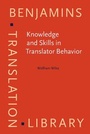
Wolfram Wilss
Knowledge and Skills in Translator Behavior
Book
04/1996
John Benjamins Publishing Co
€111.30
Shipment within 10-15 days
Person
Content
- KNOWLEDGE AND SKILLS IN TRANSLATOR BEHAVIOR
- Editorial page
- Title page
- Copyright page
- Table of contents
- Preface
- Acknowledgments
- CHAPTER I. Translation Studies - Scope and Challenges
- Introductory Remarks
- History of Modern Translation Studies
- The Task of Translation Studies
- The Relevance of Translation Studies
- Generative Theory and Translation Studies
- The Concept of Creativity in Generative Theory
- Text Linguistics and Translation
- CHAPTER II. Theoretical and Empirical Aspects of Translation Studies
- Introductory Remarks
- Translation as Cognitive Behavior
- Domains of Translation Intelligence
- The Essence of Translation
- Translation as Problem-Solving Activity
- Translation Creativity
- Translation and Intuition
- CHAPTER III. Translation as Knowledge-Based Activity
- Introductory Remarks
- Schematic Organization of Knowledge
- Schema Concept and Text Type Linguistics
- Psychological Reality of Schemata
- Schema Theory and Translator Performance
- Domain-Specificity
- Relevance of Knowledge Frames for Translation
- CHAPTER IV. Context, Culture, Compensation. Three basic orientations in translation
- Introductory Remarks
- Context
- Culture
- Compensation
- Originality vs. Automaticization
- Speed
- Pedagogical Implications
- CHAPTER V. Translation as Meaning-Based Information Processing
- Introductory Remarks
- Gradience
- Complexity
- Conventionality
- Schematicity
- Economy
- Predictability
- CHAPTER VI. The Translation Process and Translation Procedures
- Introductory Remarks
- The Translation Process
- Translation Procedures
- Literal Translation vs. Non-Literal Translation
- Implications for Translation Practice
- CHAPTER VII. The Role of the Translator in the Translation Process
- Introductory Remarks
- The Social Role of the Translator
- Mental Prerequisites of the Translator
- Rule-Governed Behavior
- Translation Skills
- Translation Strategies
- Translation Method
- Translation Techniques
- CHAPTER VIII. Discourse Linguistics and Translation
- Introductory Remarks
- The Subjectivity/Objectivity Issue
- Text Patterning
- Speech Functions
- Central and Peripheral Text Features
- Stylistic Problems in Translation
- Sensitivity to Text
- CHAPTER IX. Translation as Decision-Making and Choice
- Introductory Remarks
- Macrocontext vs. Microcontext
- Decision Theory and Translation Studies
- The Principle of "Tertium Datur
- Relevance of Decision-making for Translation
- Central Aspects of Translation Decision-making
- Decision-making Rules vs. Decision-making Heuristics
- Multiple-Stage Decision-making
- Decision-making and Translation Practice
- CHAPTER X. Translation Teaching. A practice-oriented approach
- Introductory Remarks
- Knowledge and Translation teaching
- Task Specification
- Discussion of Parallel Texts
- How to Train Translators
- Teaching Goals
- Conclusion
- CHAPTER XI. Human Translation and Machine Translation. A comparison
- Introductory Remarks
- Human and Machine Approaches in Translation
- Development of Machine Translation Research
- Syntactic Complexity
- Semantic and Syntactico-Semantic Ambiguity
- Depth of Analysis
- Syntagmatic Analysis
- Full Sentence Analysis
- Textual Level of Analysis
- MT Transfer
- Collocational Constraints
- Future Prospects
- Conclusion
- Bibliography
- Author Index
- Subject Index
