

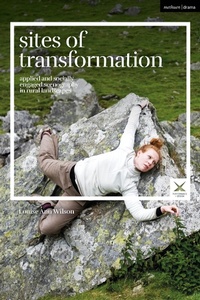
Sites of Transformation
Applied and Socially Engaged Scenography in Rural Landscapes
1st Edition
Published on 10. February 2022
248 pages
978-1-350-10446-4 (ISBN)
Description

Shortlisted for the PQ Best Publication Award in Performance Design & Scenography 2023
In this book practitioner and researcher Louise Ann Wilson examines the expanding field of socially engaged scenography and promotes the development of scenography as a distinctive type of applied art and performance practice that seeks tangible, therapeutic, and transformative real-world outcomes. It is what Christopher Baugh calls 'scenography with purpose'.
Using case studies drawn from the body of site-specific walking-performances she has created in the UK since 2011, Wilson demonstrates how she uses scenography to emplace challenging, marginalizing or 'missing' life-events into rural landscapes - creating a site of transformation - in which participants can reflect upon, re-image and re-imagine their relationship to their circumstances. Her work has addressed terminal illness and bereavement, infertility and childlessness by circumstance, and (im)mobility and memory. These works have been created on mountains, in caves, along coastlines and over beaches. Each case-study is supported by evidential material demonstrating the effects and outcomes of the performance being discussed.
The book reveals Wilson's creative methodology, her application of three distinct strands of transdisciplinary research into the site/landscape, the subject/life-event, and with the people/participants affected by it. She explains the 7 'scenographic' principles she has developed, and which apply theories and aesthetics relating to land/scape art and walking and performance practices from Early Romanticism to the present day. They are underpinned by the concept of the feminine 'material' sublime, and informed by the attentive, autotopographic, therapeutic and highly scenographic use of walking and landscape found in the work of Dorothy Wordsworth and her female contemporaries. Case studies include Fissure (2011), Ghost Bird (2012), The Gathering (2014), Warnscale (2015), Mulliontide (2016), Dorothy's Room (2018) and Women's Walks to Remember: 'With memory I was there' (2018-2019).
In this book practitioner and researcher Louise Ann Wilson examines the expanding field of socially engaged scenography and promotes the development of scenography as a distinctive type of applied art and performance practice that seeks tangible, therapeutic, and transformative real-world outcomes. It is what Christopher Baugh calls 'scenography with purpose'.
Using case studies drawn from the body of site-specific walking-performances she has created in the UK since 2011, Wilson demonstrates how she uses scenography to emplace challenging, marginalizing or 'missing' life-events into rural landscapes - creating a site of transformation - in which participants can reflect upon, re-image and re-imagine their relationship to their circumstances. Her work has addressed terminal illness and bereavement, infertility and childlessness by circumstance, and (im)mobility and memory. These works have been created on mountains, in caves, along coastlines and over beaches. Each case-study is supported by evidential material demonstrating the effects and outcomes of the performance being discussed.
The book reveals Wilson's creative methodology, her application of three distinct strands of transdisciplinary research into the site/landscape, the subject/life-event, and with the people/participants affected by it. She explains the 7 'scenographic' principles she has developed, and which apply theories and aesthetics relating to land/scape art and walking and performance practices from Early Romanticism to the present day. They are underpinned by the concept of the feminine 'material' sublime, and informed by the attentive, autotopographic, therapeutic and highly scenographic use of walking and landscape found in the work of Dorothy Wordsworth and her female contemporaries. Case studies include Fissure (2011), Ghost Bird (2012), The Gathering (2014), Warnscale (2015), Mulliontide (2016), Dorothy's Room (2018) and Women's Walks to Remember: 'With memory I was there' (2018-2019).
More details
Series
Edition
1. Auflage
Language
English
Place of publication
London
United Kingdom
Publishing group
Bloomsbury Publishing PLC
Target group
Professional and scholarly
Illustrations
30 bw illus
ISBN-13
978-1-350-10446-4 (9781350104464)
Copyright in bibliographic data and cover images is held by Nielsen Book Services Limited or by the publishers or by their respective licensors: all rights reserved.
Schweitzer Classification
Other editions
Additional editions
Louise Ann Wilson
Sites of Transformation
Applied and Socially Engaged Scenography in Rural Landscapes
Book
08/2023
Methuen Drama
€44.10
Shipment within 15-20 days
Persons
Louise Ann Wilson is a transdisciplinary scenographer, performance maker and researcher. She is the Artistic Director of the Louise Ann Wilson Company and a visiting lecturer at several UK universities.
Content
List of Illustrations
Acknowledgements
Introduction Setting the Scene: Sites of Transformation
1 Scenography with Purpose - Seven Scenographic Principles
2 Walking-Performance - Emplacing a Life-Event: Fissure
3 Creating A Scene - Centring the Visual: Ghost Bird
4 Site and Materials - Centring the Metaphor: The Gathering
5 Mapping-Walks - Centring the Subject: Warnscale
6 Giving a Voice - Centring the Community: Mulliontide
7 Applied Scenography - Multiple Applications: Dorothy's Room and Women's Walks to Remember
Appendices
References
Index
Acknowledgements
Introduction Setting the Scene: Sites of Transformation
1 Scenography with Purpose - Seven Scenographic Principles
2 Walking-Performance - Emplacing a Life-Event: Fissure
3 Creating A Scene - Centring the Visual: Ghost Bird
4 Site and Materials - Centring the Metaphor: The Gathering
5 Mapping-Walks - Centring the Subject: Warnscale
6 Giving a Voice - Centring the Community: Mulliontide
7 Applied Scenography - Multiple Applications: Dorothy's Room and Women's Walks to Remember
Appendices
References
Index
