

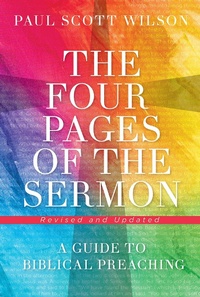
The Four Pages of the Sermon, Revised and Updated
A Guide to Biblical Preaching
Published on 18. September 2018
227 pages
978-1-5018-4240-5 (ISBN)
Description

Doing justice to the complexity of the preaching task and the questions that underlie it, author Paul Scott Wilson organizes both the preparation and the content of the sermon around its "four pages." Each "page" addresses a different theological and creative component of what happens in any sermon. Page One presents the trouble or conflict that takes place in or that underscores the biblical text itself. Page Two looks at similar conflict--sin or brokenness--in our own time. Page Three returns to the Bible to identify where God is at work in or behind the text--in other words, to discover the good news. Page Four points to God at work in our world, particularly in relation to the situations described in Page Two. This approach is about preaching the gospel in nearly any sermonic form. Wilson teaches the 'what', 'why', and 'how' of sermon construction, all rooted in a theology of the Word.
This completely revised edition guides readers through the sermon process step by step, with the aim of composing sermons that challenge and provide hope, by focusing on God more closely than on humans. It has been largely rewritten to include an assessment of where preaching is today in light of propositional preaching, the New Homiletic, African American preaching, the effect of the internet, and use of technology. A chapter on exegesis has been added, plus new focus on the importance of preaching to a felt need, the need for proclamation in addition to teaching, and developing tools to ensure sermon excellence. New sermon examples have been added along with a section that responds to critics and looks to the future.
This completely revised edition guides readers through the sermon process step by step, with the aim of composing sermons that challenge and provide hope, by focusing on God more closely than on humans. It has been largely rewritten to include an assessment of where preaching is today in light of propositional preaching, the New Homiletic, African American preaching, the effect of the internet, and use of technology. A chapter on exegesis has been added, plus new focus on the importance of preaching to a felt need, the need for proclamation in addition to teaching, and developing tools to ensure sermon excellence. New sermon examples have been added along with a section that responds to critics and looks to the future.
More details
Other editions
Additional editions
Paul Scott Wilson
Four Pages of the Sermon, Revised and Updated, The
Book
09/2018
Abingdon Press
€31.60
Shipment within 15-20 days
Person
Paul Scott Wilson is Professor of Homiletics at Emmanuel College of the University of Toronto. He is one of the most respected and recognized teachers of homiletics in North America. He is the author of a number of books, including The Practice of Preaching, Imagination of the Heart, God Sense: Reading the Bible for Preaching, and The Four Pages of the Sermon, all published by Abingdon Press. He is the General Editor of The New Interpreter's Handbook of Preaching.
Content
- Cover
- Title
- Copyright
- Contents
- Acknowledgments
- Introduction
- Chapter One: Four Pages: Grammar and the Preaching Scene
- I. The Preaching Scene: Where We Have Been
- A. Expository and Propositional Preaching
- 1. Text-Driven Points
- 2. Doctine-Driven Sermons
- 3. Topic-Driven Points
- B. The New Homiletic
- C. African American Preaching
- D. Modern and Internet Ages: The Social Context of Preaching
- 1. The Internet Age Affects How Humans Think
- 2. How the Internet Age Affects Expectations of Preaching
- II. The Preaching Scene: Where We Are Now?
- Section I. Getting Started: Monday
- Chapter Two: Exegesis and Sermon Unity
- I. Getting Started
- A. Playing with the Biblical Text
- Concerns of the Text in a Nursery Rhyme
- Concerns of the Text in 1 Corinthians 1:10-18
- B. Working with the Biblical Text by Doing Exegesis
- Exegetical Questions: 1 Corinthians 1:10-18
- II. Addressing Sermon Unity
- One Bible Text
- One Theme Sentence
- One Doctrine
- One Need in the Congregation
- One Image
- Sources of Dominant Images
- One Mission
- Conclusion
- Chapter Three: Introductions, Four Sentences, and the Need
- I. Introducing the Sermon
- A. Six Simple Strategies for Writing the Introduction
- B. Common Problems in Introductions
- II. Metaphor and Metonymy as Ways of Thought
- III. Determining Four Pages with Four Sentences and a Need
- A. An Example Using 1 Corinthians 1:10-18
- B. An Example Using Luke 15:11-32
- C. Other Examples of Four Sentences Now Adding a Need
- Conclusion
- Section II. Page One: Tuesday
- Chapter Four: Trouble in the Bible
- I. A Theological Focus
- II. Page One and a Traditional Method of Preaching
- III. The Impact of Sermon Structure on Pulpit Theology
- IV. Traditional Terms for Trouble
- V. Practical Exercises for When Trouble or Grace Seem Absent
- VI. Practical Theological Guidelines for Page One
- VII. Movie Guidelines
- A. Aiming the Camera: Scenes
- B. Aiming the Camera: People and Action
- C. Obeying the Camera's Limitations
- Chapter Five: Filming Trouble in the Bible
- Section III. Page Two: Wednesday
- Chapter Six: Trouble in the World
- I. The Need for Trouble to Be Preached
- II. Faithful Proclamation of Trouble
- A. Develop a Two-Part Understanding of Trouble
- B. Preach with Global Awareness
- C. Hold Piety and Justice Together
- D. Develop Grace in Tension with Trouble
- III. Theological Use of Stories as Trouble
- IV. Guidelines for Page Two
- 1. Organization and Focus
- 2. Sermon Unity
- 3. Use Vertical and Horizontal Trouble
- 4. Use Stories
- 5. Attend to the Emotional and Spiritual Impact of Stories
- 6. Be Empathetic and Inclusive
- 7. Get beyond the Church
- 8. Go Deep
- Chapter Seven: Filming Trouble in the World
- Section IV. Page Three: Thursday
- Chapter Eight: God's Action in the Bible
- I. A Historical Perspective on Lack of Focus on God
- II. The Need for Page Three
- III. Page Three as a Turn to God
- IV. Typical Preaching Practice
- V. The Theme Sentence
- VI. Typical Problems in Preaching Grace
- VII. A Practical Example
- VIII. Guidelines for Composing Page Three
- Making a Movie: Visualizing Page Three
- Sermon Unity
- Chapter Nine: Filming Grace in the Bible
- Section V. Page Four: Friday
- Chapter Ten: God's Action in the World
- I. Identifying God's Actions
- II. Five Functions of Page Four
- III. Dangers in Claiming God's Action
- IV. One Mission as Grace
- V. Theological Use of Stories
- VI. The Overall Character of the Preacher
- VII. Portraying Jesus as Savior, Not Example
- VIII. Two Strategies to Magnify the Gospel
- A. Refer to the Larger Christian Story
- B. Proclamation
- C. Four Practical Steps toward Proclamation
- 1. Harvest Proclamation in the Bible
- 2. Transpose the Bible into Proclamation
- 3. Devise Your Own Proclamation from the Theme Sentence
- 4. Use What Other Preachers Have Done as Models
- IX. The Sermon Conclusion
- Chapter Eleven: Filming Grace in the World
- Section VI. Varieties of Sermons
- Chapter Twelve: Reshuffling and Varying the Four Pages
- I. Answering Thomas G. Long and Other Critics
- II. A Sermon in Four Pages
- A. Analytical Preview
- B. The Sermon: A Goat's Perspective on the End Times
- C. Further Analysis
- III. Variations in Pages
- A. Varying the Order of Pages
- B. Varying the Relative Length of the Pages
- C. Variations Using Point-Form
- IV. A Four-Page Sermon in Point Form
- A. Analytical Preview
- B. The Sermon: Foundations of Our Faith
- Review/Overall Sermon Checklist
- Name and Subject Index
