

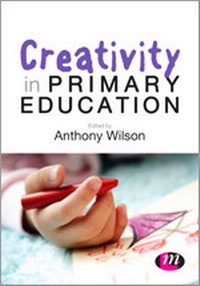
Creativity in Primary Education
3rd Edition
Published on 4. December 2014
272 pages
978-1-4739-0718-8 (ISBN)
Description

"An alien spaceship crash landed in my playground today"
For one primary school in England, this was not an ordinary day. It was a fabulous day of inspiration, writing, drawing, discovering and learning for the pupils, the staff and the parents. But the best thing of all? The only truly out of the ordinary thing was the alien spaceship.
So how do you make creativity a more everyday part of primary teaching? Teachers and trainees agree that creativity is a fabulous thing. But to get creative approaches into everyday teaching, you need to tackle the question - what is creativity?
This book explores this question in an accessible and practical way. It helps trainees to do more than 'know it when they see it', by helping them to understand the separate and very diverse elements of creativity. The third edition of this popular text retains key material, but it has been updated and revised to include two new chapters on the creative curriculum, along with links throughout to the Standards and the new National Curriculum.
This book will help you enhance your teaching so you and the children in your class can be:
fellow explorers, adventurous discoverers and spontaneous investigators!
For one primary school in England, this was not an ordinary day. It was a fabulous day of inspiration, writing, drawing, discovering and learning for the pupils, the staff and the parents. But the best thing of all? The only truly out of the ordinary thing was the alien spaceship.
So how do you make creativity a more everyday part of primary teaching? Teachers and trainees agree that creativity is a fabulous thing. But to get creative approaches into everyday teaching, you need to tackle the question - what is creativity?
This book explores this question in an accessible and practical way. It helps trainees to do more than 'know it when they see it', by helping them to understand the separate and very diverse elements of creativity. The third edition of this popular text retains key material, but it has been updated and revised to include two new chapters on the creative curriculum, along with links throughout to the Standards and the new National Curriculum.
This book will help you enhance your teaching so you and the children in your class can be:
fellow explorers, adventurous discoverers and spontaneous investigators!
Reviews / Votes
Creativity is often thought of as being related to the arts however this book explores creativity in all areas of the curriculum. The case studies are particularly useful as the outline highly imaginative lessons that have been used in other schools. The reflective tasks featured in each chapter are a great way of getting you thinking how you could implement different strategies in the classroom. -- K. Snowden * Amazon * With my degree being in musical theatre, it is easy for me to incorporate arts into the school timetable, but have been wary about introducing such creativity in other subject areas. This book provides great insight into how to include creativity throughout the whole curriculum. A great read! -- M. Wolkowski * Amazon * The success of the book is proven by the fact this is the third edition; it retains key material and has been updated and revised to include two new chapters - the theme of the creative curriculum and supporting trainees to see how effective curriculum design can enhance creative teaching. An excellent way to refresh established teaching and bring in new ideas which will delight children. With plenty of good examples, this gives lots of food for thought and motivation to extend creativity. -- Parents in TouchMore details
Series
Edition
Third Edition
Language
English
Place of publication
London
United Kingdom
Publishing group
Sage Publications Ltd
Target group
College/higher education
ISBN-13
978-1-4739-0718-8 (9781473907188)
Copyright in bibliographic data and cover images is held by Nielsen Book Services Limited or by the publishers or by their respective licensors: all rights reserved.
Schweitzer Classification
Other editions
Additional editions
Anthony Wilson
Creativity in Primary Education
Book
12/2014
3rd Edition
Learning Matters Ltd
€150.29
Shipment within 15-20 days
Anthony Wilson
Creativity in Primary Education
Book
12/2014
3rd Edition
Learning Matters Ltd
€76.70
Shipment within 15-20 days
Person
Anthony Wilson works as a Teaching Fellow in Primary English at the University of Exeter. A published poet, his books include "How Far From Here Is Home?" (Stride, 1996), "The Difference" (Aldeburgh Poetry Trust, 1999) and "Nowhere Better Than This" (Worple Press, 2002). He has held writing residencies for Apples and Snakes Poets, The Aldeburgh Poetry Trust and The Poetry Society, for whom he co-edited The Poetry Book for Primary Schools (Poetry Society, 1998), "an inspirational compilation" according to the Times Educational Supplement. In addition, he has lectured on Tate Britain's Speaking Pictures and Visual Paths programmes, organises training for teachers with the Poetry Society, and is a trainer for the Poetry Society's poetry class team.
Content
Part One: Setting the scene
1. Changes in the landscape for creativity in education
2. The art of the possible: creative principled leadership
3. Creative teachers and creative teaching
4. Play and playfulness in the Early Years Foundation Stage
5. Creativity and spiritual, moral, social and cultural development
6. The importance of informal learning to children's creative education
Part Two: Creativity in the core curriculum
7. Creativity and literacy
8. Creative mathematics
9. What is creativity in science education?
Part Three: Creativity in the foundation curriculum
10. Thinking about creativity: developing ideas and making things happen
11. Creativity and primary art and design education
12. What has creativity got to do with citizenship education?
13. Creativity in primary design and technology
14. Creative primary geography
15. Creativity in primary history
16. Creativity in the music curriculum
17. Children, creativity and physical education
Index
1. Changes in the landscape for creativity in education
2. The art of the possible: creative principled leadership
3. Creative teachers and creative teaching
4. Play and playfulness in the Early Years Foundation Stage
5. Creativity and spiritual, moral, social and cultural development
6. The importance of informal learning to children's creative education
Part Two: Creativity in the core curriculum
7. Creativity and literacy
8. Creative mathematics
9. What is creativity in science education?
Part Three: Creativity in the foundation curriculum
10. Thinking about creativity: developing ideas and making things happen
11. Creativity and primary art and design education
12. What has creativity got to do with citizenship education?
13. Creativity in primary design and technology
14. Creative primary geography
15. Creativity in primary history
16. Creativity in the music curriculum
17. Children, creativity and physical education
Index
