

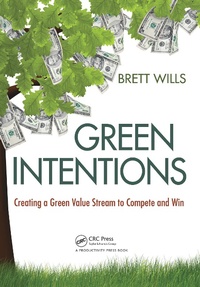
Green Intentions
Creating a Green Value Stream to Compete and Win
1st Edition
Published on 28. October 2020
296 pages
978-1-4200-8963-9 (ISBN)
Description

Developed by a plant manager who experienced first-hand the challenges to going green in a business environment, Green Intentions provides organizations with a simple, straightforward, and practical approach to green the Green Value Stream (GVS) process that is as mindful as it is profitable. Based on the highly successful, Lean philosophy, the GVS process shows you how to quickly identify, measure, and minimize the seven green wastes to realize immediate cost savings. With the initial savings from harvesting the low-hanging fruit, organizations will have the support and momentum needed to eliminate each of the green wastes, leading to environmental sustainability and the substantial business benefits that follow, including increased revenues, new customers, employee retention, innovation, and increased shareholder value.
Part I, Going Green shows how the green value stream provides a dynamic, proven, and successful approach to going green. It also defines each of the seven green wastes, explains the overall green value stream process, provides guidance on implementing it in your organization, and shows how to map your green value stream.
Part II, The Seven Green Wastes provides a step-by-step process for minimizing and eliminating each of the seven wastes. It includes real-life examples illustrating the environmental and economic benefits associated with moving toward the elimination of each.
The book also includes:
A Green Dictionary that defines current terms associated with the green movement
Web links and other resources to help you in your journey toward environmental sustainability
An environmental primer that clears through the rhetoric to give you a clear picture of what is going on with the environment and what the end goal of environmental and overall sustainability needs to look like
Part I, Going Green shows how the green value stream provides a dynamic, proven, and successful approach to going green. It also defines each of the seven green wastes, explains the overall green value stream process, provides guidance on implementing it in your organization, and shows how to map your green value stream.
Part II, The Seven Green Wastes provides a step-by-step process for minimizing and eliminating each of the seven wastes. It includes real-life examples illustrating the environmental and economic benefits associated with moving toward the elimination of each.
The book also includes:
A Green Dictionary that defines current terms associated with the green movement
Web links and other resources to help you in your journey toward environmental sustainability
An environmental primer that clears through the rhetoric to give you a clear picture of what is going on with the environment and what the end goal of environmental and overall sustainability needs to look like
More details
Edition
1. Auflage
Language
English
Place of publication
Portland
United States
Publishing group
CRC Press Inc
Target group
Professional and scholarly
Executive, change agents, project managers, middle managers, plant managers and supervisors in manufacturing companies.
Illustrations
117 s/w Abbildungen, 75 s/w Tabellen
117 b/w images, 75 tables and 8 equations
ISBN-13
978-1-4200-8963-9 (9781420089639)
Copyright in bibliographic data and cover images is held by Nielsen Book Services Limited or by the publishers or by their respective licensors: all rights reserved.
Schweitzer Classification
Other editions
Additional editions
Book
07/2017
1st Edition
CRC Press
€267.85
Shipment within 10-20 days
Book
07/2009
1st Edition
Productivity Press
€69.59
Shipment within 15-20 days
Person
Brett Wills has more than ten years of experience in the environmental arena. Brett also has firsthand experience leading teams in the implementation of lean initiatives such as Kanban systems, finished goods supermarkets, and 5S, and has extensive experience in the development and management of ISO 9001 and 14001 systems. He has also been instrumental in facilitating the development and implementation of many health, safety, and environmental initiatives within a manufacturing environment.
Content
Section I Going Green
From Lean to Green: Green Value Stream Thinking
The First Green Waste: Energy
The Second Green Waste: Water
The Third Green Waste: Materials
The Fourth Green Waste: Garbage
The Fifth Green Waste: Transportation
The Sixth Green Waste: Emissions
The Seventh Green Waste: Biodiversity
Understanding Your Green Value Streams
Starting with an Example: Value Streams versus Green Value Streams
The Green Value Stream (GVS) Approach
Green Stream Mapping
Creating Your Current-State Green Stream Map
Map What You Do
Identify Each Step or Process
Map How You Receive and Send Materials and Information
Draw in Data Boxes
Identify the Green Wastes
Measure the Green Wastes
Creating a Future-State Green Stream Map
Achieving a Green State: The Pursuit of Perfection
Gaining Corporate Support for the GVS Process
Gaining a Commitment from Top Management
Setting Your Green Vision
Establishing Your Green Champion
Establishing a Green Team
The Bottom-Up Approach
Life Cycle Analysis
Section II T he Seven Green Wastes
The First Green Waste: Energy
Step 1: Identify the Use and Source of Energy in Each Activity
Step 2: Measure the Quantity of Energy Used
Step 3: Minimize the Use of Energy
Step 4: Offset Remaining Energy Use
Step 5: Transition to Self-Harvested Renewable Energy
The Second Green Waste: Water
Step 1: Identify the Use of Water in the Value Stream and Overall Building
Step 2: Measure Water Consumption and Discharge in the Overall Building and Value Stream Activities
Step 3: Measure Toxicity of Water Discharged in Value Stream Activities
Step 4: Minimize the Consumption of Water
Step 5: Minimize the Toxicity of Water Discharge
Step 6: Self-Harvest Rainwater
Step 7: Transition toward the Continual Reuse of Water
The Third Green Waste: Materials
Step 1: Identify the Input and Output of Materials in Your Value Stream
Step 2: Measure the Recycled/Recyclable and Compostable Content of Each Material Input and Output
Step 3: Classify Materials as Technical Nutrient, Biological Nutrient, or Neither
Step 4: Assess the Impact on the Environment
Step 5: Phase out Negative-Impact Materials
Step 6: Minimize Materials Usage
Step 7: Move toward 100 Percent Recycled/Recyclable or
Step 8: Transition to 100 Percent Reuse
The Fourth Green Waste: Garbage
Step 1: Identify the Creation of Garbage in Your Value Stream
Step 2: Measure the Makeup of Garbage in Your Value Stream
Step 3: Measure the Hazardous Substances in Your Garbage
Step 4: Minimize the Creation of Garbage
Step 5: Move toward 100 Percent Reusable or Biodegradable Garbage
Step 6: Move toward the Total Elimination of Garbage
The Fifth Green Waste: Transportation
Step 1: Identify Transportation within Your Value Stream and Overall Building
Step 2: Measure the Mode and Distance of Transportation
Step 3: Minimize Transportation
Step 4: Offset Remaining Transportation
Step 5: Move toward the Use of 100 Percent Environmentally
The Sixth Green Waste: Emissions
Step 1: Identify the Sources of Emissions to Produce Your Product or Service
Step 2: Measure the Type and Amount of Emissions Used to Produce Your Product or Service
Step 3: Identify the Presence of Emissions from the Use of Your Product or Service
Step 4: Measure the Type and Amount of Emissions from the Use of Your Product or Service
Step 5: Minimize Emissions
Step 6: Offset Remaining Emissions
Step 7: Move toward the Total Elimination of Emissions
The Seventh Green Waste: Biodiversity
Step 1: Identify Biodiversity Waste
Step 2: Measure Biodiversity Destruction
Step 3: Minimize and Eliminate Biodiversity Destruction
Section III Conclusion and Appendices
Conclusion
From Lean to Green: Green Value Stream Thinking
The First Green Waste: Energy
The Second Green Waste: Water
The Third Green Waste: Materials
The Fourth Green Waste: Garbage
The Fifth Green Waste: Transportation
The Sixth Green Waste: Emissions
The Seventh Green Waste: Biodiversity
Understanding Your Green Value Streams
Starting with an Example: Value Streams versus Green Value Streams
The Green Value Stream (GVS) Approach
Green Stream Mapping
Creating Your Current-State Green Stream Map
Map What You Do
Identify Each Step or Process
Map How You Receive and Send Materials and Information
Draw in Data Boxes
Identify the Green Wastes
Measure the Green Wastes
Creating a Future-State Green Stream Map
Achieving a Green State: The Pursuit of Perfection
Gaining Corporate Support for the GVS Process
Gaining a Commitment from Top Management
Setting Your Green Vision
Establishing Your Green Champion
Establishing a Green Team
The Bottom-Up Approach
Life Cycle Analysis
Section II T he Seven Green Wastes
The First Green Waste: Energy
Step 1: Identify the Use and Source of Energy in Each Activity
Step 2: Measure the Quantity of Energy Used
Step 3: Minimize the Use of Energy
Step 4: Offset Remaining Energy Use
Step 5: Transition to Self-Harvested Renewable Energy
The Second Green Waste: Water
Step 1: Identify the Use of Water in the Value Stream and Overall Building
Step 2: Measure Water Consumption and Discharge in the Overall Building and Value Stream Activities
Step 3: Measure Toxicity of Water Discharged in Value Stream Activities
Step 4: Minimize the Consumption of Water
Step 5: Minimize the Toxicity of Water Discharge
Step 6: Self-Harvest Rainwater
Step 7: Transition toward the Continual Reuse of Water
The Third Green Waste: Materials
Step 1: Identify the Input and Output of Materials in Your Value Stream
Step 2: Measure the Recycled/Recyclable and Compostable Content of Each Material Input and Output
Step 3: Classify Materials as Technical Nutrient, Biological Nutrient, or Neither
Step 4: Assess the Impact on the Environment
Step 5: Phase out Negative-Impact Materials
Step 6: Minimize Materials Usage
Step 7: Move toward 100 Percent Recycled/Recyclable or
Step 8: Transition to 100 Percent Reuse
The Fourth Green Waste: Garbage
Step 1: Identify the Creation of Garbage in Your Value Stream
Step 2: Measure the Makeup of Garbage in Your Value Stream
Step 3: Measure the Hazardous Substances in Your Garbage
Step 4: Minimize the Creation of Garbage
Step 5: Move toward 100 Percent Reusable or Biodegradable Garbage
Step 6: Move toward the Total Elimination of Garbage
The Fifth Green Waste: Transportation
Step 1: Identify Transportation within Your Value Stream and Overall Building
Step 2: Measure the Mode and Distance of Transportation
Step 3: Minimize Transportation
Step 4: Offset Remaining Transportation
Step 5: Move toward the Use of 100 Percent Environmentally
The Sixth Green Waste: Emissions
Step 1: Identify the Sources of Emissions to Produce Your Product or Service
Step 2: Measure the Type and Amount of Emissions Used to Produce Your Product or Service
Step 3: Identify the Presence of Emissions from the Use of Your Product or Service
Step 4: Measure the Type and Amount of Emissions from the Use of Your Product or Service
Step 5: Minimize Emissions
Step 6: Offset Remaining Emissions
Step 7: Move toward the Total Elimination of Emissions
The Seventh Green Waste: Biodiversity
Step 1: Identify Biodiversity Waste
Step 2: Measure Biodiversity Destruction
Step 3: Minimize and Eliminate Biodiversity Destruction
Section III Conclusion and Appendices
Conclusion
