

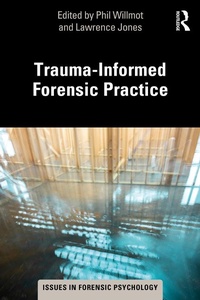
Trauma-Informed Forensic Practice
1st Edition
Published on 10. March 2022
446 pages
978-1-000-55244-7 (ISBN)
Description

Trauma-Informed Forensic Practice argues for placing trauma-informed practice and thinking at the heart of forensic services. It is written by forensic practitioners and service users from prison and forensic mental health, youth justice, and social care settings.
It provides a compassionate theoretical framework for understanding the links between trauma and offending. It also gives practical guidance on working with issues that are particularly associated with a history of trauma in forensic settings, such as self-harm and substance use, as well as on working with groups who are particularly vulnerable to trauma, such as those with intellectual disabilities and military veterans. Finally, it considers organisational aspects of delivering trauma-informed care, not just for service users but for the staff who work in challenging and dangerous forensic environments.
The book is the first of its kind to address such a broad range of issues and settings. It is aimed at forensic practitioners who wish to develop their own trauma-informed practice or trauma-responsive services. It also provides an accessible introduction to trauma-informed forensic practice for undergraduate and postgraduate students.
It provides a compassionate theoretical framework for understanding the links between trauma and offending. It also gives practical guidance on working with issues that are particularly associated with a history of trauma in forensic settings, such as self-harm and substance use, as well as on working with groups who are particularly vulnerable to trauma, such as those with intellectual disabilities and military veterans. Finally, it considers organisational aspects of delivering trauma-informed care, not just for service users but for the staff who work in challenging and dangerous forensic environments.
The book is the first of its kind to address such a broad range of issues and settings. It is aimed at forensic practitioners who wish to develop their own trauma-informed practice or trauma-responsive services. It also provides an accessible introduction to trauma-informed forensic practice for undergraduate and postgraduate students.
Reviews / Votes
"This is an essential introduction to trauma-informed care in an area where it is most needed - the forensic and criminal justice system. Perpetrators often begin as victims, and unless we take on the implications of this, we will never break the cycle of offending. In this extremely comprehensive overview, Willmot and Jones, and a range of experienced contributor, show how this perspective can be applied in a very wide range of settings and client groups. They believe that 'forensic psychology is currently due a paradigm shift.' This book is a crucial contribution to that process."Dr Lucy Johnstone, co-author of the Power Threat Meaning Framework
"A compassionate understanding of trauma-related pathways into crime has tended to be associated with fears of collusion with offending behaviour, or excuses around culpability. However, this wide-ranging and immensely thoughtful book makes a compelling case for placing trauma-informed approaches at the heart of rehabilitation. This is a great read for both practitioners and service leaders."
Dr Jackie Craissati MBE, Consultant Clinical & forensic Psychologist
"For anyone working in, or interested in, forensic and Criminal Justice services this textbook is both authoritative and groundbreaking in its approach to trauma informed forensic practice. Distinctively, trauma is not simply conceptualized as the product of individual development, but rather the traumas of wider structural inequalities are acknowledged too. It is especially gratifying to see a group of practitioners making such a substantial academic contribution to the field. As academics we have much to learn from this collection of perspectives. I am confident that it will be the go-to text in this field for academics, policy makers and practitioners across and beyond the forensic field. Congratulations to all involved in the production of this weighty volume and especially the editors for orchestrating such a commendable collection of expert and insightful chapters. Very well worth a read, I wholeheartedly endorse it."
Graham Towl, Professor of Forensic Psychology, Durham University and visiting Clinical Professor, Newcastle University and formerly inaugural Chair of the Division of Forensic Psychology and Chief Psychologist, Ministry of Justice, England and Wales.
More details
Series
Edition
1. Auflage
Language
English
Place of publication
London
United Kingdom
Publishing group
Taylor & Francis Ltd
Target group
College/higher education
Professional and scholarly
Illustrations
15 Tables, black and white; 2 Line drawings, black and white; 14 Halftones, black and white; 16 Illustrations, black and white
ISBN-13
978-1-000-55244-7 (9781000552447)
Copyright in bibliographic data and cover images is held by Nielsen Book Services Limited or by the publishers or by their respective licensors: all rights reserved.
Schweitzer Classification
Other editions
Additional editions
Phil Willmot | Lawrence Jones
Trauma-Informed Forensic Practice
Book
03/2022
1st Edition
Routledge
€72.60
Shipment within 15-20 days
Phil Willmot | Lawrence Jones
Trauma-Informed Forensic Practice
Book
03/2022
1st Edition
Routledge
€207.00
Shipment within 15-20 days
Persons
Phil Willmot is a Consultant Forensic and Clinical Psychologist and Joint Lead Psychologist for the Men's Personality Disorder Service at Rampton Hospital. He is also Senior Lecturer in Forensic Psychology at the University of Lincoln, UK.
Lawrence Jones is Head of Psychology at Rampton Hospital. He is a former chair of the Division of Forensic Psychology and has published in a range of areas including therapeutic communities, formulation, "personality disorder", iatrogenic responses to intervention, motivation, offence paralleling behaviour, sexual offending, and trauma- and diversity-informed care.
Lawrence Jones is Head of Psychology at Rampton Hospital. He is a former chair of the Division of Forensic Psychology and has published in a range of areas including therapeutic communities, formulation, "personality disorder", iatrogenic responses to intervention, motivation, offence paralleling behaviour, sexual offending, and trauma- and diversity-informed care.
Content
Introduction
Phil Willmot & Lawrence Jones
Section 1: Trauma and Offending
1. Childhood Maltreatment and its Links to Offending
Phil Willmot
2. Trauma, Violence and Gender
Phil Willmot and Yasmin Siddall
3. Trauma-Informed Risk Assessment and Intervention: Understanding the Role of Triggering Contexts and Offence-Related Altered States of Consciousness (ORASC)
Lawrence Jones
4. Trauma, Personality Disorder and Offending
Louise Sainsbury
Section 2: Vulnerable Groups
5. From Care to Custody
Elizabeth Utting and Tamara Woodall
6. Trauma and Intellectual Disability
Emma Longfellow and Rachel Hicks
7. Deafness and Trauma: A Journey to Equitable Trauma-Informed Care
Sarah Todd
8. Trauma and Offending in UK Military Veterans
Jane Jones
Section 3: Survival Responses
9. "When You Have Got Like Twenty Thousand Thoughts in Your Head, that One Little Thing Can Just Make It All Go Away": Trauma and Non Suicidal Self Injury in Forensic Settings
Rachel Beryl and Jessica Lewis
10. Trauma, Substance Use and Offending
John Farnsworth
11. Early Trauma, Psychosis and Violent Offending
Claire Moore and Naomi Callender
12. Trauma and Sexual Offending: Causal Mechanisms and Change Processes
Lawrence Jones
13. The traumatic Impact of Violent Crime on Offenders
Jennifer Pink and Nicola Gray
Section 4: Trauma-Responsive Treatment
14. A Therapeutic Community Approach to Address Harmful Sexual Behaviour in Older Teenager
Karen Parish and Peter Clarke
15. Containing Distress: Working with Compassion in a Prison-Based Democratic Therapeutic Community
Geraldine Akerman and Nathan Joshua
16. Addressing Trauma with Young Adult Males in Custody: Implementing a Stepped Care Trauma-Informed Approach in a Young Offenders Institution
Kate Geraghty and Chantal Scaillet
17. Trauma and the Experience of Imprisonment
Kerensa Hocken, Jon Taylor and Jamie Wolton
18. Trauma Informed Community Services
Karen Orpwood and Sue Ryan
Section 5: Organisational Issues
19. Developing Trauma-Informed Youth Justice Services
Nicola Silvester
20. Trauma-Informed Care in Secure Psychiatric Hospitals
Frank Maguire, Julie Carlisle and Fiona Clark
21. The Impact on Staff of Trauma-Informed Work in Forensic Settings
Michelle Smith
22. Trauma-informed Care and Culture Change in an NHS Forensic Service
Victoria Hiett-Davies
23. Trauma and Restorative Justice
Estelle Moore
24. The Future of Trauma-Informed Forensic Practice
Lawrence Jones and Phil Willmot
Phil Willmot & Lawrence Jones
Section 1: Trauma and Offending
1. Childhood Maltreatment and its Links to Offending
Phil Willmot
2. Trauma, Violence and Gender
Phil Willmot and Yasmin Siddall
3. Trauma-Informed Risk Assessment and Intervention: Understanding the Role of Triggering Contexts and Offence-Related Altered States of Consciousness (ORASC)
Lawrence Jones
4. Trauma, Personality Disorder and Offending
Louise Sainsbury
Section 2: Vulnerable Groups
5. From Care to Custody
Elizabeth Utting and Tamara Woodall
6. Trauma and Intellectual Disability
Emma Longfellow and Rachel Hicks
7. Deafness and Trauma: A Journey to Equitable Trauma-Informed Care
Sarah Todd
8. Trauma and Offending in UK Military Veterans
Jane Jones
Section 3: Survival Responses
9. "When You Have Got Like Twenty Thousand Thoughts in Your Head, that One Little Thing Can Just Make It All Go Away": Trauma and Non Suicidal Self Injury in Forensic Settings
Rachel Beryl and Jessica Lewis
10. Trauma, Substance Use and Offending
John Farnsworth
11. Early Trauma, Psychosis and Violent Offending
Claire Moore and Naomi Callender
12. Trauma and Sexual Offending: Causal Mechanisms and Change Processes
Lawrence Jones
13. The traumatic Impact of Violent Crime on Offenders
Jennifer Pink and Nicola Gray
Section 4: Trauma-Responsive Treatment
14. A Therapeutic Community Approach to Address Harmful Sexual Behaviour in Older Teenager
Karen Parish and Peter Clarke
15. Containing Distress: Working with Compassion in a Prison-Based Democratic Therapeutic Community
Geraldine Akerman and Nathan Joshua
16. Addressing Trauma with Young Adult Males in Custody: Implementing a Stepped Care Trauma-Informed Approach in a Young Offenders Institution
Kate Geraghty and Chantal Scaillet
17. Trauma and the Experience of Imprisonment
Kerensa Hocken, Jon Taylor and Jamie Wolton
18. Trauma Informed Community Services
Karen Orpwood and Sue Ryan
Section 5: Organisational Issues
19. Developing Trauma-Informed Youth Justice Services
Nicola Silvester
20. Trauma-Informed Care in Secure Psychiatric Hospitals
Frank Maguire, Julie Carlisle and Fiona Clark
21. The Impact on Staff of Trauma-Informed Work in Forensic Settings
Michelle Smith
22. Trauma-informed Care and Culture Change in an NHS Forensic Service
Victoria Hiett-Davies
23. Trauma and Restorative Justice
Estelle Moore
24. The Future of Trauma-Informed Forensic Practice
Lawrence Jones and Phil Willmot
