

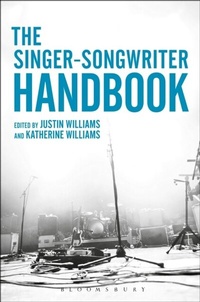
The Singer-Songwriter Handbook
1st Edition
Published on 23. February 2017
296 pages
978-1-62892-032-1 (ISBN)
Description

The singer-songwriter, someone who writes and performs their own music, is an ever-present and increasingly complex figure in popular music worlds. The Singer-Songwriter Handbook provides a useful resource for student songwriters, active musicians, fans and scholars alike.
This handbook is divided into four main sections: Songwriting (acoustic and digital), Performance, Music Industry and Case Studies. Section I focuses on the 'how to' elements of popular song composition, embracing a range of perspectives and methods, in addition to chapters on the teaching of songwriting to students. Section II deals with the nature of performance: stagecraft, open mic nights, and a number of case studies that engage with performing in a range of contexts. Section III is devoted to aspects of the music industry and the business of music including sales, contract negotiations, copyright, social media and marketing. Section IV provides specific examples of singer-songwriter personae and global open mic scenes.
The Singer-Songwriter Handbook is a much-needed single resource for budding singer-songwriters as well as songwriting pedagogues.
This handbook is divided into four main sections: Songwriting (acoustic and digital), Performance, Music Industry and Case Studies. Section I focuses on the 'how to' elements of popular song composition, embracing a range of perspectives and methods, in addition to chapters on the teaching of songwriting to students. Section II deals with the nature of performance: stagecraft, open mic nights, and a number of case studies that engage with performing in a range of contexts. Section III is devoted to aspects of the music industry and the business of music including sales, contract negotiations, copyright, social media and marketing. Section IV provides specific examples of singer-songwriter personae and global open mic scenes.
The Singer-Songwriter Handbook is a much-needed single resource for budding singer-songwriters as well as songwriting pedagogues.
Reviews / Votes
It's been a long time coming, but the identity of the singer-songwriter, sitting between so many genres as they do, seems finally to be taken seriously. But this book is special in another way too - it is unusual to find a combination of academic thinking and practical advice within the same covers, but that's what you get here, and they seem to gel to provide a rich mixture of thoughtful pieces. Indeed, there's only one delightful problem - from the abundance of perspectives offered, how do you find time to put it all into practice?! * Allan F Moore, Professor Emeritus, University of Surrey, UK * An inspiring and insightful resource for those working within the sphere of popular music and songwriting; students and educators alike. Where some titles would have us trudge in ever-decreasing circles through the rudiments of songform, the 'mathematics' of songwriting available at the flick of an Internet search, The Singer-Songwriter Handbook offers impressively fresh insight into the art, regarding innovation and performance, and with consideration to the wider context of the music industry. There is value here for songwriters of all persuasions, from bedsit acoustic to electro cut-up and collage, and much in between. * Julianne Regan, Bath Spa University, UK * The Singer-Songwriter Handbook represents a significant contribution to songwriting research. It combines the best of academic inquiry with real-world examples of contemporary and historical creative practice. For songwriters it's certainly a useful practical handbook; for scholars, it is an invaluable academic resource. * Joe Bennett, Vice-President for Academic Affairs, Boston Conservatory at Berklee, USA * Much more than a simple how-to guide, The Singer-Songwriter Handbook explores the key areas of songwriting, production, performance, and the changing music industry, from a range of perspectives. The result is balanced and insightful, a vivid snapshot of a genre in motion. This handbook will be a great resource for practitioners, students, and academics alike. * Sarah Hill, Senior Lecturer, Cardiff University, UK * Songwriters and performers will find much to nourish their skills and careers in this comprehensive compendium of analysis and advice. Its tips and case studies will also prove valuable to the growing band of popular music educators. * Dave Laing, Honorary Research Fellow, Institute of Popular Music, University of Liverpool *More details
Edition
1. Auflage
Language
English
Place of publication
New York
United States
Publishing group
Bloomsbury Publishing PLC (Digital)
ISBN-13
978-1-62892-032-1 (9781628920321)
Copyright in bibliographic data and cover images is held by Nielsen Book Services Limited or by the publishers or by their respective licensors: all rights reserved.
Schweitzer Classification
Other editions
Additional editions
Justin Williams | Katherine Williams
The Singer-Songwriter Handbook
Book
02/2017
Bloomsbury Academic USA
€55.89
Shipment within 3-4 weeks
Persons
Justin A. Williams is Senior Lecturer in Music at the University of Bristol, UK. He is the author of Rhymin and Stealin: Musical Borrowing in Hip-hop (2013) and editor of the Cambridge Companion to Hip-hop (2015) and co-editor of the Cambridge Companion to the Singer-Songwriter (2016).
Katherine Williams is Lecturer in Music and Performance Pathway Leader at Plymouth University, UK. She is the author of Rufus Wainwright (2016), and co-editor of the Cambridge Companion to the Singer-Songwriter (2016).
Katherine Williams is Lecturer in Music and Performance Pathway Leader at Plymouth University, UK. She is the author of Rufus Wainwright (2016), and co-editor of the Cambridge Companion to the Singer-Songwriter (2016).
Content
Editors' Introduction
Part Ia: Songwriting
Ch. 1 Nadav Appel "The Singer-Songwriter Disposition"
Ch. 2 Mark Simos "The Performing Songwriter's Dilemma: Principles and Practices"
Ch. 3 Zack Moir "Learning to Create and Creating to Learn: Considering the Value of Popular Music in Higher Education"
Ch. 4 Simon Barber "Professional Songwriting Techniques: A range of views summarized from the Sodajerker Interviews"
Ch. 5 Lee Bob Watson "A River, A Bible & A Broken Heart"
Part Ib: Songwriting in the Digital Era
Ch. 6 Mark Marrington "Composing with the Digital Audio Workstation."
Ch. 7 Rob Toulson and Richard James Burgess "Singer-songwriter meets music production and studio technology"
Ch. 8 Lisa Busby "Post-digital approaches to songwriting"
Part II: Performance
Ch. 9 Dane Chalfin "From 'me' to 'we': Stagecraft, performance and audience communication."
Ch. 10 Sija Tsai and Andrew Hillhouse "The Mariposa Folk Festival and the Canadian Singer- songwriter Tradition"
Ch.11 Seth Lakeman testimonial "Stories from my life and tips for getting ahead" (interview with Katherine Williams)
Part III: The Music Industry
Ch. 12 Sam Nicholls "Audience Engagement and Alternative Revenue Streams"
Ch. 13 Jo Collinson Scott and David Scott, "The Portfolio Career in Practice: Key Aspects of Building a Sustainable Songwriting and Performance Career in the Download Era"
Ch. 14 Emma Hooper "Waitress for the Bees: How to (almost) Never Play a Bad Gig Again: A Simple Way to Approach Performing Professionally"
Part IV: Case Studies
Ch. 15 Alexandra Apolloni
Vocal Authorship: Marianne Faithfull and "Sister Morphine"
Ch. 16 Claire Coleman
"Indie folk's bowerbirds: Nostalgia and contemporary singer-songwriters"
Ch. 17 Juliane Jones "Play the Bluebird to the Bitter End: Open Mics in Nashville, NYC and Shanghai"
Bibliography
Index
Part Ia: Songwriting
Ch. 1 Nadav Appel "The Singer-Songwriter Disposition"
Ch. 2 Mark Simos "The Performing Songwriter's Dilemma: Principles and Practices"
Ch. 3 Zack Moir "Learning to Create and Creating to Learn: Considering the Value of Popular Music in Higher Education"
Ch. 4 Simon Barber "Professional Songwriting Techniques: A range of views summarized from the Sodajerker Interviews"
Ch. 5 Lee Bob Watson "A River, A Bible & A Broken Heart"
Part Ib: Songwriting in the Digital Era
Ch. 6 Mark Marrington "Composing with the Digital Audio Workstation."
Ch. 7 Rob Toulson and Richard James Burgess "Singer-songwriter meets music production and studio technology"
Ch. 8 Lisa Busby "Post-digital approaches to songwriting"
Part II: Performance
Ch. 9 Dane Chalfin "From 'me' to 'we': Stagecraft, performance and audience communication."
Ch. 10 Sija Tsai and Andrew Hillhouse "The Mariposa Folk Festival and the Canadian Singer- songwriter Tradition"
Ch.11 Seth Lakeman testimonial "Stories from my life and tips for getting ahead" (interview with Katherine Williams)
Part III: The Music Industry
Ch. 12 Sam Nicholls "Audience Engagement and Alternative Revenue Streams"
Ch. 13 Jo Collinson Scott and David Scott, "The Portfolio Career in Practice: Key Aspects of Building a Sustainable Songwriting and Performance Career in the Download Era"
Ch. 14 Emma Hooper "Waitress for the Bees: How to (almost) Never Play a Bad Gig Again: A Simple Way to Approach Performing Professionally"
Part IV: Case Studies
Ch. 15 Alexandra Apolloni
Vocal Authorship: Marianne Faithfull and "Sister Morphine"
Ch. 16 Claire Coleman
"Indie folk's bowerbirds: Nostalgia and contemporary singer-songwriters"
Ch. 17 Juliane Jones "Play the Bluebird to the Bitter End: Open Mics in Nashville, NYC and Shanghai"
Bibliography
Index
