

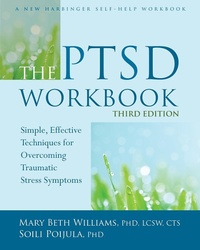
PTSD Workbook
Description

In the third edition of The PTSD Workbook, psychologists and trauma experts Mary Beth Williams and Soili Poijula offer readers the most effective tools available for overcoming post-traumatic stress disorder (PTSD).
PTSD is an extremely debilitating condition that can occur after exposure to a terrifying event. But whether you're a veteran of war, a victim of domestic violence or sexual violence, or have been involved in a natural disaster, crime, car accident, or accident in the workplace, your symptoms may be getting in the way of you living your life.
PTSD can often cause you to relive your traumatic experience in the form of flashbacks, memories, nightmares, and frightening thoughts. This is especially true when you are exposed to events or objects that remind you of your trauma. Left untreated, PTSD can lead to emotional numbness, insomnia, addiction, anxiety, depression, and even suicide. So, how can you start to heal and get your life back?
In The PTSD Workbook, Third Edition, psychologists and trauma experts Mary Beth Williams and Soili Poijula outline techniques and interventions used by PTSD experts from around the world to conquer distressing trauma-related symptoms. In this fully revised and updated workbook, you'll learn how to move past the trauma you've experienced and manage symptoms such as insomnia, anxiety, and flashbacks.
Based in cognitive behavioral therapy (CBT), this book is extremely accessible and easy to use, offering evidence-based therapy at a low cost. This new edition features chapters focusing on veterans with PTSD, the link between cortisol and adrenaline and its role in PTSD and overall mental health, and the mind-body component of PTSD. Clinicians will also find important updates reflecting the new DSM-V definition of PTSD.
This book is designed to give you the emotional resilience you need to get your life back together after a traumatic event.
More details
Other editions
Additional editions
Content
- Intro
- Introduction
- 1
- A Look at Trauma
- 2
- Before Doing the Work: Safety, Security, and Intention
- 3
- Identifying and Writing About What Has Happened to You
- 4
- Helping Yourself When You Reexperience a Trauma
- 5
- Coping with Trauma with Less Avoidance
- 6
- Dealing with Category D Symptoms: Part I
- 7
- Dealing with Category D Symptoms: Part 2
- 8
- Lessening Arousal: What to Do If You Can't Sleep, Can't Relax, or Are Angry and Irritable
- 9
- Stress, Trauma, and the Body
- 10
- For Veterans Returning from War: Tools for Personal Survival
- 11
- Finding Meaning
- 12
- Final Thoughts and Exercises
- References
