

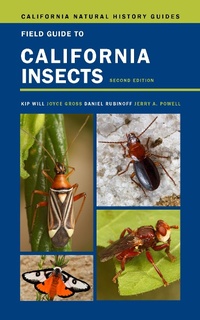
Field Guide to California Insects
Second Edition
2nd Edition
Published on 30. October 2020
536 pages
978-0-520-96357-3 (ISBN)
Description

Beautifully illustrated and approachable, this is the only California-specific, statewide book devoted to all groups of insects.
Completely revised for the first time in over 40 years, Field Guide to California Insects now includes over 600 insect species, each beautifully illustrated with color photographs. Engaging accounts focus on distinguishing features, remarkable aspects of biology, and geographical distribution in the state. An accessible and compact introduction to identifying, understanding, and appreciating these often unfamiliar and fascinating creatures, this guide covers insects that readers are likely to encounter in homes and natural areas, cities and suburbs, rural lands and wilderness. It also addresses exotic and invasive species and their impact on native plants and animals. Field Guide to California Insects remains the definitive portable reference and a captivating read for beginners as well as avid naturalists.
Completely revised for the first time in over 40 years, Field Guide to California Insects now includes over 600 insect species, each beautifully illustrated with color photographs. Engaging accounts focus on distinguishing features, remarkable aspects of biology, and geographical distribution in the state. An accessible and compact introduction to identifying, understanding, and appreciating these often unfamiliar and fascinating creatures, this guide covers insects that readers are likely to encounter in homes and natural areas, cities and suburbs, rural lands and wilderness. It also addresses exotic and invasive species and their impact on native plants and animals. Field Guide to California Insects remains the definitive portable reference and a captivating read for beginners as well as avid naturalists.
More details
Other editions
Additional editions
Book
10/2020
2nd Edition
University of California Press
€28.47
Shipment within 10-20 days
Book
10/2020
2nd Edition
University of California Press
€99.04
Article exhausted; check different version
Person
Kip Will is an entomologist, insect systematist, and former director of the Essig Museum of Entomology at the University of California, Berkeley.
Joyce Gross has been photographing California insects for 17 years and works as a computer programmer with the Berkeley Natural History Museums at the University of California, Berkeley.
Dan Rubinoff is Professor of Entomology and Director of the University of Hawaii Insect Museum. He grew up in California chasing insects and continues to work actively in the state.
Jerry A. Powell is Professor of the Graduate School and former director of the Essig Museum of Entomology at the University of California, Berkeley.
Joyce Gross has been photographing California insects for 17 years and works as a computer programmer with the Berkeley Natural History Museums at the University of California, Berkeley.
Dan Rubinoff is Professor of Entomology and Director of the University of Hawaii Insect Museum. He grew up in California chasing insects and continues to work actively in the state.
Jerry A. Powell is Professor of the Graduate School and former director of the Essig Museum of Entomology at the University of California, Berkeley.
Content
Preface
INTRODUCTION
What Is an Insect? Growth and Reproduction
Breathing and Circulation
Feeding
Stinging Distribution and Diversity of the California Insect Fauna Topography
Geographical Distribution
Diversity
Microhabitats Making an Insect Collection
Classification Names Synopsis of Hexapods and the Orders of Insects
ACCOUNTS: SYSTEMATIC TREATMENT
Coneheads (Class Protura)
Two-pronged Bristletails (Class Diplura)
Springtails (Class Collembola)
Insects (Class Insecta)
Acknowledgments
Glossary
Bibliography
Online Resources
Photo Credits
Index
About the Authors
INTRODUCTION
What Is an Insect? Growth and Reproduction
Breathing and Circulation
Feeding
Stinging Distribution and Diversity of the California Insect Fauna Topography
Geographical Distribution
Diversity
Microhabitats Making an Insect Collection
Classification Names Synopsis of Hexapods and the Orders of Insects
ACCOUNTS: SYSTEMATIC TREATMENT
Coneheads (Class Protura)
Two-pronged Bristletails (Class Diplura)
Springtails (Class Collembola)
Insects (Class Insecta)
Acknowledgments
Glossary
Bibliography
Online Resources
Photo Credits
Index
About the Authors
